
Precise Coating Adhesion in South Korea: Key Surface Treatment Factors to Check
For quality control and safety teams, precise coating adhesion South Korea is not just a finishing issue but a core control point.
It affects corrosion resistance, product life, worker safety, export readiness, and claim risk across multiple industrial sectors.
When adhesion fails, many factories first question the coating chemistry.
In practice, the bigger issue is often surface treatment discipline before coating even starts.
That is especially true in South Korea, where high-value manufacturing demands stable, repeatable, and well-documented process control.
From batteries and electronics to machinery and metal parts, precise coating adhesion South Korea depends on how consistently the substrate is prepared.
Why Surface Treatment Decides Adhesion Performance
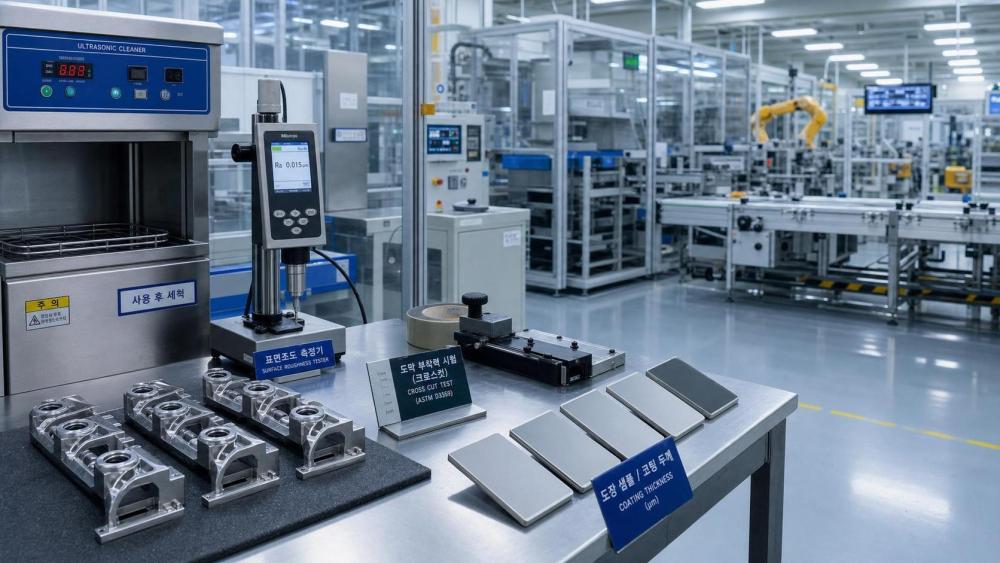
A coating can only bond as well as the surface allows.
If oils, salts, oxides, or dust remain, adhesion drops even when film thickness looks acceptable.
This creates a dangerous gap between visual inspection and long-term field performance.
For precise coating adhesion South Korea, surface treatment is not a support step.
It is the foundation of adhesion strength, coating uniformity, and process validation.
This also explains why adhesion failure often appears late.
The part may pass final inspection, then fail after humidity exposure, salt spray, heat cycling, or transport vibration.
Common failure symptoms
- Peeling at edges, holes, weld lines, or corners
- Blistering after humidity or chemical exposure
- Poor cross-hatch adhesion results
- Uneven gloss caused by surface contamination
- Rust creep under damaged coating areas
Key Factors to Check Before Blaming the Coating
A stable precise coating adhesion South Korea program starts with a disciplined checklist.
The following variables usually explain most adhesion variation in industrial lines.
1. Surface cleanliness
Residual oils, coolants, polishing compounds, and fingerprints are frequent hidden causes.
Even low contamination levels can interrupt wetting and reduce bonding energy.
Water-break testing, dyne pens, and surface energy checks are useful quick screens.
Where parts are precision-cleaned, ultrasonic systems can improve repeatability on complex geometries.
2. Surface roughness and profile
Too smooth, and the coating may not anchor well.
Too rough, and the profile may trap contaminants or create weak film coverage on peaks.
For precise coating adhesion South Korea, roughness targets should match substrate type and coating chemistry.
Abrasive blasting, brushing, or chemical etching must be verified, not assumed.
3. Pretreatment consistency
Conversion coatings, phosphate layers, passivation, and activation steps need stable bath control.
Temperature, pH, conductivity, concentration, and immersion time all change adhesion outcomes.
A line can look normal while pretreatment drift slowly weakens coating performance.
4. Rinse water quality
This point is often underestimated.
Hardness, dissolved salts, and carryover chemistry can leave residues that weaken adhesion later.
In precise coating adhesion South Korea projects, rinse monitoring should be treated like a critical quality parameter.
5. Drying and handling control
After cleaning, fresh surfaces are vulnerable.
Poor drying can trap moisture, while slow transfer invites recontamination from air or operators.
Glove policies, protected staging, and short waiting times matter more than many teams expect.
What to Measure for Reliable Precise Coating Adhesion South Korea
Good adhesion control depends on measurable evidence, not visual judgment alone.
That means linking pretreatment data with final coating test results.
From a standards perspective, the exact test method depends on industry and end-use risk.
Still, precise coating adhesion South Korea programs usually benefit from combining incoming surface checks and post-coating validation.
Useful validation methods
- Cross-hatch adhesion tests for routine line monitoring
- Salt spray exposure for corrosion-related durability review
- Humidity and thermal cycling for environmental stability
- Microscopic surface review for localized contamination analysis
- Traceable SPC records for trend detection and corrective action
South Korea Manufacturing Conditions That Raise the Bar
Precise coating adhesion South Korea is shaped by local manufacturing expectations.
Export-oriented production, strict customer audits, and advanced process capability requirements leave little room for variation.
More importantly, many Korean factories handle high-spec parts with tight cosmetic and corrosion criteria.
That increases the need for documented pretreatment consistency and contamination control.
Recent shifts toward cleaner production also matter.
As lines move toward lower-emission processes and tighter chemical management, surface treatment windows may become narrower.
This means precise coating adhesion South Korea increasingly depends on process monitoring, not operator intuition.
Practical Troubleshooting Steps for Adhesion Risk
When adhesion defects appear, speed matters, but so does sequence.
Jumping directly to new paint or powder trials often wastes time.
A structured review usually finds the issue faster.
- Confirm whether the defect is localized, batch-wide, or product-specific.
- Check recent changes in cleaning chemistry, bath maintenance, or rinse water source.
- Review roughness data and pretreatment logs against the last stable production window.
- Inspect handling points where clean parts may contact gloves, racks, or staging surfaces.
- Run adhesion and environmental tests on retained samples from good and bad lots.
- Use the findings to isolate process drift before adjusting coating formulation.
This approach supports precise coating adhesion South Korea by turning defects into traceable process evidence.
It also improves supplier communication, internal CAPA quality, and audit readiness.
How to Build a More Stable Surface Treatment Standard
The most effective plants treat adhesion as a system output.
They connect cleaning, pretreatment, coating, testing, and documentation into one control logic.
For precise coating adhesion South Korea, that usually includes three practical upgrades.
- Define measurable acceptance limits for cleanliness, roughness, and rinse quality.
- Link pretreatment records with final adhesion and corrosion test results.
- Audit handling and storage steps between cleaning and coating application.
These are not expensive changes by themselves.
The value comes from consistency, traceability, and quicker root-cause decisions.
In real operations, that is what protects both coating performance and production stability.
Final Check Before Process Changes
Precise coating adhesion South Korea is rarely improved by changing one variable in isolation.
A stronger result comes from verifying the full surface treatment chain first.
Before approving new coating materials, review cleanliness, roughness, pretreatment stability, rinse quality, drying, and handling discipline.
That sequence keeps troubleshooting grounded in evidence.
It also reduces repeat defects, strengthens compliance confidence, and supports longer coating life in demanding industrial environments.
For plants reviewing precise coating adhesion South Korea, the immediate next step is simple: validate surface treatment data before questioning the coating itself.