
Choosing surface treatment technology for metal parts is rarely a finishing detail. It affects corrosion life, adhesion, appearance, traceability, rework rates, and regulatory confidence across the product lifecycle.
The right decision depends on two variables working together: the base metal and the real service environment. A treatment that performs well on indoor steel brackets may fail on marine aluminum housings.
That is why surface treatment technology for metal should be evaluated as part of process control, not only as a cosmetic step. In advanced manufacturing, auxiliary systems often determine whether design intent survives production reality.
Why the Selection Process Matters More Than Ever
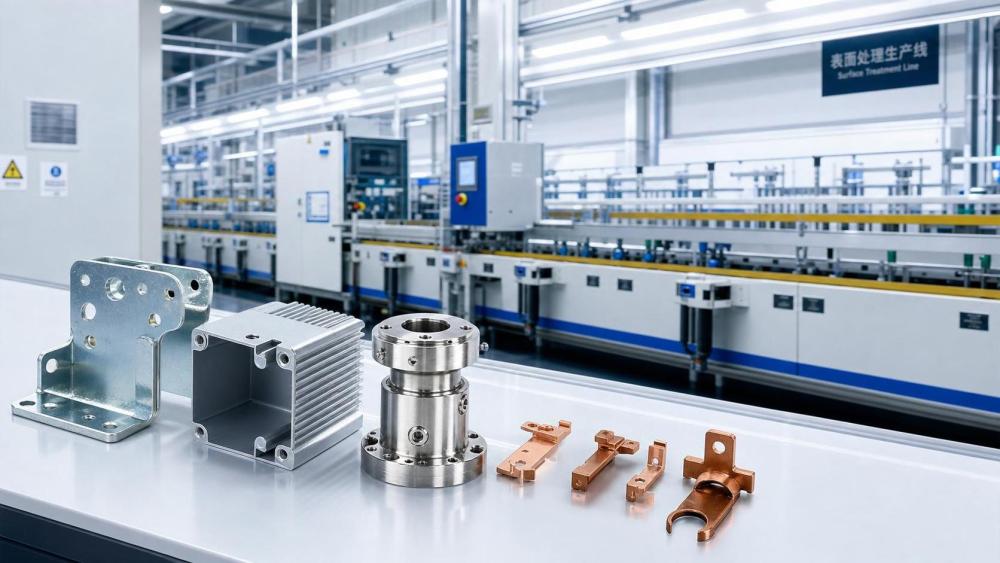
Surface performance is now tied to wider business pressures. Export requirements, durability claims, cleaner production targets, and tighter quality documentation all raise the cost of a poor finishing choice.
A metal part may need to resist salt spray, solvent exposure, abrasion, UV light, or repeated cleaning. It may also need a stable surface for laser marking, coding, sealing, welding, or downstream coating.
Platforms such as GIAS reflect this shift clearly. Surface treatment is increasingly assessed alongside cleaning precision, coating consistency, vacuum stability, and product identification because these steps interact on the line.
In practice, the selection question is not simply, “Which finish is best?” It is, “Which surface treatment technology for metal supports the material, process route, and end-use risk profile?”
Start With the Metal, Not the Catalog
Different metals respond differently to pretreatment, conversion layers, and topcoats. Chemistry, oxide behavior, hardness, and conductivity all influence the suitable treatment path.
Carbon steel and low-alloy steel
Steel usually needs strong corrosion protection. Common choices include zinc plating, phosphating, e-coating, powder coating, black oxide, and hot-dip galvanizing.
For indoor equipment frames, powder coating over proper pretreatment may be enough. For outdoor infrastructure or fasteners, galvanizing or zinc-based systems often deliver better long-term protection.
Aluminum and its alloys
Aluminum already forms a natural oxide layer, but that does not solve every requirement. Anodizing, chemical conversion coating, and powder coating are typical choices.
When appearance and wear matter, anodizing is often preferred. When aluminum will be painted or electrically connected, the pretreatment route needs closer review.
Stainless steel
Stainless steel is selected for corrosion resistance, but fabrication can damage that advantage. Passivation, electropolishing, pickling, bead blasting, and specialized coatings may all be relevant.
In food, medical, and clean-process applications, surface cleanliness matters as much as corrosion behavior. A visually smooth finish is not always a functionally clean surface.
Copper, brass, and specialty alloys
These materials may need anti-tarnish treatments, plating, or sealing layers. Electrical contact performance can limit coating thickness or rule out some decorative options.
This is where surface treatment technology for metal becomes application-specific very quickly. Electrical, thermal, and appearance requirements often pull in different directions.
End Use Should Drive the Final Choice
Material compatibility narrows the options. End use decides the winner. The same alloy can require different treatments depending on where and how the part will operate.
This comparison also shows why specification by material alone is incomplete. A stainless enclosure in a dry lab and one in chlorinated washdown service do not share the same risk level.
The Process Chain Behind a Reliable Finish
Many failures blamed on coatings begin earlier. Oil residue, oxide scale, embedded particles, poor rinsing, or unstable line conditions can undermine even a well-chosen treatment.
That is why surface treatment technology for metal should be reviewed together with upstream cleaning and downstream identification steps. Pretreatment quality directly affects adhesion, uniformity, and corrosion performance.
Ultrasonic cleaning is especially relevant for precision parts with complex geometry. It helps remove fine contaminants from holes, threads, and recesses that manual cleaning may miss.
Stable marking matters too. If a part needs laser traceability after coating, finish thickness, reflectivity, and color stability should be reviewed before locking the process.
For high-consistency manufacturing, line control is part of the treatment decision. Bath chemistry, curing profiles, filtration, rinse quality, and inspection criteria influence the real outcome more than brochure claims.
How to Compare Treatment Options in Real Projects
A practical evaluation usually needs more than a corrosion target. It should balance function, appearance, compliance, process fit, and total manufacturing cost.
Questions worth settling early
- What is the true exposure condition: indoor, outdoor, marine, chemical, or sterilized?
- Does the part need conductivity, weldability, paint adhesion, or a decorative finish?
- Which standards or customer tests will define acceptance?
- Can the chosen finish tolerate dimensional limits on threads, seals, and mating surfaces?
- Does the supply chain support repeatable pretreatment and inspection at production scale?
These questions help avoid a common mistake: selecting the lowest unit-cost finish without accounting for rejection, field failure, or certification delays.
Cost should be viewed across the lifecycle
A cheaper finish may increase packaging needs, reduce shelf life, complicate marking, or create rework after assembly. A more robust option can lower the total cost of ownership.
This is particularly true for exported equipment and multi-market products. Compliance-related failures usually cost more than the price gap between two treatment routes.
Common Misjudgments in Surface Treatment Planning
Several planning errors appear repeatedly across industries, especially when timelines are tight and finishing decisions are made late.
- Treating corrosion resistance as the only criterion, while ignoring wear, friction, marking, or cleaning exposure.
- Assuming all stainless steel parts need no further treatment.
- Specifying a coating without defining pretreatment quality.
- Overlooking how finish thickness changes fit, torque, or sealing behavior.
- Using lab test results without checking whether production conditions can reproduce them.
When surface treatment technology for metal is treated as a late-stage add-on, these risks become harder to correct. Early cross-functional review is usually cheaper than post-launch troubleshooting.
A More Useful Way to Make the Final Decision
The strongest decisions are built from a simple sequence. First define the service environment. Then confirm material behavior. After that, compare treatment routes against performance tests and production capability.
Documentation should include pretreatment steps, target thickness or conversion quality, appearance limits, adhesion criteria, and relevant standards. That creates a shared baseline between design, sourcing, and quality teams.
For companies tracking industrial auxiliary systems through GIAS, this broader view is increasingly valuable. Surface outcomes depend on cleaning, coating control, traceability, and process discipline working together.
Before selecting any surface treatment technology for metal, map the part by material, geometry, exposure, compliance demands, and downstream process needs. That framework usually reveals which options deserve pilot testing and which should be ruled out early.
The next sensible step is to build a short comparison matrix for two or three viable treatments, then validate them against actual use conditions rather than generic assumptions. That is where a durable specification starts.