
How Plasma Activation Technology Systems Improve Adhesion on Plastics and Metals
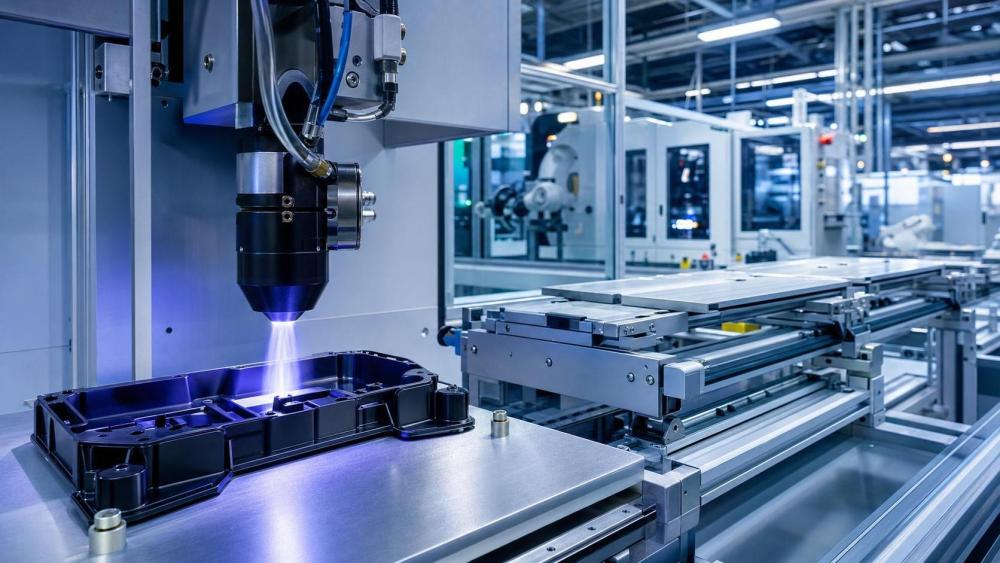
For many industrial products, adhesion problems start at the surface, not in the adhesive or coating itself.
That is why plasma activation technology systems have become important in plastic and metal processing.
They raise surface energy, remove trace contamination, and create a better base for bonding, printing, sealing, and coating.
For technical evaluations, the real value is process consistency.
A stable pretreatment step can reduce rework, improve yield, and support quality targets without changing core materials.
This matters even more when manufacturers work with low-surface-energy plastics, smooth metal parts, or mixed-material assemblies.
In those cases, plasma activation technology systems often solve adhesion issues that mechanical cleaning alone cannot fix.
What plasma activation technology systems actually do
At a basic level, these systems modify the outermost molecular layer of a material surface.
The treatment introduces polar functional groups and improves wettability.
Once surface energy rises, adhesives, inks, primers, and coatings spread more evenly.
That improved wetting is often the first signal of better downstream adhesion.
Plasma activation technology systems also remove weak boundary layers.
These may include oils, release agents, oxidation residue, dust, or microscopic organic films.
In practical production, those invisible layers often cause visible failures.
Common examples include peeling labels, weak glue joints, poor paint coverage, and unstable print quality.
Typical process effects
- Higher surface energy on plastics such as PP, PE, ABS, and PEEK.
- Cleaner metal surfaces before coating, sealing, or adhesive bonding.
- Better ink anchorage for coding, marking, and decorative printing.
- More uniform primer and paint spreading on complex geometries.
- Reduced dependence on aggressive chemical pretreatment.
Why plastics and metals respond differently
Not all surfaces behave the same under treatment.
That is why selecting plasma activation technology systems requires material-specific review.
On plastics, the main challenge is usually low surface energy.
Materials like polypropylene and polyethylene resist wetting, so adhesives tend to bead or lift.
Plasma treatment changes that behavior without adding bulk material.
On metals, the issue is often contamination, oxide behavior, or inconsistent surface condition.
Aluminum, stainless steel, copper, and plated surfaces each respond differently.
A clean-looking metal part may still carry residues that weaken coating or seal performance.
This is where plasma activation technology systems support finer process control than visual inspection can provide.
Material evaluation points
- Polymer family and additive package.
- Presence of mold release agents or lubricants.
- Metal alloy, oxide layer, and prior cleaning history.
- Time gap between treatment and bonding.
- Storage environment and humidity exposure.
Main system types and where they fit
From recent adoption trends, two formats appear most often: atmospheric plasma and low-pressure plasma.
Both are effective, but they fit different production setups.
Atmospheric plasma activation technology systems integrate well into continuous lines.
They are often used for inline pretreatment before printing, gluing, laminating, or coating.
Low-pressure systems operate in a chamber and support highly controlled treatment conditions.
They are common in medical, electronics, automotive, and precision component applications.
Quick comparison
How to evaluate adhesion improvement in real production
A common mistake is evaluating plasma activation technology systems only by supplier demonstration.
A better approach links surface treatment to measurable downstream results.
In other words, the key question is not whether plasma is present.
The key question is whether the treated part survives the real service condition.
That means testing before and after treatment using the same material, adhesive, coating, and process window.
Useful evaluation metrics
- Dyne level or contact angle change.
- Peel strength, lap shear, or pull-off adhesion.
- Cross-hatch coating adhesion results.
- Salt spray, humidity, or thermal cycling durability.
- Defect rate after bonding, coating, or printing.
Where standards apply, keep the testing framework aligned with customer or industry requirements.
Examples may include ASTM, ISO, automotive internal specs, or electronics qualification protocols.
This makes the evaluation more useful for procurement, quality, and compliance decisions.
Common risks when selecting plasma activation technology systems
The strongest signal in failed projects is usually not poor plasma capability.
It is poor process matching.
If treatment is too weak, the surface may not activate enough.
If it is too aggressive, sensitive polymers may degrade or become inconsistent.
Another issue is treatment aging.
Some activated surfaces lose effectiveness if bonding happens too late.
That means line layout and work-in-progress timing matter as much as the equipment itself.
Selection checklist
- Define the exact adhesion failure mode first.
- Confirm substrate type, contamination sources, and part geometry.
- Match system type to line speed and production format.
- Check whether treatment remains effective through the full process delay.
- Review maintenance needs, consumables, and operator control points.
- Validate results with production-grade tests, not only lab samples.
Where these systems create the most value
Plasma activation technology systems are especially valuable when product quality depends on controlled interfaces.
That includes bonding plastic housings, coating metal enclosures, printing traceability codes, and sealing hybrid assemblies.
In automotive production, they support adhesive bonding, sensor assembly, and paint-related performance.
In electronics, they help with fine-part cleanliness and reliable bonding on engineered materials.
In packaging and consumer goods, they improve print adhesion and label durability.
For exporters, consistent surface pretreatment also supports customer confidence and fewer field complaints.
That broader business impact is one reason these systems are gaining attention across advanced manufacturing.
A practical way to make the final decision
The best evaluation path is simple.
Start with the defect, not the equipment brand.
Then map the substrate, contamination profile, treatment window, and downstream performance target.
From there, compare plasma activation technology systems by measurable adhesion gain, repeatability, and integration fit.
In real operations, the winning system is rarely the most complex one.
It is the one that delivers stable surface preparation day after day.
When selected carefully, plasma activation technology systems can improve adhesion on plastics and metals in a way that is clean, controllable, and easier to scale.
That makes them a practical pretreatment option for manufacturers aiming for stronger quality control and more reliable production outcomes.