
On June 3, 2026, the European Commission released the Chips Act 2.0 and the Cloud and Artificial Intelligence Development Act, introducing a new compliance threshold for Plasma Surface Treatment equipment used in semiconductors, batteries, and high-reliability manufacturing. From Q3 2026, these systems must pass the EU AI-enabled Industrial Equipment compliance assessment, or AI-IED Scheme, which brings certification, data handling, and process-control capabilities into the import and delivery discussion. For exporters, buyers, and production-line integrators, the development is worth close attention because it affects whether equipment can be delivered into EU manufacturing projects under the new rule set.
A new entry requirement for line-level equipment
The confirmed facts are limited but clear. The European Commission announced the Chips Act 2.0 together with the Cloud and Artificial Intelligence Development Act on June 3, 2026. Under that policy package, all Plasma Surface Treatment equipment used in semiconductor, battery, and high-reliability manufacturing must, from Q3 2026 onward, complete the EU AI-enabled Industrial Equipment compliance assessment known as the AI-IED Scheme.
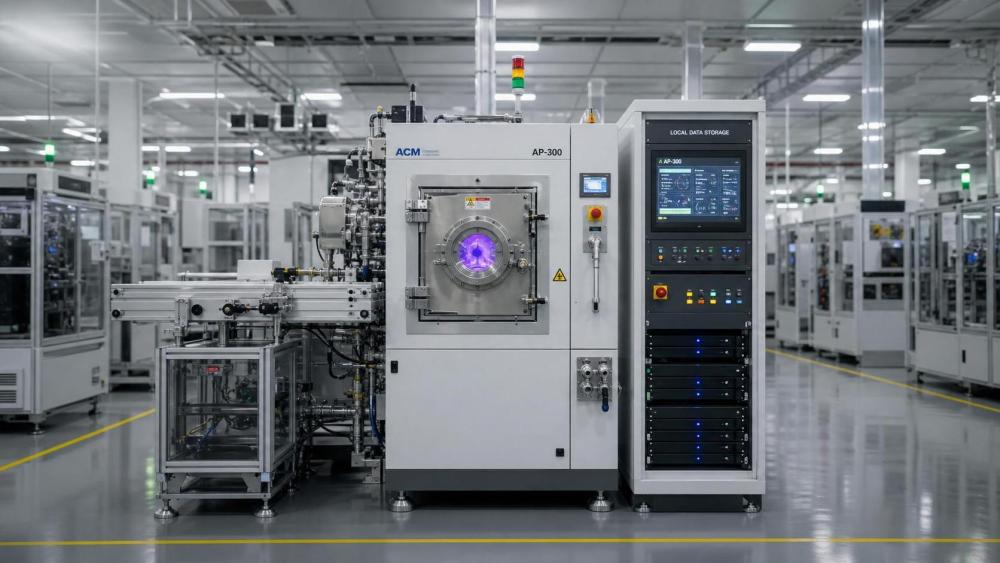
The stated assessment scope includes process-parameter traceability, real-time process feedback in a closed loop, and the ability to store data locally. The information provided also makes clear that this certification requirement will directly affect the ability of Chinese exporters to deliver production-line systems to EU customers.
Where the commercial impact is likely to appear first
Export deliveries may face a new compliance gate
From an industry perspective, exporters of Plasma Surface Treatment equipment are the most directly exposed because the new requirement sits in front of delivery into EU projects. The main pressure point is not only the machine itself, but whether the supplied system can demonstrate the traceability, closed-loop feedback, and local data storage capabilities named in the certification scope. What deserves closer attention is whether export documentation, technical files, and project handover materials are structured to support that review.
EU buyers and project procurement teams may tighten specifications
Purchasing teams and project owners in the affected manufacturing segments may need to reflect the AI-IED Scheme in technical specifications, supplier qualification checks, and acceptance conditions. Analysis shows that once certification becomes a formal requirement, procurement decisions may move upstream, with compliance readiness becoming part of equipment selection rather than a point checked only before shipment or installation.
System integration and after-sales support could become more documentation-driven
For line builders, integrators, and service providers, the change may extend beyond customs or market access questions. If process traceability and real-time feedback are part of the compliance review, then installation, commissioning, parameter management, and post-delivery support may require closer alignment with the certified system configuration. Observably, the operational issue is less about a single certificate in isolation and more about whether delivered equipment, software behavior, and stored data remain consistent with the compliance basis.
What companies should review now
Check whether current equipment architecture matches the stated scope
Companies involved in exporting or sourcing Plasma Surface Treatment systems should first compare existing equipment functions against the three stated elements of the AI-IED Scheme: process-parameter traceability, real-time closed-loop process feedback, and local data storage capability. The key point is not to assume that standard industrial automation functions automatically satisfy a new AI-related assessment framework.
Prepare technical and compliance files for customer review
Analysis shows that commercial risk may appear early in bid review, technical clarification, or pre-delivery approval. For that reason, suppliers should pay close attention to how technical descriptions, testing records, system architecture materials, and compliance statements are prepared for EU-facing projects. The available information does not define a full document list, so this remains an area requiring continued verification rather than a settled checklist.
Watch how tender language and delivery terms evolve
What deserves closer attention is whether buyers begin inserting AI-IED-related conditions into tender documents, supplier qualification requirements, or delivery milestones ahead of the Q3 2026 start point. Even without further confirmed details in the current information, companies may need to monitor whether compliance expectations begin to affect lead times, acceptance planning, and contract risk allocation.
Review exposure in China-to-EU project execution
Because the provided information specifically notes the effect on Chinese exporters delivering line-level systems to EU enterprises, companies with active or pending EU projects should review where this requirement may affect shipping schedules, project acceptance, local storage design, and post-installation support commitments. At this stage, it is more appropriate to understand this as a practical trade and delivery issue tied to compliance readiness.
Why this reads as an execution signal, not just a policy headline
Observably, this development is not merely a broad policy statement about technology sovereignty. The information already links the policy package to a concrete conformity requirement, a defined starting window in Q3 2026, and specific functional elements that equipment must address. Analysis shows that the market significance lies in the conversion of AI-related governance concepts into an import and delivery condition for industrial equipment used in sensitive manufacturing segments.
At the same time, the currently confirmed facts do not yet provide the full operating detail of implementation. That means the industry should treat this as a rule with real forward impact, while continuing to watch for clarification on certification practice, review standards, and how procurement documents interpret the requirement in actual projects.
How this development is best understood for now
The most balanced reading is that the EU has moved the discussion from general policy direction to a concrete compliance threshold for certain Plasma Surface Treatment equipment. For companies in the supply chain, the immediate significance is not a final market outcome but a new condition that may shape qualification, bidding, delivery, and project execution. It is more appropriate to understand this as a landed rule change with clear business relevance, while acknowledging that implementation details and market response still need to be tracked closely.
Basis of this article and points still requiring verification
This article is generated from the user-provided news title, event date, and event summary. For developments of this kind, commonly relevant source types include official announcements, releases from regulatory bodies, trade or customs authorities, industry association updates, standard-setting documents, and reporting by authoritative media. A specific official source link was not provided in the input, so the underlying text and later implementation details still require ongoing verification.
Further observation is still needed on detailed policy interpretation, the operating approach of the AI-IED Scheme, certification review criteria, changes in tender wording, buyer-side qualification practice, industry feedback, and how affected companies implement compliance in actual deliveries.