
A zero-VOC coating process must be validated as an operating condition, not accepted as a label claim. Air-permit status can depend on the coating’s formulation, the materials added at the point of use, the method used to calculate volatile content, and the actual boundaries of the permitted emission source. A product described commercially as “zero VOC” may be formulated under a definition that differs from the definition, test method, or regulatory basis applied to a particular facility.
The validation record should establish a traceable connection between the approved material, the application process, the curing process, and the permit language. It should also show whether related materials such as reducers, cleaning solvents, purging fluids, touch-up products, masking aids, and maintenance chemicals introduce emissions outside the coating itself. A defensible result comes from documented process evidence rather than a single supplier statement.
Start with the permit and the regulated source definition
Read the permit as an operating document before reviewing technical data sheets. Identify the emission unit, any associated control device, applicable limits, monitoring conditions, recordkeeping duties, and definitions incorporated by reference. Some permits regulate a coating line as one source that includes preparation, spraying, flash-off, curing, cleanup, and material handling. Others distinguish between booths, ovens, mixing rooms, or separate coating categories.
This distinction affects the validation boundary. If emissions from gun cleaning or line flushing are included in the source definition, a zero-VOC coating alone cannot demonstrate compliance. If an oven exhaust is routed through a control device, its capture path and bypass conditions may be part of the permit obligation even where the coating formulation is expected to contain little or no volatile organic material.
Build a source map that follows material from receiving through waste collection. It should identify storage locations, mix stations, application equipment, flash zones, curing equipment, exhaust points, control devices, and waste containers. Mark every point where a liquid may evaporate, be heated, atomized, transferred, spilled, or cleaned from equipment. This map is useful because assumptions often arise in the spaces between process departments rather than in the spray booth itself.
Establish the actual VOC basis of the coating
Request the current technical data sheet and safety data sheet for each approved coating component, including base, hardener, catalyst, pigment paste, additive, and any optional thinning material. These documents are necessary, but they may not contain enough information to support an air-permit determination. A technical data sheet may state that the coating is zero VOC under a particular test convention while omitting density, water content, exempt-compound treatment, or the detailed calculation basis needed for facility records.
Obtain a signed formulation statement or formal compliance letter when the available documents do not resolve the required value. The statement should identify the exact product code, revision date, batch applicability where relevant, VOC content units, test method or calculation method, treatment of exempt compounds, and whether the reported result is supplied as mixed, as packaged, or after dilution. The material identity must match the item actually received and dispensed.
“Zero” deserves precise handling. In many regulatory contexts, a reported zero value can mean that VOC is below a method detection limit, below a reporting threshold, absent after excluding exempt compounds, or calculated as zero after rounding. These are materially different claims. Retain the unrounded value when available and document the underlying analytical or formulation method. Avoid converting a product claim into an absolute statement unless the supporting evidence uses the same definition that governs the permit.
Waterborne materials present another recurring issue. Water content does not by itself establish VOC content, and a low-VOC waterborne coating may still contain volatile coalescents, preservatives, dispersants, or residual solvents. Powder coatings can also require separate review of cleanup agents, booth recovery practices, and oven conditions. The coating technology should guide the investigation, but it should not substitute for documentation.
Control material substitutions at receiving
Validation loses value when the approved material list is disconnected from purchasing and warehouse controls. Each incoming container should be traceable to an approved product code and current revision. A change in color, sheen, cure schedule, supplier production site, package size, or regional formulation can signal a formulation difference. An equivalent commercial name is not adequate evidence of equivalence for an air-permit record.
Maintain a controlled material register that includes supplier name, product code, internal material identifier, VOC basis, supporting document revision, allowed mixing ratio, and restrictions on thinning or use. Place expired or unreviewed materials in a status that prevents release to production. Where electronic inventory systems are used, the approval status should be visible before issue to the line rather than discovered during a record review.
Validate the process as used, including additions and exceptions
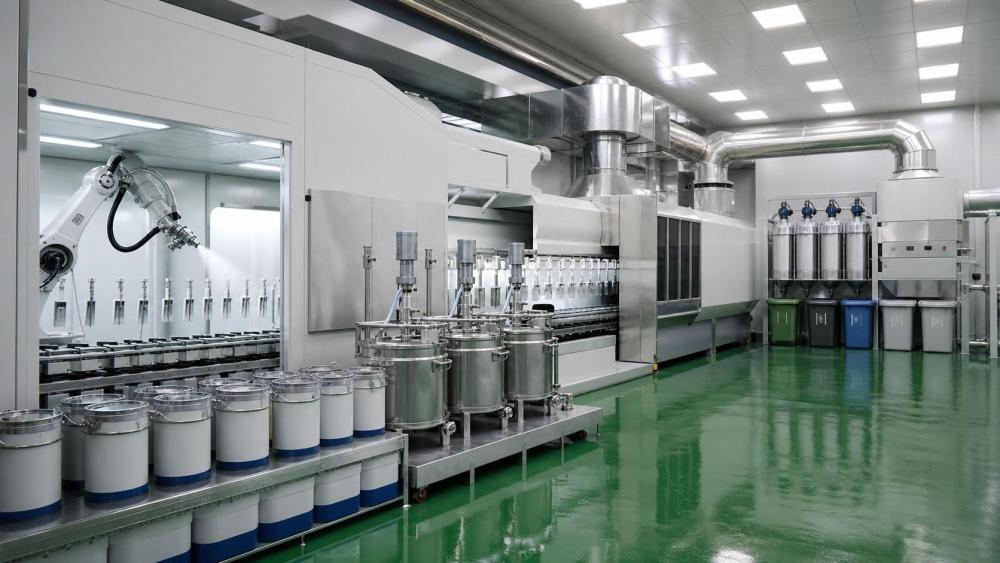
The approved coating formulation must be compared with the liquid delivered to the applicator. Metered plural-component systems, manual mix stations, recirculating lines, and batch tanks each create different risks. A coating may remain compliant at its stated mix ratio but change when an unapproved reducer, viscosity adjustment, accelerator, or anti-crater additive is introduced. Even a small addition may matter where permit calculations rely on low usage or narrow emission margins.
Document the standard work instruction for mixing and application. It should specify component ratios by weight or volume, equipment settings, allowable temperature range, viscosity control method where used, pot-life handling, and instructions for correcting off-spec material. The record should distinguish routine formulation from exception handling. A technician solving a spray-pattern problem with a solvent addition may create an emission event that is invisible in the normal coating consumption calculation.
For weight-based batching, verify scale identification, calibration status, resolution, and the practical ability to detect a mischarge. For volumetric proportioning, confirm pump ratio verification, flow-meter configuration, hose volume effects, and alarm response. A ratio check performed under static conditions may not prove ratio control during production, particularly when viscosity, feed pressure, or component temperature changes.
- Retain mix tickets or electronic batch records that show component identities, quantities, date, and disposition of rejected batches.
- Define the approved correction path for material that is too thick, too thin, contaminated, or beyond pot life. The corrective material and its quantity must be recorded.
- Separate process water, exempt solvents, and VOC-containing solvents in material records rather than grouping all liquid additions under a general cleanup or adjustment category.
- Record touch-up operations separately when they use a different package, aerosol product, brush coating, or hand-wipe method than the main line.
Examine emission pathways beyond the coating label
Application and curing conditions determine whether the documented material basis represents actual emissions. Electrostatic application can improve transfer efficiency, yet transfer efficiency is not a VOC-content measurement and should not be used to establish coating composition. It affects the quantity of material that reaches the part, the amount of overspray collected, and potentially the consumption rate used in emissions calculations.
Confirm that booth airflow, exhaust routing, and capture arrangements match the equipment configuration described in permit files. Modifications such as a new gun type, changed booth opening, added robot cell, altered duct branch, converted oven, or relocated mixing station can change the capture route. A process may have nominally zero coating VOC while still requiring control of other volatile materials that are emitted in the same area.
Curing requires particular attention. Elevated temperature can release residual volatiles, contaminants carried in from pretreatment, or volatile byproducts associated with ancillary chemicals. Review oven setpoints, actual part temperature where relevant, residence time, exhaust operation, and any interlocks between conveyor movement and ventilation. A cure schedule adjusted to solve adhesion, hardness, or appearance defects may alter the emission profile and can also invalidate the product supplier’s stated application conditions.
Where a thermal oxidizer, carbon adsorption unit, concentrator, scrubber, or other device is associated with the source, establish whether the process still relies on that device for compliance. Do not assume that a zero-VOC coating allows monitoring obligations to be discontinued. Permit conditions may require operation, inspection, pressure-drop monitoring, temperature records, capture verification, or bypass controls regardless of a material change. Any request to revise, suspend, or remove a control obligation should follow the applicable permitting process.
Use calculations that can be reconstructed
Emission calculations should be simple enough to audit from primary records. Start with material usage, then apply the documented VOC content and the units required by the permit. Do not combine products with different VOC bases into one unexplained average. Keep monthly and rolling-period calculations in a format that identifies each material, amount used, VOC factor, exempt-compound treatment, and resulting emissions.
Waste handling is an area where accounting can become unreliable. Material purchased is not always material emitted. Coating transferred to hazardous waste, reclaimed powder, booth residue, unusable mixed batch, or returned inventory may need treatment under the permit’s specified calculation method. Records should show how the facility handles these quantities and whether a deduction is allowed, supported, and consistently applied. A waste manifest alone may not demonstrate the composition or origin of the discarded material.
Consumption data should reconcile across purchasing, inventory, dispensing, and waste records within a reasonable documented method. Large unexplained differences can indicate inaccurate inventory counts, undocumented material loss, unrecorded thinning, or material issued under an incorrect code. Reconciliation is especially valuable when the calculated emissions appear unusually low compared with production activity.
Set verification frequencies around change risk
A one-time qualification is insufficient when materials, equipment, or operating conditions can change. Establish a change-control trigger for supplier reformulation, new material code, revised safety data sheet, altered mix ratio, new solvent or cleaner, coating line relocation, modified oven, exhaust change, control-device maintenance, or a change in production schedule that affects operating hours. The trigger should require review before implementation when feasible.
Routine verification can include document revision review, inventory-to-use reconciliation, observation of mixing practices, inspection of chemical storage, and review of alarms or maintenance logs. Analytical testing may be appropriate where supplier documentation is incomplete, where a discrepancy cannot be explained, or where permit requirements call for testing. Sampling plans should define the sample point, container handling, chain of custody, analytical method, reporting units, and treatment of results near a detection limit.
Do not treat a laboratory report as self-explanatory. Confirm whether the tested sample represents the supplied component, the mixed coating, the coating after dilution, or a cured film. Verify that the method is suitable for the material matrix and that its reported units can be converted to the permit basis without unsupported assumptions.
Preserve records that explain the decision
A compliance file should allow an independent reviewer to understand why the process was judged compliant at a particular time. Keep the permit excerpt, source map, approved-material register, supplier documentation, calculations, usage records, batch records, waste records, maintenance records, and change approvals together or link them through controlled document references. File names and revision dates matter because a current data sheet may not prove the formulation used in an earlier reporting period.
Training records should focus on the actions that protect the validated condition: selecting approved materials, recognizing prohibited additions, recording exceptions, responding to dispensing alarms, and isolating unidentified containers. General environmental training does not demonstrate that these controls are understood at the point where a material change can occur.
When a deviation is found, preserve the facts before attempting to close it. Identify the material, quantity, time period, emission pathway, records affected, and immediate containment action. Then evaluate whether recalculation, notification, corrective maintenance, additional sampling, or permit consultation is required. A clear deviation record is generally more defensible than retrospective reconstruction based on assumptions.
A validated zero-VOC coating process remains credible when its chemical evidence, operating controls, and permit records continue to describe the same real process. That alignment must be maintained through routine production changes, not recreated only when an inspection is expected.