
Vacuum Coating Machine vs Wet Coating: Which Process Fits Your Product and Budget
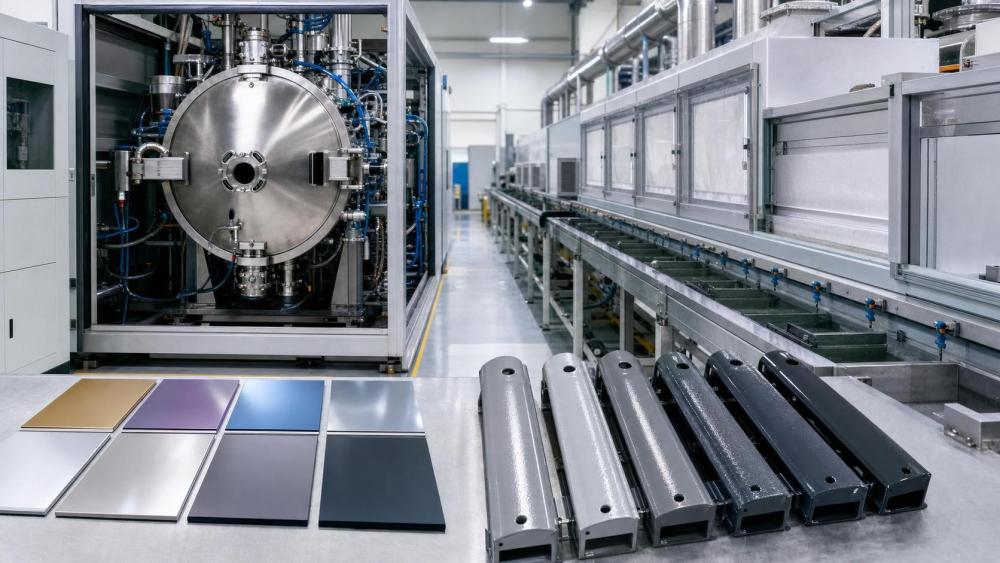
Choosing between a vacuum coating machine and wet coating is not just a process choice.
It shapes product appearance, durability, compliance cost, and production stability.
For cost-focused sourcing, the real question is broader than equipment price.
You need to compare coating performance, waste, throughput, maintenance, and future regulatory pressure.
In practical terms, both methods can work well.
But each fits different products, quality targets, and operating models.
A vacuum coating machine is often chosen for thin, precise, high-value films.
Wet coating remains common for broader coverage, lower upfront entry, and simpler line integration.
The right answer depends on product function, finish expectations, and total cost over time.
What Each Coating Process Actually Does
A vacuum coating machine deposits material in a controlled vacuum environment.
Common methods include PVD, sputtering, evaporation, and plasma-assisted coating.
These processes create thin, uniform films with strong adhesion and repeatable thickness.
Wet coating applies liquid material by spraying, dipping, rolling, or curtain coating.
The coating then dries or cures through heat, air, UV, or chemical reaction.
This route is widely used for paints, primers, protective films, and decorative finishes.
The first major difference is film structure.
A vacuum coating machine builds thinner layers with tighter process control.
Wet coating usually creates thicker layers, which can be useful for coverage or barrier build-up.
Typical end uses
- Vacuum coating machine applications include optics, electronics, tools, automotive trim, packaging films, and decorative metal-like finishes.
- Wet coating is common in furniture, appliances, structural parts, general metal fabrication, and products needing thicker corrosion layers.
Performance Comparison: Where the Real Differences Show
When comparing process options, functional performance matters more than marketing claims.
A vacuum coating machine usually delivers better thickness consistency and cleaner surface quality.
That matters in products where reflectivity, conductivity, friction, or barrier performance must stay stable.
Wet coating performs well when the goal is broad protection over less sensitive geometries.
It is also more forgiving when substrate variation is high.
If the product sells on precision or premium appearance, vacuum technology often has the edge.
If the product sells on cost-sensitive protection, wet coating may remain the better fit.
Budget Reality: Upfront Cost vs Total Cost
This is where many decisions become complicated.
A vacuum coating machine usually requires higher capital investment at the start.
You are paying for chambers, pumps, controls, fixturing, and process stability.
Wet coating lines often look cheaper initially.
However, the lower entry cost can hide recurring expenses.
Cost items that deserve attention
- Material utilization and overspray loss.
- Solvent handling, VOC treatment, and wastewater management.
- Curing energy demand and drying time.
- Rework caused by uneven coating or contamination.
- Maintenance downtime and spare parts availability.
- Operator skill requirements and process repeatability.
In many factories, the best decision comes from total cost of ownership, not purchase price.
A vacuum coating machine may reduce rejects, emissions treatment, and coating consumption.
Wet coating may still win if volume is lower, finish tolerance is wider, and line flexibility matters more.
That is why cost modeling should include at least three years of operation.
Material Compatibility and Product Fit
No coating process is universally better.
The best option depends on your substrate, geometry, and end-use environment.
A vacuum coating machine works especially well on metals, glass, ceramics, and selected engineered plastics.
But heat sensitivity, outgassing, and fixture design must be checked early.
Wet coating adapts more easily to large parts and irregular surfaces.
It also supports multilayer protection strategies, especially for corrosion control.
Ask these product-fit questions
- Does the coating need to be functional, decorative, or both?
- How important are thickness accuracy and surface cleanliness?
- Will the part face abrasion, chemicals, UV, or moisture?
- Can the substrate tolerate vacuum and process temperature?
- Will complex shapes create shadowing or pooling risks?
These questions quickly narrow the field.
They also prevent expensive trials on a process that was never a strong match.
Compliance, Sustainability, and Factory Risk
From recent market shifts, environmental compliance has become a stronger buying driver.
This is especially true for export manufacturing and regulated supply chains.
A vacuum coating machine often supports cleaner production with lower solvent exposure.
That can simplify plant safety management and reduce pressure from VOC rules.
Wet coating can still meet compliance targets.
But it may require extra investment in exhaust, recovery, filtration, and waste treatment.
That also means more permitting complexity in some regions.
Risk areas often missed during sourcing
- Long approval cycles for solvent-related infrastructure.
- Unexpected consumable cost in filters and treatment media.
- Process drift caused by poor cleaning before coating.
- Supplier dependence if spare parts or targets are hard to source.
In real operations, coating quality is tied to the full support system.
Cleaning precision, vacuum stability, fixturing, traceability, and inspection all affect the final result.
How to Choose the Right Process Without Overbuying
A smart decision framework keeps the project grounded.
Instead of asking which method is better, ask which method fits the product and business model.
A practical selection path
- Define the coating purpose in measurable terms.
- List required performance tests and pass criteria.
- Estimate annual volume, takt time, and acceptable scrap level.
- Build a three-year cost model for both options.
- Review compliance burden, utilities, and plant constraints.
- Run sample trials with real substrates and real defect standards.
If product value is high and coating quality drives acceptance, a vacuum coating machine usually justifies the investment.
If the line needs simpler deployment and thicker protective layers, wet coating may offer faster payback.
The more clearly you define yield, compliance, and finish requirements, the easier the decision becomes.
Final Takeaway
A vacuum coating machine is not automatically the premium answer for every product.
Wet coating is not automatically the cheaper answer either.
The better choice depends on coating function, product geometry, compliance exposure, and total ownership cost.
For high-uniformity films, controlled appearance, and lower solvent burden, a vacuum coating machine often stands out.
For flexible coverage, thicker layers, and lower initial investment, wet coating still has a strong case.
The next practical step is simple.
Compare both routes with real part samples, full operating costs, and supplier process data before making the final purchase decision.