
Industrial process validation FDA expectations sit at the intersection of product quality, documented control, and inspection readiness. In regulated manufacturing, validation is not limited to a finished protocol. It is the recorded proof that a process performs consistently, that risks are understood, and that changes do not quietly erode compliance.
That matters across advanced manufacturing sectors supported by GIAS, where auxiliary systems often determine whether traceability, cleanliness, coating performance, dosing accuracy, or vacuum stability can actually be defended during an audit. When documentation is weak, even a technically capable process can look uncontrolled.
What FDA Process Validation Really Demands
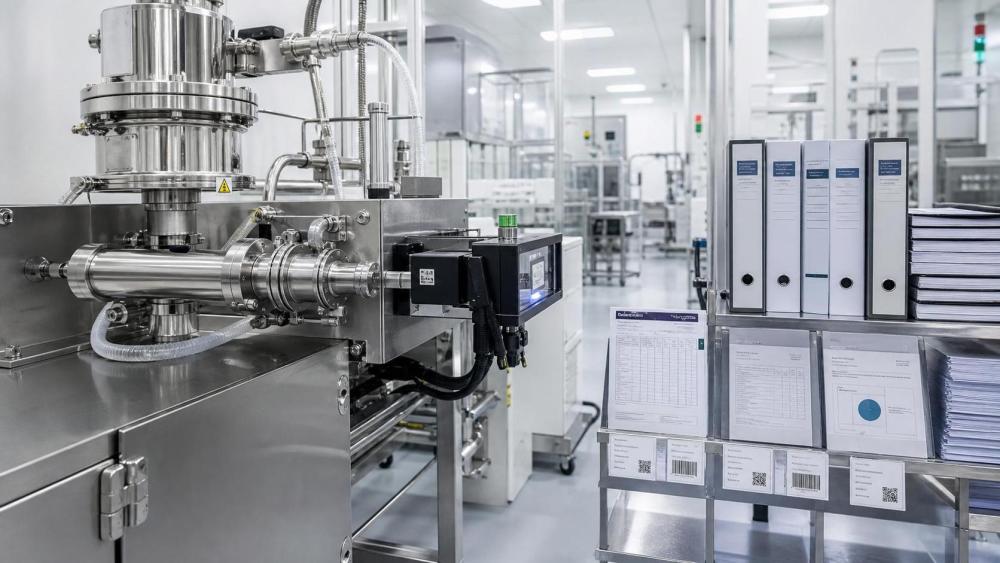
At its core, industrial process validation FDA practice is about evidence. The FDA expects manufacturers to show that process design, process qualification, and continued process verification work together as a system, not as isolated files prepared before an inspection.
In practical terms, that means documented rationale for critical parameters, clear acceptance criteria, approved procedures, trained personnel, controlled equipment, and data that supports routine reproducibility. A successful validation package explains not only what was tested, but why those conditions matter.
This is especially relevant where support equipment affects product outcomes indirectly. Ultrasonic cleaning may influence bioburden or residue levels. Laser marking and inkjet coding affect traceability. Batching systems influence formulation accuracy. Vacuum performance can shape drying, coating, or packaging integrity.
Why Documentation Receives So Much Attention
Auditors rarely begin with abstract theory. They start with records. The documentation trail shows whether the process was built on science, whether deviations were handled correctly, and whether production realities still match the original validation assumptions.
For that reason, industrial process validation FDA reviews often uncover problems that are administrative on the surface but operational underneath. Missing approvals, uncontrolled forms, and incomplete equipment histories usually point to deeper issues in change control, data integrity, or process discipline.
Another reason documentation matters is continuity. Teams change. Suppliers change. Software versions change. If the record set does not explain the validated state clearly, the process becomes harder to defend over time, even when production results still appear acceptable.
Core Records Auditors Expect to See
Validation records should form a coherent chain from process understanding to ongoing monitoring. Gaps usually appear when documents exist individually but do not connect logically.
In strong systems, these records are aligned. Batch histories, equipment logs, software controls, and validation conclusions all point to the same operating reality.
Common Audit Gaps That Keep Reappearing
The most common industrial process validation FDA gaps are usually not dramatic failures. They are small disconnects that accumulate until the validated state becomes difficult to prove.
Weak rationale for critical parameters
A process may specify temperature, cycle time, vacuum level, line speed, or coating thickness limits, yet the file does not explain why those limits were selected. Without rationale, acceptance criteria can look arbitrary.
Incomplete change assessment
Software upgrades, nozzle replacement, pump changes, cleaning chemistry updates, or marking parameter edits often enter production with limited validation review. Auditors notice when equipment history and change control do not match.
Poor linkage between support systems and product risk
Auxiliary equipment is sometimes treated as secondary infrastructure. That is risky. If an ultrasonic cleaning unit leaves residue, or a batching system drifts, the product impact may be direct even if the main production machine performs normally.
Data integrity weaknesses
Uncontrolled spreadsheets, manual overwrites, missing timestamps, and inconsistent user permissions remain recurring findings. Industrial process validation FDA expectations increasingly depend on reliable digital traceability, not just signed paper records.
Where Auxiliary Systems Shape Validation Outcomes
The GIAS industry focus is useful here because many validation failures begin in process-support functions rather than in the headline production asset. Auditors increasingly look at the full process environment.
- Ultrasonic cleaning systems affect residue control, particulate levels, and surface readiness before coating, bonding, or assembly.
- Laser marking and inkjet coding influence lot traceability, permanent identification, and recall effectiveness.
- Industrial weighing and batching systems determine recipe accuracy, material balance, and repeatable dosing.
- Vacuum pumps and vacuum systems support drying, packaging, coating, degassing, and contamination control.
- Surface treatment and electrostatic coating systems shape adhesion, corrosion resistance, appearance, and environmental performance.
When these systems are validated with the product process in mind, documentation becomes more persuasive. The file no longer reads like equipment qualification alone. It shows how process support controls final quality attributes.
How to Read Validation Strength in Daily Operations
A robust industrial process validation FDA program is visible in routine behavior. It does not appear only during audits or annual review meetings.
One useful test is consistency across records. If a vacuum specification in the protocol differs from the production work instruction, or if coded lot data cannot be reconciled with batch release records, the validation framework is already weakening.
Another useful test is trend visibility. Teams should be able to show whether a process is stable, becoming noisy, or drifting toward failure. Continued process verification is where many mature systems separate themselves from paper-only compliance.
It also helps to examine exceptions closely. Repeated minor deviations often reveal hidden instability in pumps, sensors, weighing cells, coding heads, or cleaning chemistry controls. A validated process should explain these patterns, not normalize them.
Practical Steps Before the Next Audit
Preparation works best when it focuses on record quality and process logic together. A document check without process understanding misses too much.
- Map each critical product attribute to the process parameter and supporting equipment that controls it.
- Confirm that IQ, OQ, PQ files reflect current hardware, software, utilities, and operating ranges.
- Review calibration, maintenance, and spare-part changes for validation impact.
- Check whether coding, weighing, vacuum, cleaning, and coating records are electronically traceable and reviewable.
- Trend deviations and process data together, rather than reviewing each event in isolation.
- Make sure temporary workarounds, manual interventions, and operator adjustments are formally assessed.
These steps strengthen industrial process validation FDA readiness because they reconnect documentation with actual manufacturing performance. That is usually where inspection confidence is won or lost.
A More Reliable Basis for Compliance Decisions
Industrial process validation FDA work is rarely about one protocol or one event. It is an operating discipline that links scientific understanding, equipment control, traceable data, and change governance across the production environment.
For organizations reviewing process-support technologies through platforms such as GIAS, the more useful question is not simply whether a system performs well in isolation. The better question is whether it can support a defensible validated state over time.
That next review can begin with a narrow scope: one process, one critical parameter set, or one support system with frequent deviations. From there, it becomes easier to compare documentation depth, traceability strength, and long-term audit resilience before the next inspection makes those gaps visible.