
Industrial Coating Performance Adhesion: What Affects Bond Strength Most?
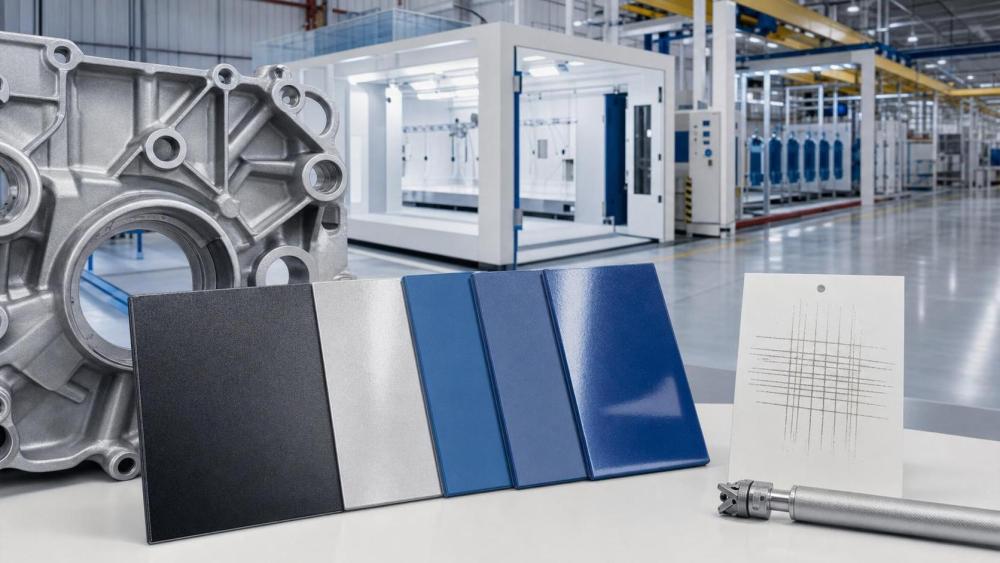
In industrial finishing, industrial coating performance adhesion often decides whether a part lasts for years or fails far too early.
Bond strength is not controlled by one setting alone. It comes from a chain of process choices working together.
If one link is weak, even a premium coating can peel, blister, chip, or lose corrosion protection.
That is why industrial coating performance adhesion matters in automotive parts, appliances, metal furniture, electronics housings, tools, and export-grade fabricated products.
From a technical and standards perspective, the biggest drivers are surface cleanliness, surface profile, substrate chemistry, coating formulation, application stability, curing control, and service environment.
In practice, most adhesion failures are process failures first, material failures second. That distinction matters during evaluation.
Why Industrial Coating Performance Adhesion Fails in Real Production
Adhesion is the ability of a coating film to stay attached under stress, impact, humidity, chemicals, and temperature change.
The coating may bond through mechanical anchoring, chemical attraction, or both. Different systems rely on these mechanisms differently.
Powder coating on blasted steel behaves differently from liquid coating on aluminum, and both differ from coatings on plastics.
When industrial coating performance adhesion drops, visible defects usually appear late. Root causes appear much earlier in pretreatment and process control.
- Residual oil blocks direct contact between coating and substrate.
- Oxide layers create unstable bonding surfaces.
- Low surface energy reduces wetting and film spread.
- Incorrect cure leaves the film under-crosslinked or brittle.
- Moisture or salts trigger underfilm corrosion and lifting.
A reliable evaluation should therefore review the full process window, not only the paint supplier data sheet.
Surface Preparation Usually Has the Biggest Impact
If one factor affects industrial coating performance adhesion most, it is usually surface preparation.
A coating cannot bond well to contamination. It only bonds to what it actually touches.
That sounds simple, but modern production adds oils, coolants, release agents, dust, fingerprints, oxides, and transport residues.
Cleaning quality is especially critical for precision parts and high-volume lines where small contamination can become a repeated defect.
Key surface preparation variables
- Degreasing effectiveness and bath maintenance.
- Rinse quality and conductivity control.
- Drying completeness before coating.
- Mechanical roughening or blast profile consistency.
- Chemical conversion layer quality on metals.
In many factories, ultrasonic cleaning improves consistency by removing fine contamination from complex geometries and tight recesses.
That is increasingly relevant where coating lines handle small precision components, stamped parts, or mixed-material assemblies.
For steel, aluminum, and galvanized surfaces, pretreatment also shapes corrosion behavior. Better pretreatment often means better industrial coating performance adhesion over time, not just on day one.
Substrate Condition and Surface Energy Matter More Than Expected
Not all substrates are equally coatable. Surface chemistry strongly affects wetting, anchoring, and long-term bond durability.
Freshly processed metal may perform well, while aged stock with oxidation may fail even under the same coating recipe.
Plastics add another layer of complexity because low surface energy can prevent proper film wet-out.
Common substrate-related risks
- Oxidized aluminum or steel stored too long.
- Galvanized surfaces with unstable passivation residues.
- Mold release residues on plastic parts.
- Smooth polished surfaces with limited anchor profile.
- Mixed batches with inconsistent alloy composition.
In actual evaluation work, substrate mapping is often overlooked. Yet it explains why one line passes tests while another line struggles using the same paint.
This also means incoming material control is part of industrial coating performance adhesion management, not a separate issue.
Coating Formulation and Application Stability Shape Bond Strength
Even with ideal pretreatment, the coating itself must match the substrate, geometry, and service conditions.
Resin type, pigment volume, additives, solvent balance, and film build all influence industrial coating performance adhesion.
For powder systems, particle charge behavior and deposition uniformity also matter. For liquid systems, viscosity and flash-off behavior are critical.
Application variables that often reduce adhesion
- Film thickness outside the recommended range.
- Poor atomization or unstable electrostatic settings.
- Overspray contamination on partially cured layers.
- Excessive time between pretreatment and coating.
- Humidity or temperature drift in the spray area.
Electrostatic coating processes deserve close attention because transfer efficiency and edge coverage can hide weak spots until later testing.
When technical teams compare suppliers, consistent application data is often more valuable than a single strong laboratory result.
Curing Control Is Where Good Adhesion Is Often Won or Lost
Cure is not just about reaching oven temperature. It is about achieving the right time-and-temperature history in the actual coating film.
If cure is too low, crosslinking remains incomplete. If too high, the film may embrittle, discolor, or lose flexibility.
Both conditions hurt industrial coating performance adhesion, especially after thermal cycling, impact, or humidity exposure.
What should be checked
- Metal temperature, not only oven air temperature.
- Line speed stability across different part masses.
- Shadowed zones and dense rack loading effects.
- Cure confirmation by solvent rub, hardness, or DSC where relevant.
- Recoat window compatibility for multilayer systems.
In complex production, data logging helps connect cure history with later adhesion results. That improves both troubleshooting speed and supplier comparison.
Environmental Exposure and Standards Reveal True Industrial Coating Performance Adhesion
A coating can look excellent after application and still fail in service. Real performance appears under exposure.
Humidity, salt, UV, cleaners, heat, and mechanical stress all challenge the bond between coating and substrate.
That is why industrial coating performance adhesion should be evaluated through recognized test methods, not appearance alone.
Common evaluation methods
- Cross-cut adhesion testing under ISO 2409 or ASTM D3359.
- Pull-off adhesion testing where higher precision is needed.
- Salt spray exposure for corrosion-driven failure analysis.
- Humidity resistance and condensation testing.
- Impact, bend, or thermal cycling validation.
Recent quality programs also compare pre-exposure and post-exposure adhesion. That approach gives a more realistic risk picture.
A Practical Evaluation Checklist for Better Bond Strength
When the goal is stable industrial coating performance adhesion, evaluations should stay practical and traceable.
The most useful approach is to connect materials, process data, test standards, and service conditions into one decision path.
Recommended checklist
- Confirm substrate type, storage condition, and surface variability.
- Audit cleaning, pretreatment, and rinse control records.
- Review coating compatibility with part material and use environment.
- Check application window, film thickness, and transfer consistency.
- Validate cure using actual part temperature data.
- Test adhesion before and after environmental exposure.
- Document batch traceability for recurring defect analysis.
This kind of structure reduces guesswork. It also helps compare process-support technologies that influence coating quality indirectly but significantly.
In broader manufacturing terms, industrial coating performance adhesion is a result of process discipline. Cleanliness systems, surface treatment, electrostatic coating stability, traceability, and quality verification all contribute.
The strongest bond rarely comes from one dramatic improvement. It usually comes from controlling small variables well, every day, across the full production chain.
For better decisions, start with the surface, verify the cure, test under real exposure, and treat industrial coating performance adhesion as a measurable process outcome, not just a coating property.