
Why harsh environments change the corrosion equation
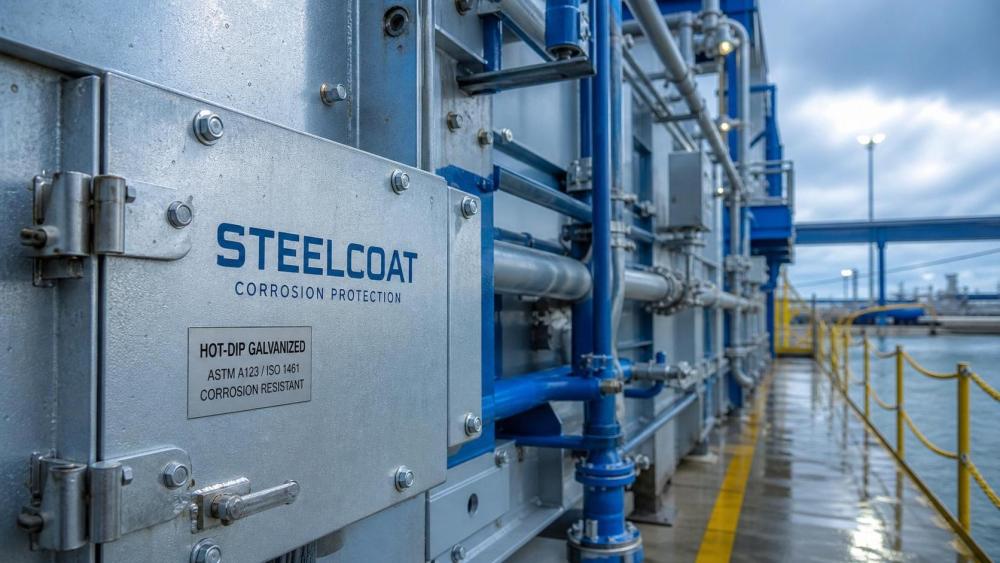
Industrial surface treatment corrosion resistance is rarely defined by coating thickness alone.
In real production, failure usually starts at the interface between material, pretreatment quality, environment, and operating stress.
That is why the same finish can perform well on indoor equipment, yet degrade quickly near salt spray, alkaline washdown, or cyclic humidity.
For advanced manufacturing, surface protection also connects with broader auxiliary processes.
Cleaning precision, traceable marking, stable batching, and controlled vacuum or coating conditions all influence final durability.
This matters across the industrial sectors covered by GIAS, where microscopic process control often decides whether corrosion stays cosmetic or becomes structural.
A practical evaluation starts with exposure mapping.
Is the part exposed to chlorides, solvents, abrasion, UV, condensation, temperature shock, or electrically active contaminants?
Each factor shifts the right path for industrial surface treatment corrosion resistance.
Actual operating conditions matter more than nominal material grade
Different service environments create different failure modes, even when the substrate looks familiar on paper.
Carbon steel in a dry assembly hall faces oxidation risk, but not the same crevice attack found in marine hardware.
Aluminum in electronics enclosures may need appearance stability and conductivity control together.
Stainless steel in food equipment often fails because weld zones, heat tint, and cleaning chemistry were underestimated.
A useful way to judge industrial surface treatment corrosion resistance is to separate three variables.
- Base material behavior under chemical and thermal stress.
- Surface condition before treatment, including oil, oxide, and roughness.
- Long-term exposure pattern, especially cycling, impact, and maintenance contact.
When these variables are not separated, teams often select a process for catalog performance rather than field performance.
High-salt and outdoor equipment needs barrier performance plus edge control
Outdoor enclosures, transport components, coastal machinery, and infrastructure accessories usually face the most visible corrosion pressure.
Here, industrial surface treatment corrosion resistance depends on more than one protective layer.
The weak points are often cut edges, fastener zones, drain geometry, and local film damage during installation.
In these conditions, zinc-rich systems, hot-dip galvanizing, duplex systems, or well-controlled powder coating over conversion layers are common choices.
The decision depends on expected salt deposition, cosmetic demands, and whether touch-up must be possible onsite.
More demanding outdoor assets usually benefit from layered protection.
A conversion coating or blast profile alone is not enough when edges remain sharp and water retention is ignored.
Rounded edges, sealed joints, and proper cure control often improve industrial surface treatment corrosion resistance as much as adding nominal thickness.
Washdown and chemical contact call for a different judgment
Food processing, pharmaceutical support equipment, chemical dosing stations, and battery-related systems present a different challenge.
The risk is not only corrosion from moisture.
Frequent cleaning cycles, alkaline agents, acidic residues, and temperature fluctuations can undercut coatings or attack passivation layers.
In these settings, stainless steel passivation, electropolishing, fluoropolymer systems, or chemically resistant powder and liquid coatings may be more suitable.
The right answer depends on whether the surface must remain cleanable, low-retention, non-contaminating, or electrically neutral.
Pretreatment becomes critical here.
Residual contamination from machining oils or incomplete rinsing can reduce industrial surface treatment corrosion resistance before the equipment enters service.
That is one reason ultrasonic cleaning and controlled rinsing quality often matter upstream, even though they are not usually listed as corrosion technologies.
Precision parts often balance corrosion resistance with function
Not every harsh environment allows thick coatings.
Precision components in electronics, vacuum-related assemblies, sensors, connectors, and moving mechanisms often need tight tolerances and stable surface properties.
In these cases, industrial surface treatment corrosion resistance must be balanced with conductivity, friction, outgassing, reflectivity, or marking readability.
Anodizing, nickel plating, zinc-nickel, phosphate systems, PVD-related finishes, and thin-film conversion treatments may all be valid, depending on the function.
A common mistake is choosing the treatment with the strongest corrosion test result, while ignoring dimensional growth or contact resistance.
Where traceability matters, laser marking compatibility also deserves review.
Some finishes support clear permanent coding after treatment, while others fade, discolor, or create local corrosion initiation if the mark breaks the protective layer.
Different environments shift the treatment choice
A side-by-side view helps clarify why industrial surface treatment corrosion resistance cannot be standardized across all lines.
The table is only a starting point.
The final decision still depends on part geometry, production volume, rework strategy, and regulatory limits on pretreatment chemistry.
Where corrosion plans often go wrong
Several recurring misjudgments reduce industrial surface treatment corrosion resistance even when good materials are specified.
- Selecting by catalog salt spray hours without matching the real failure mode.
- Focusing on coating cost, while ignoring pretreatment, cure control, and inspection burden.
- Treating indoor humidity and outdoor condensation as equivalent exposure.
- Assuming stainless steel needs no surface treatment review in chloride or cleaning-intensive service.
- Overlooking how welded areas, threaded sections, and sharp corners behave differently from flat coupons.
Another issue is fragmented process control.
When cleaning, coating, curing, marking, and packaging are managed separately, contamination or damage can be introduced between steps.
GIAS frequently highlights these links because auxiliary systems often determine whether a protection strategy remains consistent at scale.
A practical path for choosing the right protection strategy
A workable industrial surface treatment corrosion resistance plan usually starts with a short qualification sequence.
- Define the real exposure mix, including chemicals, humidity pattern, temperature swing, and mechanical wear.
- Map critical surfaces such as edges, welds, cavities, contact points, and marked zones.
- Screen candidate treatments for both corrosion performance and functional constraints.
- Validate pretreatment cleanliness, adhesion, cure, and post-process handling.
- Review lifecycle factors, including maintenance chemicals, repair method, and replacement interval.
This approach keeps decisions grounded in operating reality.
It also reduces the risk of over-specifying expensive systems where a simpler finish would perform well, or under-specifying surfaces that face aggressive service.
When comparing options, it helps to assess process stability as carefully as laboratory performance.
Stable pretreatment, controlled bath chemistry, consistent curing, and traceable inspection records often matter more than the headline coating name.
The next step is to build a scenario-based standard
Improving industrial surface treatment corrosion resistance is usually less about finding one superior finish and more about matching the surface system to the service reality.
Harsh environments differ in chemistry, moisture behavior, mechanical stress, and compliance pressure.
That is why coating decisions should be tied to actual operating scenarios, not generic material assumptions.
A useful next move is to sort applications by exposure severity, surface function, and maintenance conditions.
Then compare pretreatment quality, candidate finishes, validation methods, and implementation limits across those groups.
That kind of structured review produces better industrial surface treatment corrosion resistance decisions and more reliable long-term protection.