
What should procurement teams look at first when comparing validation suppliers?
Start with scope fit, not price. A supplier may be technically strong in general validation work and still be the wrong choice for your product, process, or regulatory environment. In regulated production, the real question is whether the supplier understands the exact process you need to qualify, the risks tied to that process, and the documentation burden that comes with it.
For buyers evaluating an industrial process validation supplier, the first screen should cover three points: the supplier’s experience with similar manufacturing steps, the quality of its validation documentation, and its ability to support audits and change control later. If one of those is weak, the relationship usually becomes expensive even when the initial quote looks attractive.
That matters across auxiliary systems too. Cleaning, coding, weighing, batching, vacuum performance, surface treatment, and coating quality often sit outside the headline production machine, but they still affect traceability, contamination risk, repeatability, and release decisions. Procurement should treat validation support around those systems as part of compliance infrastructure, not as a routine vendor service.
How do you know whether a supplier actually understands regulated production?
Ask them to explain how they build a validation package for your process. A capable supplier can walk through the logic clearly: user requirements, risk assessment, protocol structure, test methods, deviation handling, acceptance criteria, traceability, and final reporting. If the explanation stays at the level of “we provide complete documents,” that is not enough.
You are listening for applied understanding. For example, if the validated process involves industrial weighing or batching, the supplier should discuss recipe accuracy, calibration status, data integrity, alarm handling, and how out-of-tolerance events are recorded. If the process involves laser marking or inkjet coding, they should bring up mark permanence, readability, traceability records, and process consistency across substrates. If it is ultrasonic cleaning, they should be comfortable discussing contamination control, repeatable cleaning parameters, and verification methods appropriate to the part and residue risk.
A supplier with real experience usually asks better questions than a supplier trying to sell a template.
Which documents should be reviewed before awarding the contract?
Before you approve a purchase order, request sample documents with sensitive details removed. This is one of the fastest ways to see whether the supplier’s work will stand up to internal QA review or an external audit.
- A sample validation master plan or equivalent project structure
- Risk assessment format used for process or equipment qualification
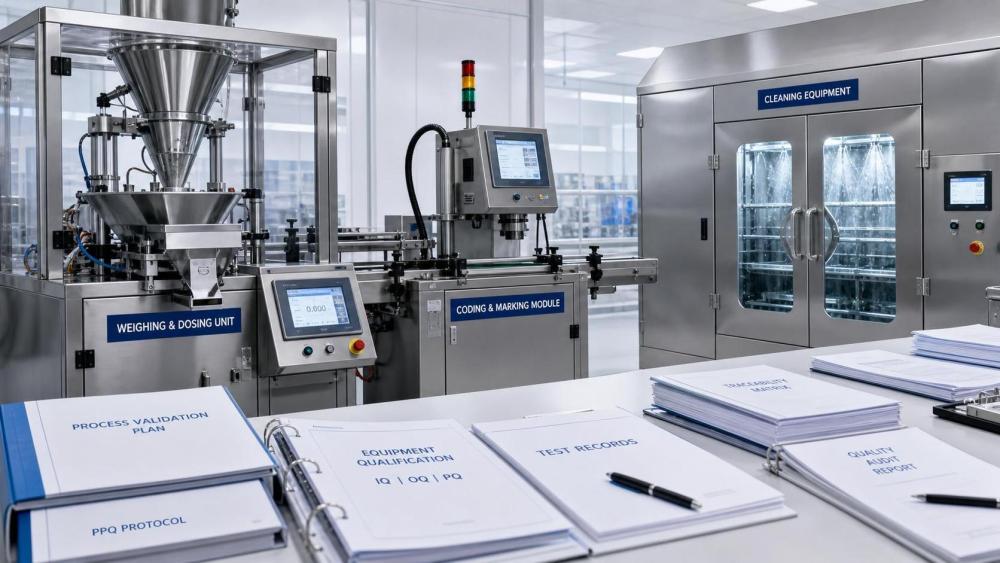
- IQ/OQ/PQ protocol examples where relevant
- Deviation, nonconformance, and corrective action templates
- Traceability matrix or document linking requirements to tests and outcomes
- Change control and revalidation approach
- Final report structure with approvals and data review fields
Look at how specific the documents are. Weak suppliers often deliver generic protocols with broad acceptance statements and vague test steps. Strong suppliers define who does what, which instruments are used, how data are recorded, what constitutes failure, and what happens when the result is marginal rather than clearly pass or fail.
Is industry-specific experience really necessary, or is validation methodology enough?
Methodology matters, but industry context changes the risk profile. A supplier can be excellent at writing protocols and still miss the practical failure modes of your application. That gap shows up later in incomplete test coverage, poor sampling logic, or acceptance criteria that look neat on paper but do not protect the process.
Procurement does not need a supplier that has worked on your exact product before. You do need one that understands comparable regulated environments and process-critical variables. In other words, similarity of risk is more important than similarity of marketing language.
What are the clearest warning signs during supplier evaluation?
A few red flags show up repeatedly.
- They promise validation approval before seeing your process details.
- Their proposal focuses on document count instead of validation logic.
- Acceptance criteria are described as “to be decided during execution.”
- They cannot explain how deviations are investigated and closed.
- Support after protocol execution is excluded or vaguely worded.
- They rely on heavy subcontracting but cannot define review responsibility.
The biggest mistake buyers make is assuming a low-cost package will be “good enough” because the plant team can fill in the gaps. In regulated settings, those gaps usually become internal workload, delayed approval, repeated runs, or audit exposure.
How should procurement evaluate technical competence without doing the engineer’s job?
You do not need to re-run the technical review yourself. What you need is a structured comparison process that brings engineering, quality, and compliance into the buying decision early enough to matter.
- Ask each supplier to respond to the same process brief.
- Require a draft document list and execution plan.
- Have QA review one sample protocol for clarity and completeness.
- Have engineering review whether the proposed tests reflect real operating variables.
- Check whether procurement can clearly identify scope boundaries, review cycles, and ownership of final approvals.
This keeps procurement in its proper role: commercial control with enough technical visibility to avoid buying a paper exercise.
What should be included in the RFQ or supplier brief?
If the RFQ is thin, supplier proposals become impossible to compare. A useful brief should define the process, intended use, operating environment, quality risks, documentation expectations, and handoff responsibilities. That does not mean writing the protocol for them. It means giving enough context so they can propose the right validation effort.
Include the equipment or process description, product family, critical process parameters if already known, interfaces with existing systems, required records, target market or regulated environment, expected deliverables, site support needs, and review workflow. If software, coding data, batching records, or electronic logs are involved, say so early. Those details can materially change effort, timing, and documentation depth.
How much weight should documentation quality carry in the decision?
A lot. In regulated production, poor documentation can invalidate otherwise acceptable technical work. The supplier may execute tests correctly, but if the record set is inconsistent, incomplete, or hard to trace, your internal team still carries the risk.
Good validation documents have a few clear traits: terminology is consistent, revisions are controlled, test steps are reproducible, raw data expectations are defined, and deviations are not hidden in narrative language. You should also check whether reports clearly distinguish observed results from interpretation. That sounds basic, but it is often where weak suppliers lose credibility.
Can one supplier handle both equipment knowledge and validation execution?
Sometimes yes, but do not assume that is automatically better. An equipment maker or process-support specialist may know the machine deeply while having limited discipline around formal validation records. A pure validation consultancy may know documentation extremely well but need more input on actual process behavior. Either model can work if responsibilities are explicit.
What matters is who owns technical input, who writes the protocols, who witnesses execution, who resolves deviations, and who signs the final report package. If those lines are blurred, disputes start as soon as a result falls outside the expected range.
How do you compare total cost beyond the initial quote?
The cheapest industrial process validation supplier can become the most expensive once rework starts. Buyers should compare total cost of validation ownership, not just project fees.
Look for the hidden cost drivers: number of review rounds included, handling of deviations, on-site versus remote execution, training of plant personnel, document revisions after FAT or SAT changes, retesting needs, and support during customer or regulatory audits. Also check what happens if the process configuration changes before completion. Some suppliers price the initial package low and recover margin through change orders that were easy to predict from the start.
What questions should be asked before final selection?
A short supplier interview can tell you more than a polished slide deck. Ask practical questions that force the supplier to show how they work:
- What process risks would you expect to assess first in this application?
- Which deliverables are standard, and which depend on our process configuration?
- How do you define acceptance criteria when the customer has not finalized them yet?
- Who reviews raw data, and how are deviations escalated?
- What triggers partial or full revalidation in your normal approach?
- What support is available after initial execution and report issue?
You are not looking for perfect wording. You are looking for clear thinking, defined ownership, and evidence that the supplier understands validation as an operational control system, not just a documentation deliverable.
What is a sensible final decision rule?
Choose the supplier that can show the strongest alignment between process knowledge, validation discipline, and document control, even if that supplier is not the lowest bidder. In regulated production, the better decision is usually the supplier whose work your quality team can defend six months later, during a deviation review, customer audit, or process change.
A useful buying sequence is simple: define the process risk, issue a detailed RFQ, review sample validation documents, test cross-functional fit with QA and engineering, then compare support obligations line by line. That approach gives procurement something more reliable than a price comparison: it gives you a supplier you can actually run with.