
How to Evaluate Smart Factory Auxiliary Systems Integration for Retrofit Projects
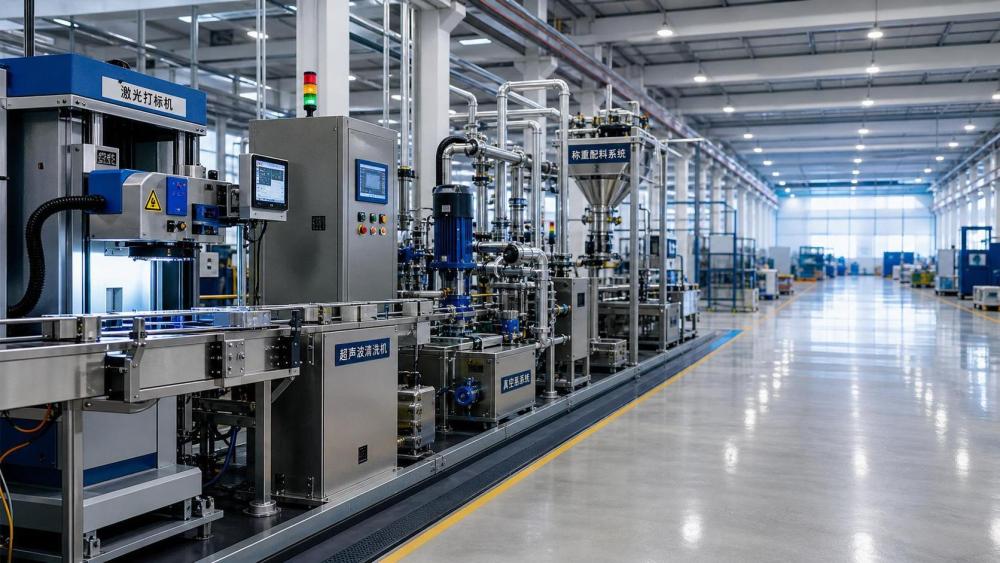
For retrofit projects, smart factory auxiliary systems integration often decides whether modernization creates value or just adds complexity.
That matters because auxiliary systems shape traceability, cleanliness, vacuum stability, batching accuracy, coating quality, and production consistency every day.
In older factories, these functions usually exist already, but they operate in isolated ways.
A retrofit changes the question from “Do we need this equipment?” to “Can these systems work together reliably?”
That is why smart factory auxiliary systems integration should be evaluated before vendors are shortlisted, not after installation starts.
Start with the process impact, not the hardware list
A common mistake is reviewing machines one by one.
That approach misses how auxiliary equipment affects the entire production outcome.
For example, an ultrasonic cleaning system may look secondary, yet contamination control can determine bonding strength, coating adhesion, and inspection yield.
The same applies to laser marking, inkjet coding, vacuum pumps, industrial weighing, and electrostatic coating.
Each system contributes process data and operating conditions that should connect to a wider control strategy.
Start by mapping where defects, delays, rework, or compliance risks currently appear.
Then identify which auxiliary systems influence those points most directly.
- Traceability gaps often link to coding, marking, or data capture limits.
- Yield loss may come from unstable vacuum, poor surface preparation, or inaccurate dosing.
- Compliance exposure may involve batch records, process alarms, or coating consistency.
- High maintenance costs may reflect weak communication between support systems and line controls.
This process-first view makes smart factory auxiliary systems integration measurable instead of theoretical.
Check integration readiness inside the existing factory environment
Retrofit projects rarely start from a clean slate.
Most plants have mixed generations of PLCs, HMIs, SCADA platforms, and manual workarounds.
Because of that, the first evaluation step is integration readiness, not feature comparison.
A vendor may offer advanced functions, but those features lose value if plant systems cannot consume the data.
Review the current state in four areas.
- Control architecture: Identify fieldbus standards, PLC brands, and supervisory software.
- Data quality: Confirm signal accuracy, timestamp consistency, and event logging.
- Physical constraints: Check utilities, floor space, cable paths, safety zones, and environmental limits.
- Operational maturity: Assess operator discipline, maintenance response, and change management practices.
This review often reveals that the bottleneck is not equipment performance.
It is usually inconsistent data structure, weak interoperability, or unclear ownership of process changes.
In practical terms, strong smart factory auxiliary systems integration depends on both machine capability and plant discipline.
Evaluate technology compatibility system by system
Compatibility should be tested at the application level.
General claims about “smart connectivity” are not enough for retrofit decisions.
Ask what data is generated, how often it updates, where it is stored, and what action it supports.
Traceability equipment
For laser marking and inkjet coding, verify code quality feedback, serialization logic, recipe control, and MES or ERP connection options.
The key issue is whether traceability data closes the loop with inspection and recall processes.
Cleaning and welding systems
For ultrasonic systems, evaluate parameter repeatability, contamination monitoring, cycle records, and alarm integration.
These details matter when quality teams need proof of process consistency.
Vacuum and process-support systems
For vacuum pumps and vacuum systems, focus on pressure stability, leak response, predictive maintenance signals, and energy monitoring.
A system that sends pressure data but cannot trigger useful actions offers limited retrofit value.
Weighing, batching, and coating
For weighing and batching, confirm audit trails, calibration routines, recipe locking, and tolerance management.
For surface treatment and electrostatic coating, check thickness data, line synchronization, defect tracking, and environmental reporting.
This is where smart factory auxiliary systems integration moves from connectivity to control.
Use a practical scoring model for decision-making
Decision quality improves when evaluation criteria are visible and weighted.
A simple scoring model helps compare suppliers without reducing the project to purchase price alone.
This kind of model keeps smart factory auxiliary systems integration grounded in operational outcomes.
It also helps internal teams align faster on trade-offs.
Watch for retrofit risks that are easy to underestimate
The bigger the legacy environment, the more hidden risks appear.
Most retrofit delays come from assumptions that seemed minor during planning.
- Data mismatch between equipment tags and plant naming conventions.
- Manual process steps that were never documented properly.
- Insufficient cybersecurity controls for connected auxiliary equipment.
- Operator resistance when interfaces change without workflow redesign.
- Utility instability affecting vacuum, cleaning, or coating performance.
A reliable evaluation process should include site walks, line interviews, and test scenarios.
Do not rely only on vendor presentations or top-level engineering drawings.
The more realistic the retrofit review, the stronger the smart factory auxiliary systems integration outcome.
Translate integration into long-term operational value
A retrofit should not be judged only by startup success.
The real test is whether the factory becomes easier to manage, scale, and improve.
Well-executed smart factory auxiliary systems integration creates several lasting advantages.
- Faster root-cause analysis when defects or downtime occur.
- Stronger compliance records for regulated or export-driven production.
- Better visibility into process drift before scrap rises.
- More consistent product identity, finish quality, and batch performance.
- A cleaner path for future automation, analytics, and supplier collaboration.
That is especially relevant in sectors where microscopic process variation affects final product reliability.
When auxiliary systems are evaluated well, modernization becomes more than equipment replacement.
It becomes a foundation for better quality control and better business decisions.
A practical way to move forward
Before approving any retrofit budget, define the process problems that matter most.
Then review current controls, data pathways, and plant constraints with those problems in mind.
After that, compare suppliers using a scoring model built around process fit, interoperability, compliance, and lifecycle value.
That sequence keeps smart factory auxiliary systems integration tied to measurable factory performance.
For retrofit projects, the best decision is rarely the system with the most features.
It is the one that fits existing operations, improves control, and keeps delivering value long after commissioning.