
How to Evaluate Precision Industrial Equipment for High-Accuracy Production
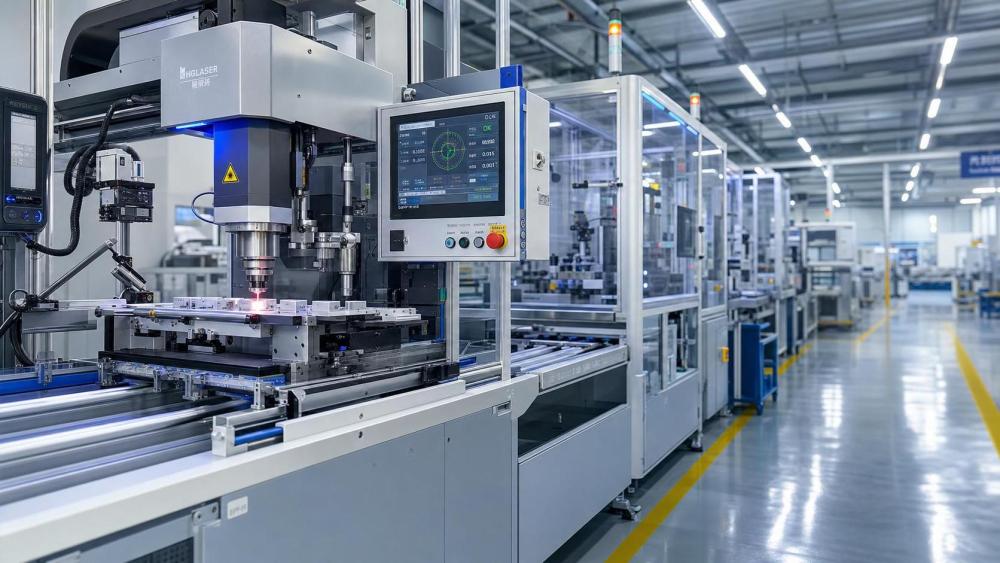
Selecting precision industrial equipment for high accuracy production requires more than checking specifications.
A machine may look strong on paper, yet drift under real factory conditions.
That gap matters in industries where yield, traceability, and process stability drive profit.
From ultrasonic cleaning to laser marking, support equipment often decides final consistency.
This is why precision industrial equipment high accuracy decisions need a structured evaluation method.
The goal is not simply to buy advanced equipment.
The real goal is to confirm stable performance across changing loads, operators, materials, and environments.
A sound review process reduces risk before capital is locked into production.
Start With the Accuracy Requirement, Not the Machine
Many equipment evaluations fail because buyers begin with vendor catalogs instead of process targets.
High accuracy production starts with a clear definition of acceptable variation.
That definition should include dimensional tolerance, contamination level, code readability, coating thickness, or batch ratio accuracy.
It should also define how often the target must be met.
This helps separate peak capability from repeatable output.
- List the exact quality variable being controlled.
- Define the tolerance window in measurable units.
- Set acceptable variation over shift, day, and batch.
- Identify what failure looks like in production.
Once those points are fixed, precision industrial equipment high accuracy comparisons become much more objective.
Check Repeatability Before Maximum Performance
In real purchasing decisions, repeatability is usually more valuable than headline speed or power.
A system that performs consistently at 95 percent is often better than one that peaks at 100 percent occasionally.
Ask suppliers for repeatability data under continuous production conditions.
Look for Cp, Cpk, GR&R, drift data, and calibration intervals where relevant.
This is especially important for weighing, batching, vacuum control, marking depth, and cleaning precision.
Precision industrial equipment high accuracy claims should always be tied to process capability evidence.
If a supplier only shares ideal lab results, the evaluation remains incomplete.
Questions Worth Asking
- What is the repeatability across three shifts?
- How does performance change with different materials?
- What happens after warm-up, shutdown, and restart?
- How often is recalibration required?
Evaluate the Control System Behind the Equipment
Mechanical quality matters, but control architecture often determines real production accuracy.
Sensors, software logic, feedback loops, and parameter management influence output every second.
A precise pump or cleaner becomes less reliable if the control layer responds slowly or inconsistently.
This also affects traceability and process validation.
For precision industrial equipment high accuracy applications, assess the following areas carefully.
- Parameter resolution and control granularity.
- Closed-loop feedback speed and stability.
- Alarm logic and deviation response.
- Recipe locking and operator permission control.
- Data export, audit trail, and MES or ERP connectivity.
In practice, strong control systems make scaling easier when production volume grows.
They also reduce hidden losses caused by manual adjustment and undocumented parameter changes.
Test Under Real Materials and Real Operating Conditions
A serious evaluation should never stop at a showroom demonstration.
Actual substrates, contaminants, coating chemistry, packaging formats, and ambient conditions change equipment behavior.
That is where many precision industrial equipment high accuracy decisions become clearer.
A laser marker may pass a demo, then lose contrast on reflective surfaces.
An ultrasonic system may clean well in one solvent condition, then struggle with mixed contamination.
A batching unit may hold accuracy at low speed, then drift during high-throughput runs.
A Useful Trial Framework
This type of testing reveals whether equipment can protect quality outside controlled presentations.
Look at Traceability, Compliance, and Data Integrity
In many sectors, accuracy is not only about process output.
It is also about proving what happened, when it happened, and who changed what.
That is why precision industrial equipment high accuracy reviews should include digital traceability.
This is especially relevant in food, pharmaceuticals, electronics, automotive, and export manufacturing.
Ask whether the system stores parameter history, production logs, alarm events, and maintenance records.
For coding and marking systems, confirm code permanence, readability, and anti-counterfeit support.
For weighing or batching, verify secure record retention and tamper-resistant data handling.
Compliance pressure is increasing, and weak records can turn a small process issue into a major commercial problem.
Measure Total Reliability, Not Only Purchase Cost
Cheaper equipment may raise long-term cost if it creates downtime, rework, scrap, or frequent recalibration.
That pattern is common in high accuracy production environments.
When comparing precision industrial equipment high accuracy options, reliability should be quantified.
- Mean time between failures
- Spare parts availability
- Service response speed
- Calibration support and tooling
- Expected consumable life
- Energy, solvent, gas, or vacuum efficiency
A supplier with robust service documentation often creates lower operational risk than a low-price competitor.
This matters even more for exporters and multi-site manufacturers that need predictable support.
Compare Suppliers as Process Partners
Equipment selection is also a supplier assessment exercise.
The best machine can still underperform if application support is weak.
A good supplier should understand the production process, not just the equipment model.
This becomes a major advantage during startup, validation, and process optimization.
Review case studies, installation references, certification records, and export experience.
For precision industrial equipment high accuracy projects, application knowledge often predicts long-term success better than brochure language.
It is worth checking how the supplier handles failed trials, unusual materials, and compliance documentation requests.
Build a Practical Evaluation Scorecard
A scorecard keeps technical reviews consistent across several vendors.
It also reduces decisions driven by one impressive demo.
For precision industrial equipment high accuracy selection, include both hard metrics and operational factors.
- Accuracy and repeatability performance
- Control precision and software reliability
- Traceability and data integrity
- Trial results with actual materials
- Maintenance burden and uptime expectation
- Supplier responsiveness and technical depth
- Total cost over the equipment life cycle
Weight each item based on production risk, not personal preference.
That approach leads to better decisions when quality expectations rise later.
Final Decision: Choose Stability That Can Scale
The right choice is rarely the machine with the most dramatic specification sheet.
It is the one that protects quality day after day, under real plant conditions.
Precision industrial equipment high accuracy selection should therefore focus on repeatability, control quality, traceability, and long-term support.
When those factors are tested carefully, the risk of expensive misalignment drops sharply.
A disciplined review process also makes future expansion easier.
In practical terms, better evaluation leads to better uptime, cleaner compliance records, and more consistent output.
That is the standard worth using when high accuracy production is the business requirement.