
How to Evaluate Energy Saving Equipment for Lower Operating Costs in Industrial Plants
Choosing the right energy saving equipment can cut plant operating costs in a very real way, but most bad buying decisions happen for a simple reason: the evaluation stops at rated power, brochure savings, or purchase price. In an industrial plant, that is rarely enough. A vacuum pump that looks efficient on paper may become expensive if it cannot hold stable vacuum under actual load. A curing, cleaning, weighing, coding, or coating support system may use less electricity per hour, yet still raise total cost if it slows throughput, increases rejects, or adds maintenance complexity.
For business decision-makers, the practical question is not “Is this piece of equipment energy-saving?” It is “Will this reduce cost in our process, at our duty cycle, with our utilities, labor structure, maintenance capability, and compliance requirements?” That is the standard worth using. The checklist below is written from that angle.
Start with the process, not the machine label
Before comparing suppliers, define where energy is actually being consumed and wasted. In many plants, the biggest loss is not from an old motor alone. It may come from overspecified vacuum levels, compressed air leakage, oversized pumps cycling inefficiently, poor thermal insulation, unstable batching that causes rework, or cleaning systems running longer than needed because contamination control is inconsistent.
Ask your production and maintenance teams for three things:
- actual run hours by shift or by batch, not nameplate assumptions;
- the process point where instability creates scrap, downtime, or repeat work;
- the utility cost structure, including electricity tariffs, compressed air cost, steam, chilled water, and maintenance labor.
Without that baseline, “lower operating cost” turns into guesswork. This matters especially in auxiliary systems covered by GIAS sectors, where process-support equipment influences final quality more than many buyers expect.
Check whether the claimed savings match your duty cycle
Suppliers often present energy savings under ideal operating conditions. That is not necessarily wrong, but it can be misleading if your plant runs short cycles, frequent starts and stops, variable loads, or multi-product production.
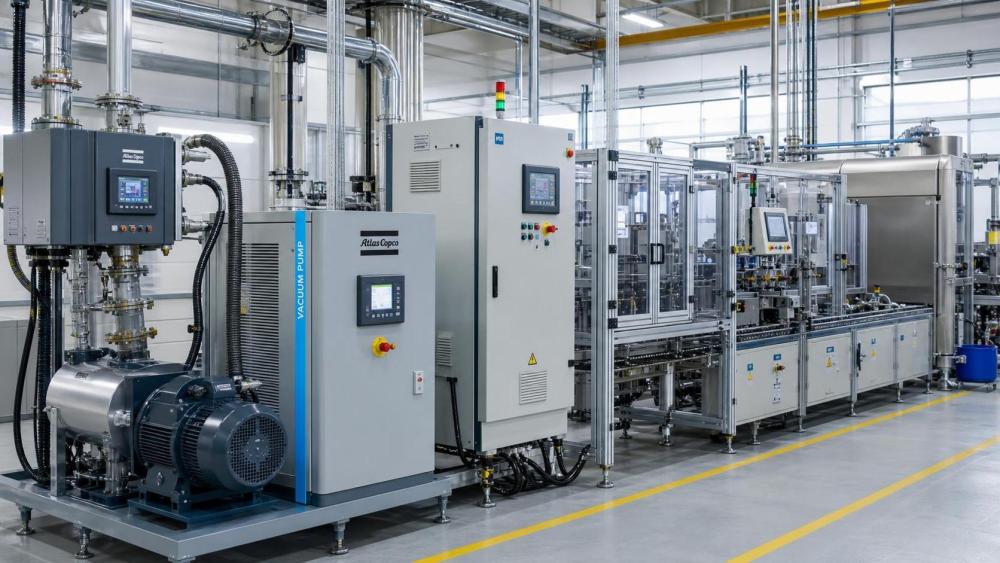
For example, variable speed drives, high-efficiency vacuum systems, ultrasonic cleaning units, industrial ovens, and coating line auxiliaries can all perform very differently depending on load profile. If your line runs at 90% steady load, one solution may work well. If it swings between idle and peak demand all day, a different configuration may save more.
A useful procurement question is simple: ask each supplier to estimate consumption under your real operating pattern, not just under full-load conditions. If they cannot translate savings into your production schedule, be careful.
Look beyond kW and ask what happens to output quality
This is where many purchasing reviews get too narrow. A lower-energy system that reduces process consistency can cost more overall.
In practice, that means checking whether the equipment affects any of the following:
- cleaning precision for parts with tight contamination limits;
- weld consistency in ultrasonic applications;
- marking permanence and readability for traceability;
- batching accuracy in recipe-controlled production;
- vacuum stability for packaging, coating, freeze-drying, or semiconductor-related processes;
- surface treatment or electrostatic coating uniformity.
Energy saving equipment should lower cost without quietly moving expense into scrap, inspection, warranty risk, or customer complaints. If a supplier talks only about utility reduction and says little about process repeatability, that is a gap in the evaluation.
Use total cost of ownership, but keep it grounded
Total cost of ownership is a useful buying lens, but only if you keep it tied to verifiable cost buckets. A realistic review usually includes:
One caution here: ROI calculators are often highly assumption-driven. If the supplier includes labor savings, scrap reduction, or maintenance reductions, ask how those numbers were derived and whether they came from your plant data or a generic model. If the answer is unclear, mark it as 【待核实】 in your internal review.
Check control capability, not just hardware efficiency
A lot of savings come from control logic, sensors, and system matching rather than from the core machine alone. This is especially true in auxiliary equipment. A pump, cleaning unit, dryer, or coating support system with poor control can waste energy even if the core hardware is efficient.
Look for control features that help the equipment adapt to demand: variable speed operation, staged load management, automatic standby, recipe-based settings, leak detection, alarm logging, and integration with plant monitoring systems. These are not “nice to have” in many plants. They are what turns a theoretically efficient system into a measurable cost-saving one.
If your site already uses MES, SCADA, or energy management tools, ask whether the new equipment can export relevant operating data. A black-box machine makes verification harder after purchase.
Do not ignore maintenance burden
This point gets missed when procurement is under pressure to show fast payback. Some energy saving equipment lowers electricity use but introduces specialized service needs, narrow spare part availability, or cleaning routines that internal teams are not ready to handle.
The practical test is straightforward: can your maintenance team support the equipment without depending on emergency overseas service for ordinary issues? For exporters and multinational operations, this question becomes even more important. Local service coverage, spare part stocking, and documentation quality often matter as much as rated efficiency.
When reviewing proposals, ask for the preventive maintenance schedule, common failure parts, recommended inventory list, and expected service intervals. If the supplier avoids specifics, budget risk is being pushed downstream.
Match the evaluation to your regulated market
Industrial buyers selling into food, pharmaceuticals, electronics, automotive, chemicals, or export-heavy sectors often need more than cost reduction. They need documentation that supports audits, customer approvals, traceability, and environmental or safety reviews.
That does not mean every energy-efficient upgrade requires a complex compliance project. It does mean you should confirm whether the equipment change affects validation records, process control documentation, emissions handling, product marking standards, or clean-process requirements. The exact requirement depends on your market and site, so broad claims should be treated carefully. Where a supplier references standards or certifications, ask for the actual documents and scope rather than accepting a summary statement.
Ask for application evidence, but verify the context
Case studies can help, but they are often less transferable than buyers assume. A coating line, vacuum system, or batching installation that delivered strong savings in one plant may have been operating with a different product mix, ambient condition, utility cost, cleanliness target, or automation level.
Instead of asking only for “success stories,” ask for context:
- What process was the equipment supporting?
- What baseline system was replaced or optimized?
- How was savings measured?
- Were yield, quality, and maintenance also tracked?
If those details are missing, treat the example as directional, not decision-grade evidence.
Run a short list through a plant-side decision filter
By the time you have two or three viable options, the decision usually becomes clearer if you force each one through the same internal filter. Keep it practical:
- Will it reduce utility cost under our real production rhythm?
- Will it protect or improve process stability?
- Can our team maintain it without creating a support bottleneck?
- Can the supplier document claims well enough for finance, engineering, and compliance review?
- If demand changes, will this still be the right-sized solution two years from now?
That last point matters more than it sounds. Oversizing is still one of the most common reasons supposedly efficient systems underperform in real plants.
What experienced buyers usually avoid
They avoid buying on headline efficiency alone. They avoid assuming a premium model always has the lowest operating cost. They avoid mixing unverified savings claims into ROI calculations. And they avoid treating auxiliary systems as secondary just because they sit outside the primary machine.
In many plants, those “secondary” systems decide whether the line runs cleanly, consistently, and cheaply.
If you are evaluating energy saving equipment for procurement, the best decision usually comes from a plain discipline: define the process baseline, test supplier claims against actual duty cycle, include quality and maintenance in the cost model, and verify what can be documented. That approach is less flashy than chasing the biggest percentage-saving promise, but it is how lower operating costs usually show up on the plant ledger.