
Why a Surface Treatment Engineering Supplier Matters in Regulated Production
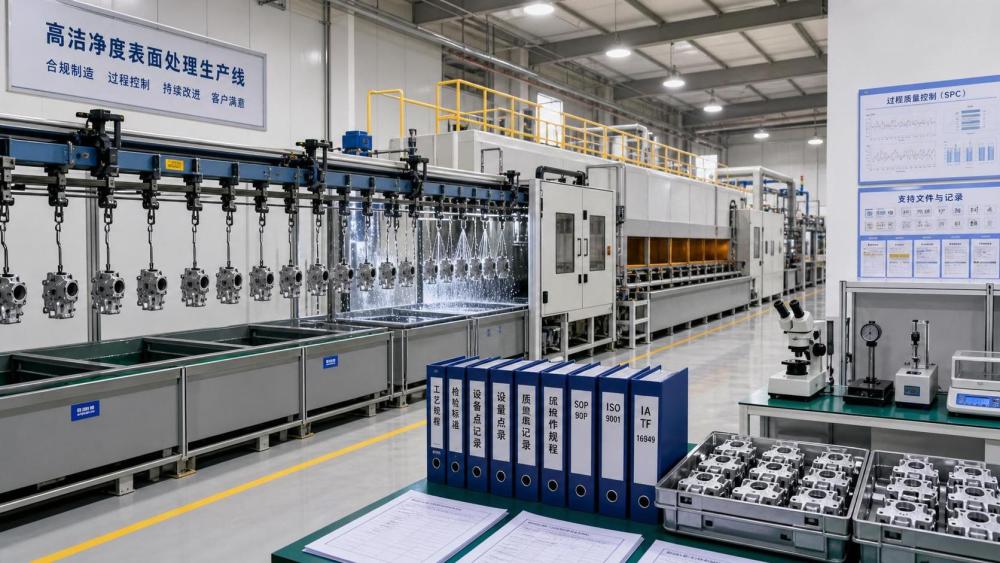
Choosing a surface treatment engineering supplier shapes more than cost and delivery. It influences compliance readiness, coating quality, corrosion resistance, traceability, and long-term process stability.
In regulated production, weak surface control creates expensive problems. These include failed audits, coating defects, rework, customer complaints, and inconsistent product performance in the field.
That is why selecting a surface treatment engineering supplier should be handled as a strategic decision, not a routine sourcing task.
The best supplier supports process design, validation, documentation, and continuous control. In practical terms, that reduces risk across production, quality, export, and customer approval.
From recent market changes, a clearer signal is emerging. Buyers no longer compare only equipment features. They also assess compliance capability, engineering depth, and data transparency.
This also means a qualified surface treatment engineering supplier must understand both chemistry and manufacturing discipline. Good hardware alone is no longer enough.
Start with the Regulatory and Application Context
Before comparing suppliers, define the production environment clearly. A surface treatment engineering supplier can only be evaluated correctly when application requirements are specific.
Different industries create very different risk profiles. Medical devices, automotive parts, electronics, aerospace components, and food-contact equipment each require distinct control methods.
Some lines focus on corrosion resistance. Others prioritize adhesion, appearance, chemical resistance, conductivity, or environmental compliance. The supplier must fit the real production goal.
At this stage, confirm key variables:
- Base material, geometry, and part sensitivity
- Required coating thickness and uniformity
- Salt spray, humidity, abrasion, or chemical resistance targets
- Applicable standards, audit expectations, and export rules
- Traceability, reporting, and batch documentation needs
When these inputs are vague, even a strong surface treatment engineering supplier may propose the wrong system. Clear requirements lead to faster and safer selection.
Evaluate Engineering Capability, Not Just Product Catalogs
Many vendors can present polished brochures. Fewer can explain how pretreatment, chemistry control, rinsing, drying, curing, and inspection work together as one stable process.
A reliable surface treatment engineering supplier should be able to discuss line configuration, contamination control, material compatibility, and process windows in practical detail.
Ask how they handle variation. This includes changing part loads, mixed materials, temperature swings, water quality differences, and operator inconsistency.
Strong engineering capability often shows up in these areas:
- Ability to recommend process routes based on substrate and regulation
- Experience with automation, dosing, filtration, and bath monitoring
- Knowledge of defect causes such as blistering, peeling, pitting, or uneven coverage
- Support for pilot testing, sample validation, and line optimization
- Capability to integrate surface treatment with upstream cleaning and downstream inspection
In real operations, the better surface treatment engineering supplier is usually the one that can prevent problems before startup, not just react after complaints.
Check Process Control and Documentation Discipline
Regulated production demands evidence. A surface treatment engineering supplier must provide more than equipment drawings and a quotation sheet.
You need proof that the process can be controlled, repeated, measured, and documented under normal production conditions.
This becomes even more important when customers require audits, supplier qualification, or change-control approval before installation.
Review whether the supplier can provide:
- Process flow diagrams and control plans
- FMEA support or comparable risk analysis
- IQ, OQ, and PQ documentation where relevant
- SOP guidance for operation, maintenance, and cleaning
- Calibration, inspection, and acceptance criteria definitions
- Batch records, parameter logs, and traceability options
A disciplined surface treatment engineering supplier helps quality teams defend decisions with data. That shortens approval cycles and improves cross-functional confidence.
More importantly, documentation quality often reflects process maturity. If the paperwork is weak, process control may be weak too.
Look Closely at Compliance, EHS, and Material Standards
Compliance is where many sourcing decisions become risky. A surface treatment engineering supplier should understand environmental, health, safety, and material restrictions early in the project.
This is especially important when coating chemistry involves regulated substances, wastewater treatment, air emissions, sludge handling, or worker exposure controls.
A good supplier will discuss these issues directly. They will not wait until the installation phase to mention permits, exhaust design, or waste treatment limitations.
Useful checkpoints include:
- Understanding of RoHS, REACH, and customer-specific material restrictions
- Knowledge of local wastewater and emission compliance requirements
- Ability to specify safer alternatives where restricted chemistry is a concern
- Clear SDS management and chemical handling procedures
- Alignment with ISO systems or sector-specific compliance expectations
When a surface treatment engineering supplier understands compliance from the beginning, costly redesign and delayed commissioning become much less likely.
Assess Quality Validation, Testing, and Failure Response
Surface treatment quality cannot be judged by appearance alone. A capable surface treatment engineering supplier should connect process settings to measurable performance outcomes.
That means defining how the line will be validated and how future issues will be investigated if failures occur in production or in the field.
Ask which tests are used to verify performance:
- Adhesion testing
- Coating thickness measurement
- Salt spray or cyclic corrosion testing
- Cross-section analysis or microscopy if needed
- Surface cleanliness or pretreatment verification
Also ask how they respond when results drift. A mature surface treatment engineering supplier should offer root-cause support, corrective actions, and parameter review.
That responsiveness matters because regulated production rarely tolerates long problem-solving cycles. Every delay can affect shipments, audits, and customer trust.
Compare Suppliers with a Practical Decision Matrix
At this point, a structured comparison helps. Instead of selecting by price alone, compare each surface treatment engineering supplier against weighted operational criteria.
This approach makes internal alignment easier. Procurement, engineering, quality, and compliance teams can review the same decision framework with fewer assumptions.
Questions to Ask Before Final Selection
The final shortlist should be challenged with direct questions. A strong surface treatment engineering supplier will answer clearly, with examples and supporting records.
- Which regulated industries have you supported with similar surface treatment requirements?
- How do you validate pretreatment effectiveness before coating begins?
- What process parameters are monitored continuously, and how are deviations managed?
- Which documents are included for qualification, audit support, and maintenance control?
- How do you manage chemistry restrictions, wastewater concerns, and operator safety?
- What is your response plan if coating performance fails after launch?
These questions reveal more than technical skill. They show whether the surface treatment engineering supplier understands the operational pressure behind regulated manufacturing.
In many cases, the most useful answer is not the fastest yes. It is the most precise explanation of limits, controls, and trade-offs.
Make the Decision with Long-Term Reliability in Mind
The right surface treatment engineering supplier should strengthen production reliability over time, not simply complete an installation project.
That means stable coating performance, predictable documentation, manageable operating costs, and support when product requirements change.
In actual business settings, the best supplier is often the one that helps you avoid hidden costs. Requalification, scrap, downtime, and compliance delays can erase any low purchase price.
A careful evaluation process turns supplier selection into risk control. It also improves internal confidence when production, quality, and compliance teams need to defend the choice.
If you are comparing options now, build your shortlist around engineering depth, process control, compliance awareness, and validation discipline. That is how a surface treatment engineering supplier becomes a reliable manufacturing partner.