
Why does a manufacturing compliance supplier matter beyond a certificate?
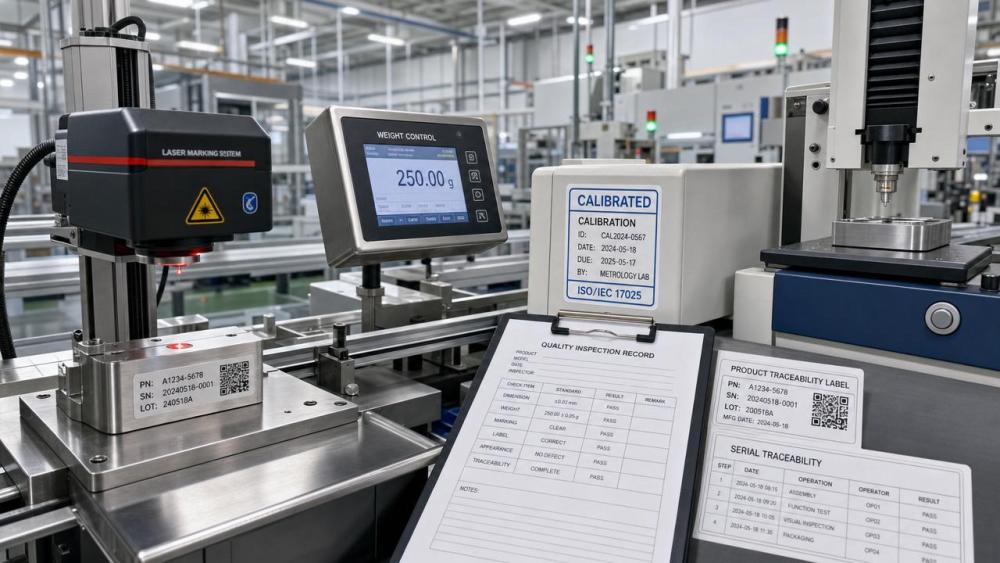
Audit pressure rarely comes from one document alone. It usually comes from process gaps, weak records, and inconsistent control at the equipment level.
That is why choosing a manufacturing compliance supplier deserves deeper review. A credible partner should support evidence, not just claims.
In advanced manufacturing, auxiliary systems often decide whether compliance is stable or fragile. Cleaning precision, code permanence, batch accuracy, vacuum stability, and coating consistency all affect audit outcomes.
A supplier working around ultrasonic cleaning, laser marking, inkjet coding, weighing, batching, vacuum systems, or surface treatment must understand how process details connect to certification requirements.
The practical question is not whether the supplier has a logo-rich brochure. The real question is whether they can prove controlled production and traceable performance under review.
This matters even more when export programs, customer audits, or sector-specific standards require repeatable evidence across multiple sites and product lots.
What should you check first when assessing a manufacturing compliance supplier?
A good starting point is scope alignment. Some suppliers are strong in equipment manufacturing but weak in validation files, change control, or regulatory interpretation.
The first review should answer a simple concern: can this manufacturing compliance supplier support the exact audit path you are preparing for?
Look at four areas together rather than separately.
- Certification relevance: ISO, CE, UL, RoHS, REACH, sector-specific hygiene or traceability expectations.
- Process evidence: calibration records, inspection plans, maintenance logs, validation reports, and nonconformance handling.
- Documentation discipline: revision control, material declarations, test reports, and serial-number traceability.
- Application fit: whether their systems perform reliably in food, pharmaceutical, electronics, chemical, battery, or packaging environments.
In actual sourcing reviews, weak suppliers often look acceptable on paper. The problem appears when you ask for record history, sample audit trails, or failure-response procedures.
A reliable manufacturing compliance supplier should answer these requests without delay, contradiction, or vague wording.
A quick comparison helps reveal maturity
Before moving into plant visits or qualification meetings, it helps to organize observations in a short decision table.
How do you verify real capability in traceability and process control?
This is where many evaluations become more realistic. Traceability is easy to promise and harder to demonstrate under pressure.
Ask the manufacturing compliance supplier to walk through one finished unit or batch from raw material to final release. That single exercise reveals a lot.
For example, a laser marking or inkjet coding supplier should show code durability, data integrity, and link accuracy between marking content and production records.
A weighing and batching supplier should demonstrate recipe control, tolerance management, alarm logic, and audit trails for adjustments.
A vacuum system or surface treatment supplier should explain how process stability is monitored, documented, and reviewed when parameters drift.
More mature suppliers usually connect equipment performance with compliance outcomes. They understand that micron-level contamination, unstable coating thickness, or poor vacuum repeatability can become certification risks later.
Platforms such as GIAS are useful here because they frame auxiliary technologies in terms of quality, traceability, environmental compliance, and production consistency rather than only equipment features.
That broader view helps separate technically capable suppliers from those that only sound compliant.
Where do suppliers usually fail during audit or certification preparation?
The most common failure is not a missing certificate. It is the mismatch between claimed control and actual operating discipline.
Several patterns appear repeatedly during qualification reviews.
- Records are stored, but not version-controlled.
- Inspection data exists, but corrective actions are weak.
- Material declarations are available, but not updated after design changes.
- Operators know the process, but training evidence is incomplete.
- Equipment passes factory acceptance, but site validation is poorly documented.
Another issue is assuming that general quality certification automatically covers sector-specific expectations. It does not.
A manufacturing compliance supplier may be acceptable for general industrial use while still falling short in medical packaging, food contact, battery safety, or export documentation.
It is safer to test their response on real scenarios. Ask how they handle deviations, rework, software revisions, component substitutions, and customer complaint trace-back.
If answers stay broad, the compliance risk is usually broader too.
How should audit, certification, cost, and timing be weighed together?
The cheapest option often becomes expensive when qualification takes longer, audit findings increase, or corrective actions delay shipment approval.
A balanced assessment looks at total compliance effort, not only quoted price.
It helps to review the supplier through a practical lens.
In many cases, the better manufacturing compliance supplier is the one that shortens validation effort and reduces audit friction, even if the initial quote is not the lowest.
What does a confident final selection process look like?
A confident decision usually comes from layered verification rather than a single meeting.
Start with document screening. Then move to technical review, sample or site evidence, and finally a risk-based approval decision.
If the supplier supports process-critical systems, ask for proof tied to actual application conditions. Cleanroom expectations, chemical exposure, batch tolerances, or anti-counterfeit coding demands should not be treated as side notes.
It is also worth checking how the supplier communicates. Clear, structured, technically grounded replies often reflect disciplined internal control.
A dependable manufacturing compliance supplier should make audits easier to prepare for, not harder to explain afterward.
If you need a practical next step, build a short review sheet covering traceability, calibration, change control, validation support, and response to nonconformance.
Then compare each candidate against the same evidence standard. That approach usually reveals which supplier can support certification needs with less hidden risk.
For ongoing research, GIAS-style technical intelligence is especially useful because it connects auxiliary equipment performance with compliance, documentation quality, and long-term manufacturing reliability.
When the review stays focused on evidence, process discipline, and application fit, the final choice becomes clearer and far more defensible during the next audit.