
An anti-corrosion coating can remain functional for a few years or for several decades. The difference is rarely explained by the coating name alone. Service life is determined by the corrosion environment, substrate condition, surface preparation, dry-film thickness, coating-system design, application control, mechanical exposure, and the timing of maintenance.
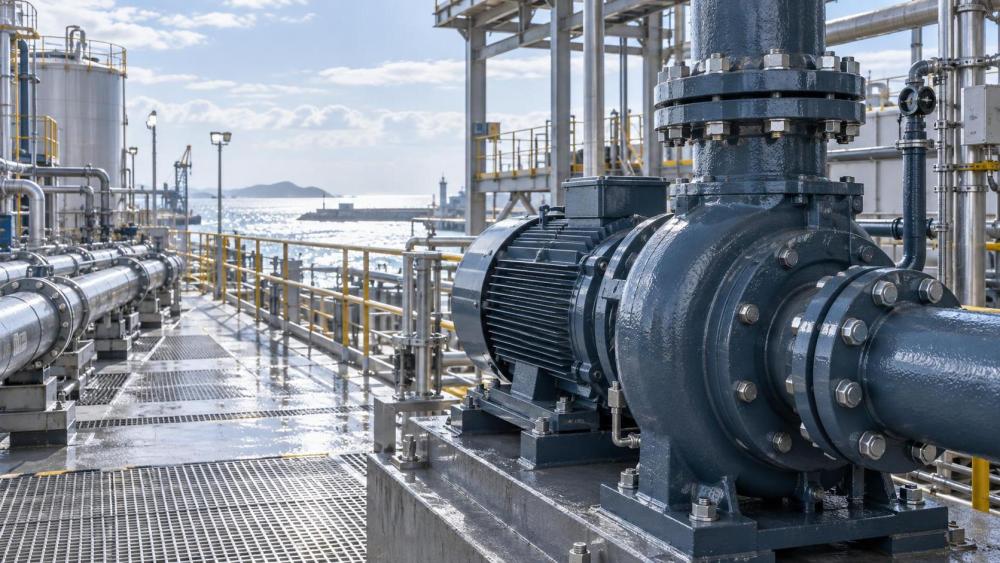
For industrial decision-making, the useful question is not simply “How long does an anti-corrosion coating last?” It is: How long will this specific coating system protect this asset before major maintenance is required under its actual operating conditions? A coating on indoor machinery in a dry assembly area faces a fundamentally different risk profile from the same material applied to a coastal pump skid, chemical-process vessel, offshore structure, or export equipment exposed to humid storage and salt-laden transport.
Coating life means time to first major maintenance, not permanent protection
Anti-corrosion coatings gradually lose their protective function. Ultraviolet light can degrade binders and reduce gloss; water and oxygen can permeate the film; impact can create local damage; thermal cycling can induce cracking; and soluble salts trapped beneath the coating can initiate corrosion even when the surface still appears intact.
Because degradation is progressive, “failure” is not always a sudden event. A coating may still look acceptable while corrosion develops at edges, welds, bolted joints, cut surfaces, crevices, and damaged areas. In many industrial specifications, service life is therefore assessed as the period before the first major maintenance cycle rather than the point at which every part of the coating has detached.
ISO 12944, a widely used framework for corrosion protection of steel structures by protective paint systems, classifies durability in broad ranges: low durability up to 7 years, medium durability from 7 to 15 years, high durability from 15 to 25 years, and very high durability beyond 25 years. These ranges are planning references, not universal guarantees. They do not mean that any coating specified as “high durability” will automatically last 15 to 25 years on every asset.
The standard’s durability concept also should not be confused with a product warranty. Warranty terms depend on contractual scope, inspection access, exclusions for damage or misuse, maintenance obligations, and the agreed preparation and application conditions.
The operating environment is usually the largest variable
Corrosion severity is strongly affected by moisture, contaminants, temperature, time of wetness, chemical exposure, and the ability of a surface to dry. A coating that performs reliably in a protected warehouse can deteriorate rapidly when exposed to persistent condensation, marine aerosols, acid or alkaline splashes, abrasive dust, or immersion.
Atmospheric environments are commonly described from low-corrosivity indoor conditions through increasingly severe industrial, coastal, offshore, and highly saline environments. The distinction matters because chloride deposition and retained moisture can undermine coating adhesion and promote underfilm corrosion. Industrial pollutants can have a similar effect, particularly where moisture forms conductive films on steel surfaces.
Immersion and splash-zone service require even more caution. A coating suitable for general atmospheric exposure may not tolerate continuous contact with water, wastewater, solvents, acids, alkalis, fuels, or process chemicals. Chemical resistance depends on concentration, temperature, exposure duration, cleaning procedures, and whether the contact is continuous, intermittent, or accidental. A general statement such as “epoxy is chemical resistant” is not enough for specification purposes.
Temperature also changes coating behavior. Elevated temperature can accelerate permeation and chemical attack. Repeated heating and cooling can stress the interface between the coating and substrate. Low temperatures may reduce flexibility, making a coating more vulnerable to impact or cracking. Where insulated equipment is involved, corrosion under insulation introduces a separate risk: moisture can remain trapped against the metal while external inspection gives little indication of damage.
Surface preparation often determines whether the designed life is achieved
Even a technically suitable coating can have a short life if it is applied over oil, dust, moisture, mill scale, old unstable paint, weld spatter, or soluble salts. Coatings protect by creating a continuous barrier and maintaining adhesion. Contamination weakens that barrier from the start.
For steel, abrasive blast cleaning is frequently specified when long-term performance is required. It removes rust and mill scale while creating an anchor profile that helps the primer adhere mechanically. The required cleanliness grade and surface profile depend on the coating system. A profile that is too smooth can limit adhesion; a profile that is too rough can leave peaks insufficiently covered, creating early rust points.
Soluble salt contamination deserves particular attention in marine, offshore, transport, and refurbishment work. Chlorides and sulfates may remain after visible rust has been removed. If not controlled, they can attract moisture and contribute to blistering or corrosion beneath the film. Surface cleanliness cannot be judged by appearance alone where salt exposure is likely.
Edges, welds, corners, fasteners, and cutouts should receive focused treatment. Coatings naturally pull away from sharp edges during application, leaving a thinner film than on flat areas. Edge rounding, weld preparation, stripe coating, and adequate film build are practical controls that often influence the real life of a system more than a small difference in nominal product performance.
Coating type matters, but the system matters more
An anti-corrosion coating system normally combines layers with different roles. A primer promotes adhesion and may provide corrosion-inhibiting or sacrificial protection. Intermediate coats build barrier thickness. A topcoat can provide ultraviolet resistance, color retention, cleanability, or resistance to weathering and chemicals.
Common system choices include zinc-rich primers, epoxy primers and intermediates, polyurethane topcoats, acrylic coatings, alkyd systems, vinyl esters, and specialty linings. Their expected lives cannot be compared meaningfully without considering film thickness, substrate, environment, and the full coating stack.
- Zinc-rich primers can provide sacrificial protection to steel, but their performance depends on correct formulation, electrical continuity, film thickness, and compatible overcoats.
- Epoxy coatings are widely used for barrier protection and can offer strong adhesion and chemical resistance. Many epoxies chalk under ultraviolet exposure, so exterior systems often use a more weather-resistant topcoat.
- Polyurethane topcoats are often selected where exterior appearance, gloss retention, and UV resistance matter, although chemical and immersion suitability must be checked separately.
- Alkyd and other conventional maintenance coatings may be suitable for lower-demand environments or routine repainting programs, but should not be assumed to deliver long maintenance intervals in aggressive conditions.
- High-build epoxies, glass-flake systems, and specialized linings may be used where abrasion, immersion, or aggressive chemicals create risks beyond ordinary atmospheric service.
A thicker coating does not automatically last longer. Excessive thickness can cause solvent retention, cracking, poor intercoat adhesion, sagging, or curing problems. Insufficient thickness leaves inadequate barrier protection and can expose surface-profile peaks. The objective is to achieve the specified dry-film thickness consistently across the entire geometry, including difficult locations.
Application quality can shorten life before the equipment enters service
Many premature failures originate during application rather than from an inherently unsuitable coating chemistry. Common causes include painting over a surface outside the allowed humidity or temperature range, applying onto condensation, exceeding the maximum recoat interval, failing to mix multi-component materials correctly, or putting a topcoat on before the underlying layer has cured adequately.
Dry-film thickness measurement is essential because visual inspection cannot reliably identify thin areas. Wet-film checks during application help prevent underbuild before curing. Adhesion testing, holiday detection for certain linings, cure verification, and inspection of difficult geometry may also be appropriate depending on the asset and specified system.
Ambient conditions need to be controlled at the work surface, not merely noted from a general weather report. Steel temperature relative to dew point is particularly important. If moisture condenses on the substrate, coating adhesion can be compromised even when the steel appears dry to the eye.
For fabricated equipment shipped internationally, coating quality also depends on what happens after application. Unprotected handling, forklift impact, poor blocking, abrasive packing materials, and long storage in humid or coastal locations can damage a coating before installation. Export packaging and temporary corrosion protection should align with the expected transport route, storage period, and final installation conditions.
Mechanical damage and design details limit real-world durability
Coatings are not structural repairs. They cannot compensate for water traps, unsealed crevices, poorly drained sections, sharp edges, galvanic couples, leaking gaskets, or vibration that repeatedly rubs adjacent components together. Design features can create localized corrosion far earlier than the coating’s nominal life would suggest.
Bolted flanges, support points, handrails, pipe shoes, lifting points, and areas beneath clamps deserve attention because they are difficult to coat and inspect. Coating damage at these locations can spread beneath the surrounding film. Where dissimilar metals are connected in the presence of an electrolyte, galvanic corrosion may also attack the less noble metal unless the design includes appropriate isolation or protection.
In abrasive applications, such as bulk-material handling or slurry service, erosion can physically remove the coating. In food, pharmaceutical, and high-cleanliness environments, aggressive cleaning agents and repeated washdowns may become the dominant durability factor. The coating must be selected for the actual cleaning chemistry and temperature, not just for the process fluid or room environment.
Maintenance extends coating life only when intervention begins early enough
Small coating defects are far less expensive to repair than widespread delamination or deep section loss. Maintenance planning should therefore rely on periodic condition assessment rather than waiting for obvious rusting. Inspection frequency should reflect exposure severity, asset criticality, access difficulty, safety consequences, and the cost of unplanned shutdown.
Early warning signs include edge rusting, blistering, chalking accompanied by film thinning, cracking, localized peeling, discoloration around fasteners, and corrosion at drainage points. Not every visible change requires full recoating. Chalked topcoats may remain protective if the underlying system is intact, while a small blister can indicate significant underfilm corrosion if it contains moisture or salts.
Repair quality is critical. Local touch-up performed over loose paint, rust, or contaminated surfaces can create a cosmetic patch without restoring long-term protection. The repair area should be cleaned, feathered where appropriate, prepared to the specified standard, and recoated with materials compatible with the existing system.
How to estimate life before specifying a coating
A defensible durability estimate starts with service conditions rather than a supplier’s generic product description. The specification should identify the substrate, expected exposure, temperature range, chemical contact, UV exposure, abrasion, immersion conditions, required maintenance interval, and any appearance requirements. It should also define the preparation method, coating layers, target dry-film thickness, application constraints, inspection points, and repair procedure.
For complex or high-consequence assets, a coating schedule should be reviewed against recognized corrosion-protection standards and the coating manufacturer’s documented suitability for the intended environment. Steel structures are often evaluated using ISO 12944 principles; other substrates and applications may require different standards, sector-specific requirements, or customer specifications.
The most reliable answer to how long an anti-corrosion coating lasts is therefore conditional: a correctly selected and properly applied system can protect an asset through its planned maintenance interval, but no coating has a meaningful lifespan independent of its environment and application quality. Treating corrosion protection as a system—surface, coating, geometry, inspection, handling, and maintenance—provides a far more accurate basis for cost control and asset reliability than choosing by coating name alone.