
Choosing high performance coatings becomes a strategic decision when equipment must survive moisture, chemicals, particle impact, and elevated temperatures at the same time.
In advanced manufacturing, coating failure rarely stays local. It can affect uptime, contamination control, traceability, maintenance cycles, and even compliance records.
That is why coating selection deserves the same discipline applied to cleaning systems, vacuum stability, weighing accuracy, and surface preparation across industrial support processes.
Why coating choice now carries more operational weight
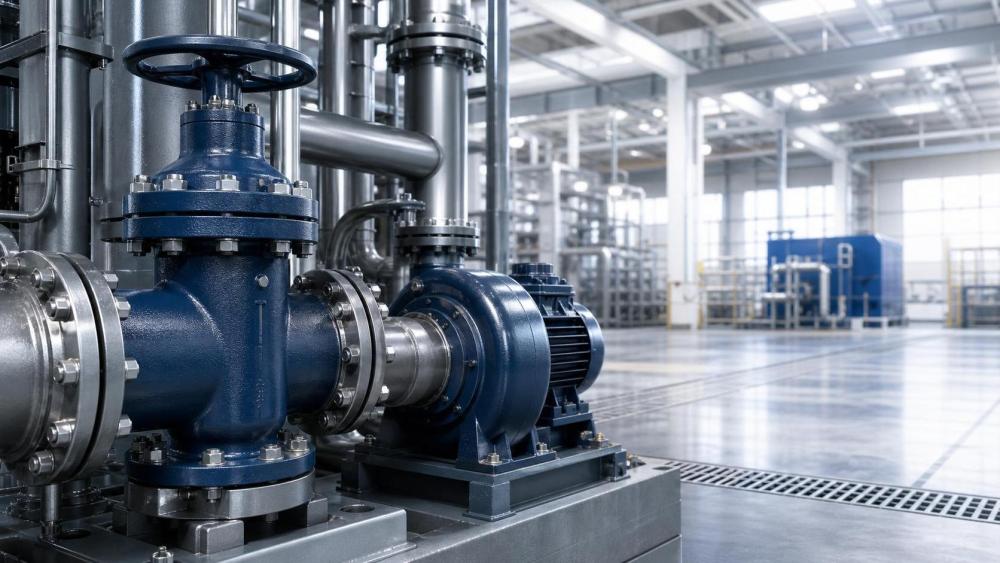
A coated surface is often treated as a finishing detail. In practice, it is part of the functional design of valves, tanks, housings, tooling, fixtures, ducts, pumps, and transport components.
High performance coatings are expected to resist more than visible wear. They often protect against hidden corrosion, thermal cycling, product sticking, washdown chemistry, and premature substrate damage.
This matters across sectors covered by GIAS, where auxiliary systems shape final process quality. Surface protection influences whether precision-cleaned parts stay clean, whether coded parts remain legible, and whether vacuum-related assemblies hold stable performance over time.
As production lines become more traceable and more tightly controlled, the tolerance for unpredictable coating behavior gets smaller. A coating that looks acceptable on paper may still fail in the actual duty cycle.
What high performance coatings really need to address
The term covers a wide range of materials and deposition methods. It usually refers to coatings designed for harsh industrial service rather than decorative appearance alone.
The core question is not which coating is strongest in general. The better question is which failure mode matters most in the intended environment.
Corrosion resistance is needed when substrates face salts, acids, alkalis, humidity, solvents, condensate, or process fluids. Abrasion resistance matters when particles, scraping contact, or repetitive handling remove material.
Heat exposure adds another layer. A coating may handle corrosion at room temperature, yet soften, oxidize, crack, or lose adhesion when thermal loading changes.
Many high performance coatings must balance all three demands. That balance is where evaluation becomes more difficult and more valuable.
Typical coating families in industrial selection
Different systems solve different problems. A concise comparison helps narrow the field before deeper testing begins.
Start with the service environment, not the brochure
The most useful screening step is to define what the coating will actually face during operation, cleaning, shutdown, and restart.
A component may encounter intermittent splash rather than full immersion. It may face dry abrasion most of the year, then aggressive washdown during sanitation cycles.
Heat exposure also needs detail. Constant high temperature, thermal peaks, and repeated cycling do not stress a coating in the same way.
In many industrial lines, several minor conditions combine into one major risk. Fine dust, elevated humidity, cleaning chemistry, and edge impact can accelerate failure far faster than a single headline variable.
Questions worth clarifying early
- What chemicals contact the surface, at what concentration, and for how long?
- Is wear caused by sliding, erosion, impact, or cleaning tools?
- What are the normal, peak, and cycling temperatures?
- Will the coating face vacuum service, outgassing limits, or contamination sensitivity?
- Does the asset require conductivity control, cleanability, or product-release behavior?
Substrate condition often decides the outcome
High performance coatings do not compensate for poor substrate preparation. Adhesion, film continuity, and long-term durability depend heavily on what happens before application.
Surface contamination is a frequent blind spot. Oil residues, oxide layers, embedded particles, or moisture can undermine a premium coating system before service even begins.
This links directly to auxiliary process control. Ultrasonic cleaning, controlled blasting, pretreatment chemistry, drying quality, and handling discipline all influence coating performance.
For precision industries, substrate roughness also needs control. Too smooth may reduce mechanical anchoring. Too rough may create peaks, voids, and weak coverage at edges.
Common substrate-related risks
- Residual contamination after cleaning or machining
- Incompatible pretreatment between metal and coating chemistry
- Sharp edges that reduce film build
- Improper cure schedule or coating thickness variation
- Storage conditions that introduce flash rust or moisture pickup
Where application priorities change by process type
The best high performance coatings for one line may be unsuitable for another, even inside the same plant. Process-support equipment creates very different demands.
In ultrasonic cleaning systems, resistance to cleaning agents and stable surface integrity matter more than visual finish. Coating debris or delamination can become a contamination source.
In vacuum systems, thermal stability, low outgassing behavior, and compatibility with sealing surfaces become more critical than simple corrosion ratings.
For surface treatment and electrostatic coating lines, upstream and downstream compatibility matters. The selected coating must align with pretreatment, curing windows, grounding, and quality inspection methods.
On coded or marked parts, the coating can also affect adhesion of inks, contrast of laser marks, and durability of traceability data through transport and cleaning cycles.
How to compare options without oversimplifying
A useful evaluation framework combines laboratory data, application process capability, and actual service simulation. One source alone is rarely enough.
Salt spray hours, hardness, and temperature ratings are helpful, but they do not automatically predict field life. Geometry, exposure sequence, and maintenance habits can change results dramatically.
More reliable selection usually comes from comparing systems against a defined failure threshold. That threshold may be red rust, coating loss, gloss loss, particle shedding, or heat-related cracking.
Practical signals of a stronger decision
Good coating selection usually leaves a traceable reasoning path. The chosen system should match substrate, environment, application process, inspection method, and maintenance plan.
It is also useful to separate must-have requirements from preferred features. Heat tolerance may be non-negotiable, while appearance retention may be secondary.
When reviewing high performance coatings, the strongest candidates often come with process detail, not just product literature. Cure profiles, pretreatment windows, test conditions, and field references matter.
That discipline fits the broader GIAS view of industrial reliability. Surface protection performs best when supported by controlled cleaning, stable process inputs, and measurable quality checkpoints.
A sensible next step for evaluation
Before narrowing suppliers or coating families, define the real exposure map of the part or system. Include chemicals, wear pattern, temperature behavior, cleaning method, and expected life.
Then compare high performance coatings against that map, not against generic rankings. A shorter shortlist built on actual service conditions is usually more accurate than a broader search.
Where uncertainty remains, pilot testing, sample panels, and review of surface preparation controls can reveal more than a long specification sheet. That is often where the most dependable decision begins.