
Product Identification Systems Automotive Teams Compare First
In automotive manufacturing, choosing the right product identification systems automotive teams rely on can directly affect traceability, compliance, and production efficiency.
Whether the option is barcode, laser, or vision-based identification, each method offers distinct advantages in durability, accuracy, and integration.
This article helps evaluate which system best fits production goals, quality requirements, and long-term operational demands.
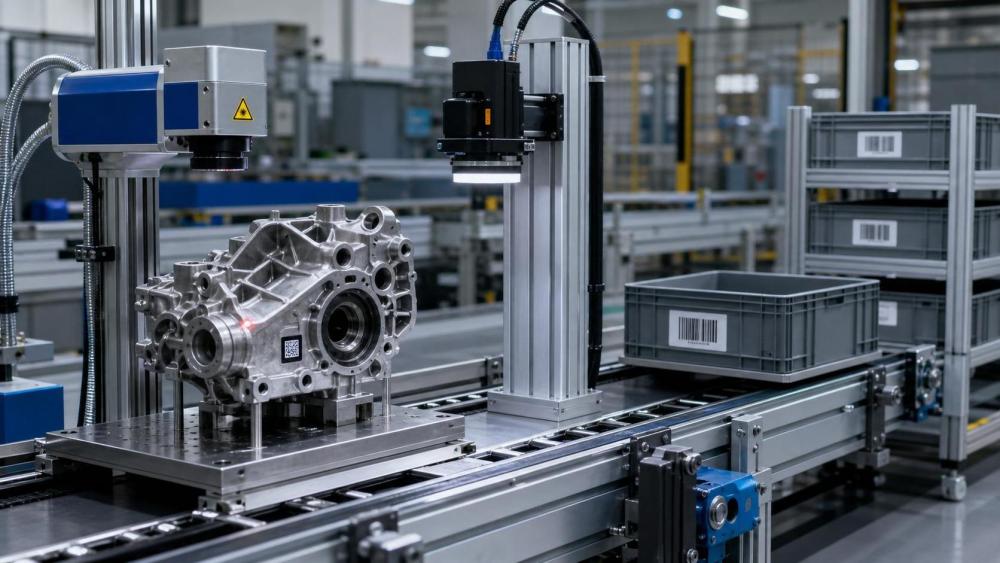
From recent industry changes, one signal stands out.
Vehicle platforms now carry stricter traceability demands across body, powertrain, battery, electronics, and service parts.
That means product identification systems automotive plants choose must work beyond basic labeling.
They must survive heat, oil, abrasion, washing, coating, and long storage cycles.
They also need stable data capture for MES, ERP, quality records, and supplier audits.
Why the Selection Decision Matters More Than Before
Automotive identification is no longer just a marking task.
It connects quality control, warranty management, recall response, anti-counterfeiting, and production analytics.
A weak identification method can create expensive blind spots.
Unreadable codes slow stations, trigger rework, and increase manual verification.
More importantly, they undermine part genealogy when problems emerge months later.
In practical terms, the best product identification systems automotive operations adopt align with part material, process exposure, and reading distance.
There is no universal winner.
The better question is which technology fits each use case with the lowest lifecycle risk.
Barcode Systems: Simple, Familiar, and Cost Efficient
Barcode-based product identification systems automotive suppliers often use remain attractive for one reason.
They are easy to deploy across packaging, bins, subassemblies, and logistics flows.
Linear barcodes and 2D codes support fast scanning and low hardware cost.
They also fit well where labels can be replaced or protected.
Best-fit scenarios
- Returnable containers and warehouse tracking
- Interior parts with limited environmental stress
- Kitting, sequencing, and shipping verification
- Temporary process identification during assembly
Still, barcode systems have clear limits.
Labels may peel, fade, wrinkle, or become unreadable after paint, heat, fluids, or abrasion.
That makes them weaker for safety-critical components with long service life.
If traceability must stay with the part permanently, label-based marking may fall short.
Laser Marking: Permanent Identification for Harsh Conditions
Laser-based product identification systems automotive manufacturers increasingly prefer solve the durability problem directly.
They create permanent codes, text, and serial data on metal, plastic, coated parts, and electronic components.
This is especially valuable where the mark must survive the full part lifecycle.
Why laser often wins
- Permanent direct part marking supports full genealogy
- No consumable labels or ribbons reduce recurring costs
- High contrast codes improve scanner performance
- Suitable for engine, drivetrain, battery, and e-mobility parts
However, laser marking is not automatically the best answer everywhere.
Initial capital cost is higher, and material response varies.
Some plastics discolor well, while others deform or produce weak contrast.
Cycle time, enclosure design, fume extraction, and safety compliance also need early review.
In short, laser is strongest when permanence outweighs equipment complexity.
Vision-Based Identification: Reading, Verifying, and Error Proofing
Vision is different from barcode and laser because it is not only a marking method.
It is also a verification layer inside product identification systems automotive plants use for quality assurance.
A vision system can read codes, inspect mark quality, confirm position, and reject poor parts automatically.
That added intelligence matters in high-volume lines.
Where vision adds value
- Verification of Data Matrix and QR code quality
- Reading marks on moving conveyors or robotic cells
- Checking orientation, presence, and character completeness
- Supporting poka-yoke and closed-loop traceability
The tradeoff is complexity.
Lighting, camera angles, surface reflectivity, software tuning, and maintenance discipline all affect results.
So vision usually performs best as part of a combined architecture, not as a stand-alone answer.
Barcode, Laser, or Vision? A Practical Comparison
For selection work, a side-by-side comparison is often more useful than abstract technology descriptions.
This comparison shows why many modern product identification systems automotive facilities deploy are hybrid by design.
They use barcode for logistics, laser for direct marking, and vision for validation.
Key Evaluation Criteria Before Approval
A sound decision starts with process mapping, not vendor slides.
In actual projects, five criteria usually separate workable solutions from expensive misfits.
- Part material and surface condition. Metal, molded plastic, coated surfaces, and textured parts behave differently.
- Environmental exposure. Heat, coolant, oil, UV, wash cycles, and friction directly affect mark survival.
- Data content and code size. More data often means smaller cells and tighter reading tolerance.
- Line speed and takt time. A reliable system must match production rhythm without bottlenecks.
- System integration. PLC, MES, quality software, and audit trails must connect cleanly.
These checks also help estimate total cost of ownership.
That includes downtime, operator training, consumables, validation effort, and maintenance support.
Common Risks in Product Identification Systems Automotive Projects
Selection mistakes rarely come from technology alone.
They usually come from incomplete testing or weak process assumptions.
- Testing marks on clean samples, but not after coating or contamination
- Ignoring downstream scanner angle and station layout
- Choosing dense codes without enough contrast margin
- Underestimating operator handling damage on labels
- Treating vision setup as plug-and-play without tuning time
A better approach is to test under real production conditions.
Run pilot batches, simulate wear, and verify read rates across shifts.
That is where practical confidence comes from.
How to Choose the Right Path
If the goal is low-cost logistics traceability, barcode may be enough.
If the goal is permanent direct part marking, laser usually leads.
If the goal is read accuracy and defect prevention, vision adds important control.
For many factories, the strongest product identification systems automotive programs combine all three in different layers.
That structure reflects how automotive lines actually operate.
One technology marks, another carries flow data, and another verifies quality.
The best decision comes from matching identification method to business risk, not chasing a single trend.
Start with critical parts, define failure cost, test real conditions, and build product identification systems automotive operations can trust over time.