
Manufacturing traceability for medical devices has moved well beyond internal quality discipline. It now sits at the center of compliance, audit readiness, recall control, and patient risk management.
A device may pass final inspection, yet still fail a regulatory review if its production history is incomplete. That is why captured data matters as much as physical output.
In practice, the issue reaches into cleaning, marking, batching, welding, inspection, packaging, and storage. Many of these steps depend on auxiliary systems that quietly shape product integrity.
For organizations managing manufacturing traceability for medical devices, the real question is not whether data exists. The question is whether the right data is linked, accurate, and reviewable.
Why traceability now demands deeper process visibility
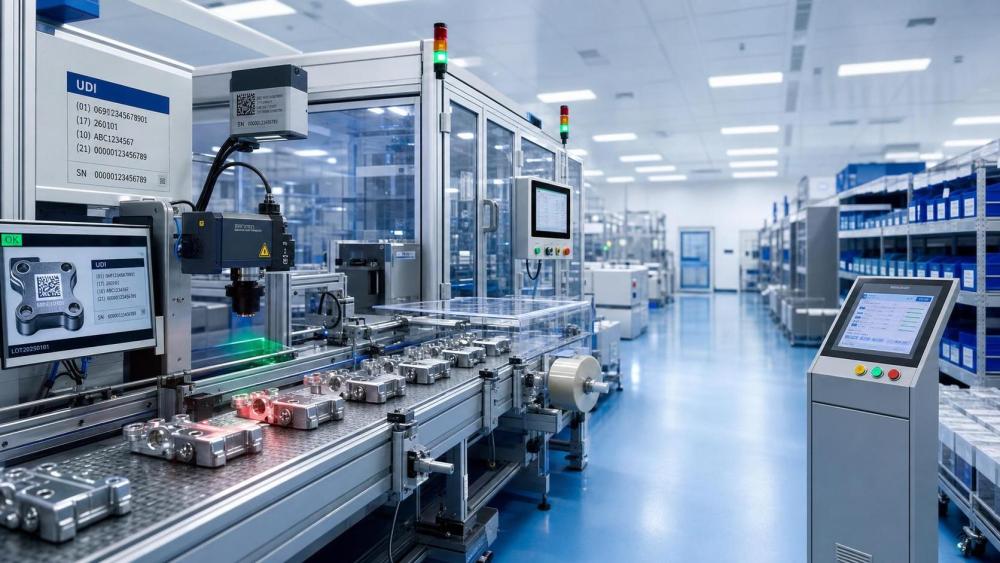
Medical device regulations increasingly expect a documented chain from raw material to released unit. That expectation applies to both primary manufacturing steps and supporting processes.
This is where manufacturing traceability for medical devices becomes more detailed than ordinary production recordkeeping. It must support investigations, deviations, complaints, and controlled field actions.
A missing cleaning parameter, unreadable code, or unverified batch addition can break that chain. Once that happens, proving conformity becomes difficult even when no defect is visible.
Across advanced manufacturing, GIAS highlights how auxiliary systems influence precision, cleanliness, identification, and production consistency. In medical device settings, those same factors directly affect compliance evidence.
What traceability really means on a medical device line
Traceability is often described as the ability to follow a product backward and forward. That definition is useful, but not enough for regulated manufacturing.
A compliant record should answer four practical questions. What was made, how it was made, who released each step, and which conditions could affect safety or performance.
For manufacturing traceability for medical devices, data should connect device identifiers, work orders, equipment status, process parameters, inspection outcomes, and packaging results into one reviewable history.
That history should also be attributable and time-based. Regulators do not only ask what value was recorded. They ask when it was recorded, by whom, and under which revision.
The minimum logic behind a usable traceability record
- Each product unit or lot must have a unique identifier.
- Each critical process must have linked parameter records.
- Each material input must tie back to supplier and receiving status.
- Each inspection and release decision must be attributable.
- Each exception must show review, disposition, and containment.
Which data must be captured to stay compliant
The exact data set varies by device class, process risk, and market. Still, some categories appear repeatedly in effective manufacturing traceability for medical devices programs.
The strongest systems do not collect these elements as isolated files. They create a connected data structure that can be searched by lot, unit, date, process, or deviation.
Critical points across cleaning, marking, batching, and packaging
Some of the most important compliance evidence comes from support processes that are easy to underestimate. These are exactly the areas where data gaps often appear.
Cleaning and contamination control
If ultrasonic cleaning is part of the route, records should include cycle parameters, solution condition, bath change history, loading pattern, and verification of cleaning effectiveness.
For high-risk components, linking cleanliness inspection results to the specific cleaning run can be essential. Without that link, contamination investigations become slow and uncertain.
Marking and identification
Laser marking and inkjet coding support direct part identification, UDI implementation, and anti-counterfeit control. The traceability record should capture code content, readability checks, and rework events.
A permanent mark is only useful if it remains legible after sterilization, handling, or packaging stress. Verification results should therefore be part of manufacturing traceability for medical devices.
Weighing, batching, and recipe control
Where adhesives, coatings, compounds, or liquid formulations are involved, industrial weighing and batching data becomes part of product genealogy. Target value, actual value, tolerance, and override history should be retained.
This is especially important when small dosing errors could affect curing, bonding strength, biocompatibility, or shelf life.
Vacuum, sealing, and packaging integrity
Vacuum systems and packaging equipment often affect sterile barrier performance. Pressure profile, dwell time, leak testing, seal inspection, and environmental conditions should be easy to retrieve.
In complaint analysis, packaging data can quickly determine whether the issue was device-related or introduced during final handling.
What good records look like during an audit or investigation
A large volume of records does not guarantee control. Auditors usually test whether records are complete, consistent, legible, secure, and logically connected.
In manufacturing traceability for medical devices, useful records usually show the following traits:
- Data is captured at the point of activity, not reconstructed later.
- Critical limits and alarms are recorded automatically where possible.
- Manual entries include reason codes and review steps.
- Rework and scrap remain visible in the product history.
- Record revisions are controlled and audit-trailed.
This matters because investigations rarely begin with a neat failure mode. They often begin with a complaint, a drift signal, or an unexplained discrepancy.
At that point, speed matters. A traceability system should narrow exposure quickly, identify common process factors, and support defensible decisions.
Common weak spots that break compliance confidence
Most traceability failures do not come from one dramatic gap. They come from small disconnects between systems, shifts, suppliers, or process steps.
Typical weak spots include unlinked auxiliary equipment logs, paper records scanned too late, inconsistent lot naming, and missing evidence for rejected or reworked parts.
Another recurring issue is assuming final test results can compensate for incomplete process history. In regulated environments, they usually cannot.
More mature manufacturing traceability for medical devices programs treat support equipment data as part of the regulated record, not as maintenance-only information.
How to strengthen traceability without overcomplicating the system
Improvement usually starts with process mapping. Identify every step where a product can change condition, identity, composition, sterility risk, or release status.
Then define which data is critical to prove control at that step. Not every machine value needs long-term retention, but every critical attribute needs a clear rationale.
A practical review often focuses on five questions:
- Can each finished unit be traced to materials and process runs?
- Are auxiliary systems feeding data into the same traceability logic?
- Can critical parameters be retrieved within minutes during an audit?
- Do alarms, deviations, and overrides remain visible after batch release?
- Is the record structure aligned with actual investigation workflows?
That is also where platforms like GIAS add value. They make it easier to compare process-support technologies that influence cleaning precision, code permanence, batching accuracy, vacuum stability, and packaging reliability.
The next step is usually straightforward: review the current device history record, map hidden data sources, and test whether a single lot can be reconstructed end to end without guesswork.
If that exercise reveals delays or blind spots, the priority is clear. Strengthen the data chain at the process points where compliance, product quality, and patient safety intersect.