
Manufacturing Support Technology Traceability: How to Build a Reliable Track-and-Trace Workflow
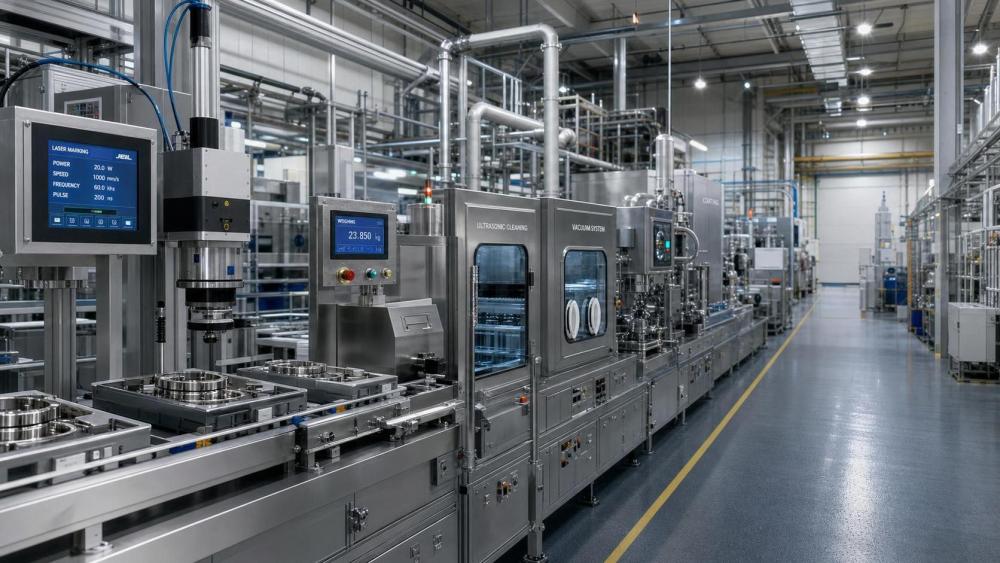
In complex production environments, Manufacturing Support Technology traceability is no longer optional. It is now a working requirement for quality, compliance, and stable output.
When production depends on coding, weighing, cleaning, vacuum, and coating systems, traceability cannot stay fragmented. It has to become one connected and verifiable workflow.
That shift is especially important when product quality depends on small process details. A missing code, unstable vacuum level, or unverified cleaning cycle can create costly downstream risk.
A reliable track-and-trace workflow does more than record events. It connects material identity, process conditions, inspection results, and final release into a practical decision system.
For manufacturers working across regulated, export-driven, or quality-sensitive sectors, Manufacturing Support Technology traceability helps reduce audit stress, improve root-cause analysis, and protect brand confidence.
Why Manufacturing Support Technology traceability matters now
From recent market changes, one clear signal stands out. Buyers, auditors, and internal quality teams now expect data continuity across the entire support process.
This is not limited to primary production machines. Auxiliary systems often decide whether process evidence is complete, searchable, and defensible during customer review or regulatory inspection.
For example, laser marking and inkjet coding establish product identity. Industrial weighing and batching confirm recipe accuracy. Ultrasonic cleaning records contamination control. Vacuum systems prove process stability.
Surface treatment and electrostatic coating add another layer. They support corrosion resistance, appearance consistency, and compliance evidence, especially when products move across markets with different standards.
That is why Manufacturing Support Technology traceability has become a practical management tool. It links process support equipment to measurable business control.
What a dependable track-and-trace workflow should include
A strong workflow starts with a simple rule. Every product, batch, or component must have a unique identity that stays connected from entry to shipment.
That identity should follow the item through all critical support steps. If the chain breaks, Manufacturing Support Technology traceability becomes incomplete and much less useful.
In practical terms, the workflow should cover these elements:
- Product or batch identification through laser marking, inkjet coding, labels, or serial assignment.
- Material intake records, supplier lot references, and incoming quality checkpoints.
- Weighing and batching data for formulas, dosing tolerance, and operator confirmation.
- Cleaning, welding, vacuum, coating, or drying process parameters with timestamps.
- Inspection results, exception handling, rework records, and final release status.
- Archived digital records that support search, audit retrieval, and root-cause investigation.
The point is not to capture everything. The point is to capture the data that proves process control, identifies failure points, and supports action when something goes wrong.
How to build Manufacturing Support Technology traceability step by step
A workable system usually begins with process mapping. Before buying software or adding sensors, map where identity, data, and operator decisions currently enter the production flow.
1. Define the traceability unit
Decide whether the traceability unit is a batch, pallet, tray, component, or finished item. This decision affects equipment integration, data storage, and coding format.
2. Identify critical control points
Focus on steps where support technology changes product condition. Typical control points include cleaning cycles, welding settings, batching tolerance, vacuum pressure, marking quality, and coating thickness.
3. Standardize data fields
Use consistent fields across systems. Time, lot number, machine ID, operator ID, recipe version, pass or fail status, and alarm code should follow one shared structure.
4. Connect equipment to one record chain
This is where Manufacturing Support Technology traceability becomes real. Coding, weighing, cleaning, vacuum, and coating systems must feed into linked records, not isolated files.
5. Build exception handling rules
A good workflow is tested by failure, not normal operation. Define what happens when codes are unreadable, weight drifts out of range, or cleaning validation is incomplete.
6. Make retrieval fast
Search speed matters during audits and complaints. A strong system should retrieve batch history, machine conditions, and quality results within minutes, not hours.
Where support technologies fit inside the traceability chain
Many teams still treat auxiliary systems as separate utilities. In actual operations, they are traceability anchors because they create the evidence behind process quality.
When these technologies share common identifiers, Manufacturing Support Technology traceability becomes easier to manage, measure, and improve across product lines.
Common failure points and how to avoid them
Most traceability projects fail for operational reasons, not technical ones. The system may exist, but the workflow does not match how people actually run production.
The most common problems include:
- Too many manual entries, which create delay and inconsistency.
- Different naming rules across departments and machines.
- Unreadable or damaged product codes in harsh environments.
- Missing links between support equipment records and final inspection records.
- No clear rule for blocked material, rework, or mixed batches.
The practical response is to simplify the workflow. Automate capture where possible, define one record structure, and make exception handling visible to both engineering and quality teams.
It also helps to treat Manufacturing Support Technology traceability as a process discipline. Without ownership, even good tools lose reliability over time.
How to measure whether the workflow is working
A traceability system should be judged by response quality, not by data volume. More records do not automatically mean better control.
Useful performance indicators usually include audit retrieval time, trace-back accuracy, rework visibility, code readability rate, and exception closure time.
In many factories, one strong sign of progress is faster investigation. If teams can isolate a batch issue quickly, the workflow is creating real operational value.
Another sign is preventive action. Good Manufacturing Support Technology traceability helps teams spot drift early, before defects spread across output or reach customers.
A practical path forward
The most effective approach is usually phased. Start with one product family, one line, or one critical process area where traceability gaps already create cost or compliance pressure.
Then connect the support technologies that matter most. Product coding, weighing, cleaning validation, vacuum records, and coating evidence often deliver the fastest return.
As the workflow matures, standardize naming, automate data capture, and strengthen retrieval rules. That is how Manufacturing Support Technology traceability grows from a reporting task into a control system.
For industrial operations focused on quality, export readiness, and process reliability, the goal is straightforward. Build one trusted data chain that proves what happened, when it happened, and why it can be trusted.
That kind of workflow supports better audits, faster decisions, and stronger manufacturing confidence. In real production, that is what reliable traceability is supposed to deliver.