
How an Anti-Counterfeiting Marking Supplier Supports Traceability in Packaging Lines
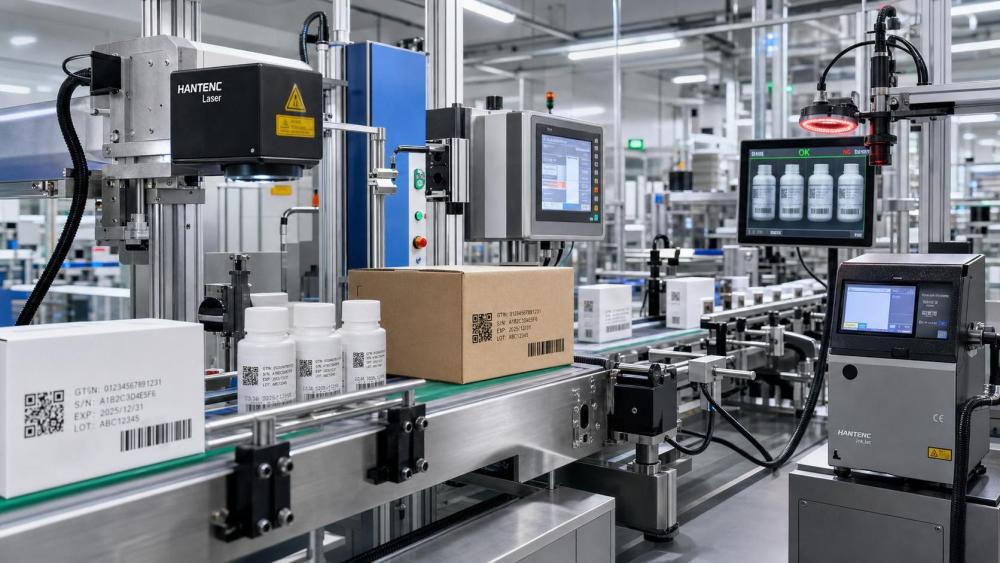
In modern packaging lines, an anti-counterfeiting marking supplier does more than add codes or labels.
It helps manufacturers build reliable traceability, protect brand integrity, and support compliance across fast-moving production environments.
That shift matters more now because packaging is no longer just the final wrapping step.
It is now a data carrier for quality control, recall readiness, customs clearance, and market trust.
A capable anti-counterfeiting marking supplier connects coding technology with production logic.
That connection makes every package easier to identify, verify, and trace across the supply chain.
In practical terms, this means fewer blind spots between filling, sealing, labeling, warehousing, and shipment.
It also means faster response when counterfeit risk, customer complaints, or regulatory questions appear.
Why traceability has become a packaging line priority
Recent changes make traceability a direct business issue, not only a technical feature.
More products move across borders, through distributors, and onto online marketplaces with limited visibility.
At the same time, counterfeiters copy packaging faster and with better visual accuracy than before.
This is where an anti-counterfeiting marking supplier becomes strategically useful.
Instead of treating marking as an isolated machine, the supplier helps create a traceable identity system.
That system can include batch numbers, serialized codes, date information, GS1 structures, and verification marks.
When those elements are integrated correctly, each unit can be linked to a production event.
That production event may include operator shift, line number, raw material lot, inspection data, or shipment destination.
The value is simple.
If something goes wrong, teams can isolate the affected scope quickly instead of stopping everything.
What an anti-counterfeiting marking supplier actually contributes
A strong anti-counterfeiting marking supplier brings more than equipment specifications.
It supports code durability, data accuracy, line compatibility, and downstream readability.
That matters because traceability fails when marking quality drops under real production conditions.
For example, condensation, dust, curved surfaces, film reflection, and line vibration can all reduce code performance.
A qualified supplier usually helps in five areas:
- Selecting the right marking method for the packaging material and line speed.
- Designing code content that supports traceability and anti-diversion control.
- Integrating printers, lasers, vision systems, and software with existing line equipment.
- Validating readability at the point of production and at distribution checkpoints.
- Maintaining uptime through consumables management, calibration, and service support.
In other words, the anti-counterfeiting marking supplier helps turn package identity into usable production intelligence.
From visible marks to digital traceability
Some companies still focus only on visible labels or simple date coding.
That is no longer enough in higher-risk sectors or export-oriented operations.
A modern anti-counterfeiting marking supplier supports layered identification.
That may combine human-readable text, machine-readable codes, covert security features, and cloud-linked serial data.
This layered approach improves authentication while keeping the packaging line efficient.
How traceability works across the packaging line
Traceability is strongest when coding is treated as part of line architecture.
The anti-counterfeiting marking supplier usually supports this by mapping code points across packaging stages.
- Primary packaging receives unit-level identity, such as a serialized QR code or lot code.
- Secondary packaging links grouped units to a carton code for aggregation.
- Tertiary packaging connects cartons to pallet data for warehouse and logistics visibility.
- Vision inspection verifies print quality and rejects unreadable or missing codes.
- Software records every event for audit trails, recall analysis, and shipment confirmation.
This structure is especially useful in food, pharmaceuticals, electronics, cosmetics, and industrial components.
Those sectors need fast packaging and dependable product identity at the same time.
The more complex the distribution network becomes, the more valuable accurate aggregation becomes.
Where failures usually happen
In actual operations, traceability problems are often basic.
Codes may smear, duplicate, disappear, scan poorly, or fail to sync with databases.
An experienced anti-counterfeiting marking supplier plans for these risks before installation.
That preventive approach usually delivers more value than reacting after market complaints appear.
Choosing technologies that fit the package and the risk level
Not every product needs the same anti-counterfeiting structure.
The right anti-counterfeiting marking supplier evaluates packaging material, throughput, environment, and fraud exposure together.
Common options include continuous inkjet, thermal inkjet, laser marking, thermal transfer, and print-and-apply labeling.
The choice depends on whether the priority is permanence, contrast, consumable cost, flexibility, or data density.
A practical anti-counterfeiting marking supplier will also discuss verification tools, not only marking devices.
Without inspection, even a good code design can fail in real production.
What decision-makers should evaluate before selecting a supplier
Supplier selection should start with operational fit, not only unit price.
An anti-counterfeiting marking supplier affects uptime, compliance confidence, and the credibility of traceability records.
The most useful evaluation questions are usually these:
- Can the supplier prove performance on packaging materials similar to yours?
- Does the solution support serialization, aggregation, and database integration?
- How stable is code quality at target line speeds and environmental conditions?
- What is the process for validation, operator training, and change control?
- How quickly can spare parts, consumables, and service support be delivered?
- Can the system scale across multiple factories or export markets?
These questions help separate a machine vendor from a true anti-counterfeiting marking supplier.
That distinction becomes important when traceability must survive audits, recalls, and distributor disputes.
A practical path to stronger packaging traceability
The best results usually come from phased implementation.
First, define the business problem clearly.
That may be counterfeit exposure, weak recall readiness, export compliance, or poor warehouse visibility.
Then align code design with those risks.
Next, ask the anti-counterfeiting marking supplier to validate performance on the real line.
That includes actual substrates, operators, shift patterns, and scan points.
After that, connect marking data with inspection and production records.
Finally, create clear response rules for failed codes, rework, and exception handling.
This process turns traceability from a compliance checkbox into a working control system.
For packaging lines under pressure to move faster, that control is often the real competitive advantage.
A capable anti-counterfeiting marking supplier supports that advantage by making every package easier to trust, trace, and manage.
That is the practical standard worth building toward.