
How Digital Supply Chain Identification Packaging Improves Traceability and Recall Control
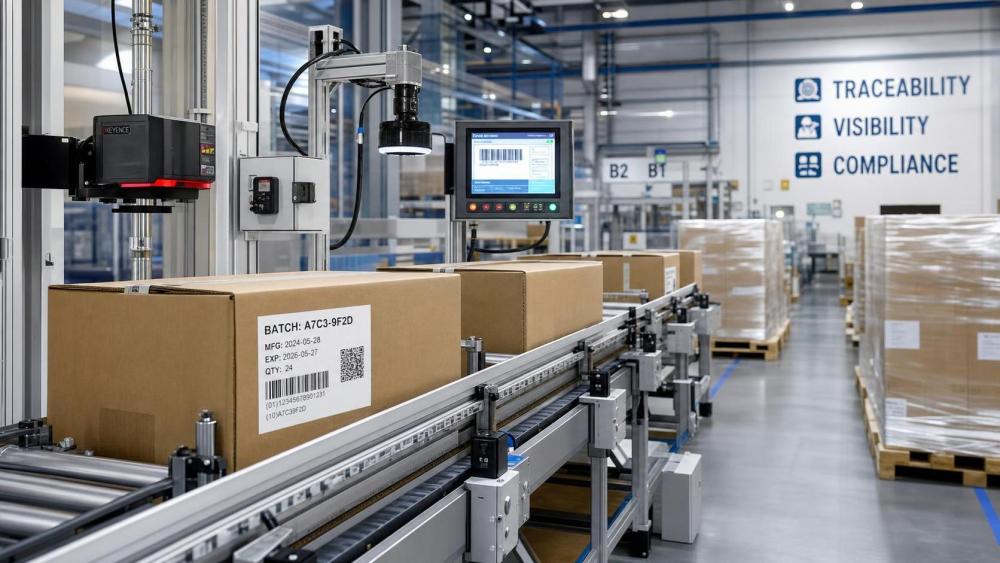
In quality-critical manufacturing, digital supply chain identification packaging is no longer a supporting detail. It has become a control point for traceability, recall readiness, and compliance confidence.
When labels, codes, and packaging records stay disconnected, problems spread quietly. A batch issue that starts on one line can become harder to isolate across storage, shipping, and customer delivery.
That is why digital supply chain identification packaging matters. It connects product identity, production data, packaging status, and movement history into one searchable record.
In practical terms, this means faster batch verification, fewer manual checks, and better recall control. It also supports root-cause analysis when nonconforming goods appear in the field.
For manufacturers working under tighter customer audits and regulatory pressure, digital identification is now part of operational risk management, not just packaging decoration.
Why Traceability Breaks Down in Traditional Packaging Workflows
Many factories still rely on fragmented labeling steps. One system prints codes, another stores batch data, and a separate warehouse process records carton movement.
This separation creates blind spots. A readable label does not always mean a trustworthy traceability record. If the code is not linked to process data, its value is limited.
The risk grows when products move across multiple suppliers, contract packers, or export channels. Manual entry errors and relabeling during repacking often break chain-of-custody visibility.
During a recall, those gaps become expensive. Teams may end up stopping more inventory than necessary because they cannot confidently identify the affected range.
That broad containment approach protects the brand, but it increases waste, freight cost, rework, and customer disruption. Better identification packaging reduces that uncertainty.
What Digital Supply Chain Identification Packaging Actually Includes
Digital supply chain identification packaging combines several layers of control. It is not only about printing a code on a box.
A complete setup usually links product marking, packaging verification, data capture, and system-level record management. Each layer strengthens the next.
- Laser marking or inkjet coding for permanent or high-speed product identification
- Barcode, 2D code, or serialized data printed on primary, secondary, or transport packaging
- Vision inspection to confirm readability, position, and code accuracy
- Packaging aggregation that links item, carton, pallet, and shipment levels
- Database or MES integration that stores time, line, operator, batch, and process parameters
From a control perspective, aggregation is especially useful. It allows one scan at the pallet level to reveal which cartons and units are inside.
That structure makes digital supply chain identification packaging far more powerful during quarantine, recall, and inventory release decisions.
How It Improves Recall Control
Recall control depends on speed and precision. The first question is simple: which products are affected, and where are they now?
Digital supply chain identification packaging answers that question faster by tying every package to a production event and a logistics path.
When a defect appears, teams can search by batch, date, shift, line, material lot, or packaging code. That narrows the affected scope before action begins.
This changes recall execution in three important ways:
- It shortens product identification time.
- It reduces overblocking of unaffected stock.
- It improves communication with distributors and regulators.
More importantly, the record is defensible. Instead of relying on memory or paper logs, the team can show a time-stamped traceability trail.
That matters when customers ask why some stock was recalled and other stock was released. Clear digital evidence supports confident decisions.
The Link Between Identification Packaging and Root-Cause Analysis
Traceability is not only about finding product. It also helps explain why a problem happened.
A good digital supply chain identification packaging system records more than serial numbers. It can also connect to process-support equipment and packaging conditions.
That may include weighing records, cleaning cycle data, vacuum packaging parameters, surface treatment history, or coding verification results.
In a complaint investigation, those linked records are often the difference between guessing and knowing. Teams can compare affected and unaffected lots with real evidence.
For example, if unreadable codes appear only on one shift, the issue may relate to printer setup, substrate condition, or packaging line speed.
If leakage complaints appear only in lots packed under unstable vacuum conditions, the packaging traceability record points the investigation in the right direction immediately.
This is where industrial auxiliary systems become strategically important. They support the process signals that make recall analysis more accurate and corrective actions more targeted.
Where the Biggest Gains Usually Appear
The strongest results usually show up in operations with complex product movement or strict compliance demands. That includes food, pharmaceuticals, chemicals, electronics, and export manufacturing.
Still, the benefits are not limited to regulated sectors. Any factory that manages multiple SKUs, batch changes, or private-label packaging can gain from stronger identification control.
- Faster inbound and outbound verification
- Cleaner quarantine and release workflows
- Lower risk of shipping mixed or mislabeled goods
- Stronger support for anti-counterfeiting and authenticity checks
- Better audit readiness across plants and distribution partners
From recent market changes, one signal stands out. Buyers increasingly expect packaging identification to support both compliance reporting and digital procurement transparency.
That means digital supply chain identification packaging is becoming part of commercial competitiveness as well as internal quality control.
How to Implement It Without Disrupting Production
A full replacement project is not always necessary. Many plants start with one product family, one packaging format, or one high-risk line.
The most practical approach is staged integration. First secure code quality, then strengthen data linkage, then build aggregation and recall reporting.
- Map current traceability gaps across production, packing, storage, and shipping.
- Define which code format fits the product, substrate, and scanning environment.
- Add verification points to catch unreadable, missing, or duplicated identifiers.
- Connect identification data with batch, machine, operator, and time records.
- Test a mock recall using real packaging data before scaling further.
This phased method keeps risk manageable. It also helps teams prove value early through measurable improvements in search time, segregation accuracy, and audit response.
In many cases, the best starting point is not the most advanced code. It is the point where missing visibility creates the highest operational cost.
What to Check When Evaluating a Solution
Not every system labeled as traceability-ready can support effective recall control. The technical details matter.
A useful digital supply chain identification packaging solution should be evaluated against real production conditions, not demo assumptions.
- Can the code remain readable after abrasion, moisture, or transport handling?
- Does the system support both unit-level and pallet-level traceability?
- Can it integrate with MES, ERP, warehouse, and inspection systems?
- How quickly can it produce an affected-lot report during a recall event?
- Does it support audit trails, user permissions, and change history?
Those checks keep the project focused on control value, not just equipment features. In recall scenarios, retrieval speed and data integrity matter more than interface cosmetics.
A Stronger Packaging Identity Creates a Stronger Safety Response
Digital supply chain identification packaging improves more than labeling accuracy. It gives manufacturers a clearer operational memory of what was made, packed, stored, and shipped.
That clarity supports faster traceability checks, narrower recall boundaries, and more reliable corrective action. It also reduces the cost of uncertainty during high-pressure quality events.
As supply chains become more distributed, identification packaging will keep moving closer to the center of quality and safety strategy.
The next practical step is to review where product identity gets lost today. Once that gap is visible, digital control becomes much easier to design and justify.