
Anti-Counterfeiting for Packaging: Which Technologies Work Best for Brand Protection?
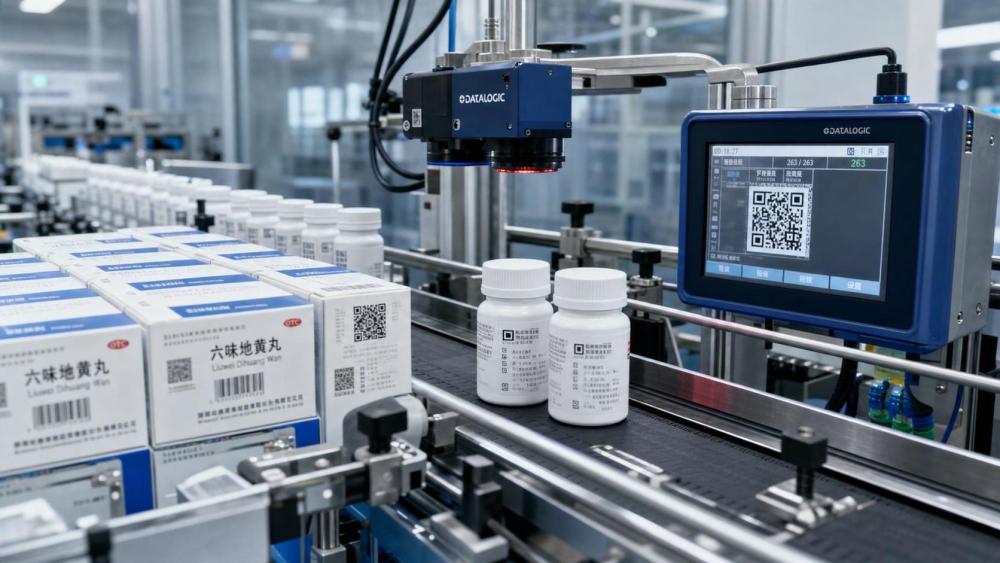
Anti-counterfeiting for packaging is no longer a niche concern. It now sits close to product quality, channel control, and market access.
Fake goods damage revenue, trigger recalls, and weaken customer trust. In regulated sectors, they can also create compliance exposure and legal risk.
That is why anti-counterfeiting for packaging has moved from a label decision to a cross-functional business strategy.
In practice, the best results rarely come from one feature alone. Strong brand protection usually combines visible, covert, and digital controls.
For industrial manufacturers, this also connects with traceability, coding reliability, inspection accuracy, and process consistency across global supply chains.
Why anti-counterfeiting for packaging matters more now
Several market shifts have raised the stakes. Cross-border e-commerce has expanded product reach, but it has also widened counterfeit entry points.
At the same time, customers expect instant product verification. They want to know whether a package is genuine, compliant, and safe.
Regulators are pushing in the same direction. Serialization, labeling accuracy, and track-and-trace expectations are rising in many industries.
This changes the evaluation standard. Anti-counterfeiting for packaging must now support both brand defense and operational control.
- Protect revenue from diverted, copied, or relabeled products.
- Support traceability during recalls or market investigations.
- Strengthen distributor accountability across regions.
- Improve customer confidence at the point of purchase.
What technologies are used in anti-counterfeiting for packaging?
The main technology groups fall into four layers. Each layer solves a different authentication problem.
1. Overt security features
These are visible to users and inspectors. Examples include holograms, tamper-evident seals, color-shifting inks, and special print effects.
They are useful because they create immediate screening value. However, basic visible features are often copied over time.
2. Covert security features
These include UV inks, microtext, forensic taggants, and hidden markers. They usually require trained verification or special tools.
Covert methods improve resistance against casual duplication. They are especially useful in controlled channel inspections.
3. Serialization and coding
Unique serial numbers, QR codes, DataMatrix codes, and lot identifiers are central to modern anti-counterfeiting for packaging.
This is where laser marking and inkjet coding become highly relevant. They connect packaging identity with production records and supply chain events.
4. Digital authentication platforms
Cloud verification, mobile scanning, database matching, and analytics platforms turn codes into actionable intelligence.
This layer helps detect duplicate scans, unusual locations, and suspicious distribution patterns.
Which packaging technologies work best in real business use?
The most effective anti-counterfeiting for packaging depends on product value, channel complexity, and verification needs.
Still, some technologies consistently perform well because they balance security, scalability, and factory integration.
Laser marking for permanent identification
Laser marking creates durable codes that resist abrasion, solvents, and handling. That makes it valuable for long-life packaging or secondary components.
It also supports high-resolution variable data. For anti-counterfeiting for packaging, permanence matters when traceability must survive logistics stress.
The limitation is substrate compatibility and capital cost. Not every packaging material responds equally well to laser systems.
Industrial inkjet coding for flexibility
Inkjet coding remains one of the most flexible tools for anti-counterfeiting for packaging. It handles variable codes at high line speed.
It works well for cartons, labels, films, and mixed packaging formats. This is important for plants running multiple SKUs.
Performance depends on print quality, adhesion, and readability. Poor maintenance can quickly reduce authentication reliability.
Tamper-evident structures for physical assurance
Seals, breakable closures, destructible labels, and induction liners do not verify identity alone. But they clearly reveal package interference.
That makes them a practical companion to coding systems. In anti-counterfeiting for packaging, physical evidence still matters.
Smart QR or DataMatrix with cloud validation
This is often the strongest scalable option. A unique code becomes far more powerful when linked to a secure database and scan history.
It supports product authentication, channel monitoring, recall readiness, and consumer engagement in one framework.
How to compare anti-counterfeiting for packaging options
Decision quality improves when technology choices are tied to business conditions. A simple comparison table can clarify the trade-offs.
From a risk perspective, smart serialized codes combined with reliable marking or coding usually deliver the best overall value.
Standards, compliance, and process control considerations
Technology selection should also reflect standards and process discipline. Anti-counterfeiting for packaging fails when code quality is inconsistent.
GS1 structures, barcode grading, data integrity, audit trails, and line verification all matter. This is especially true for regulated exports.
A code is only useful if scanners can read it, databases can trust it, and investigations can trace it.
This is where industrial auxiliary systems become important. Marking, coding, inspection, weighing, and handling stability affect final packaging security.
- Use vision inspection to verify code readability on-line.
- Control substrate cleanliness before printing or marking.
- Maintain batch and serialization data in secure systems.
- Validate line performance after material or format changes.
A practical framework for choosing the right mix
A useful anti-counterfeiting for packaging strategy starts with risk mapping, not feature shopping.
- Identify where counterfeiting happens: factory, transit, distributor level, or online resale.
- Define who must authenticate the package: consumer, customs officer, distributor, or internal quality team.
- Match technology to substrate, line speed, and packaging format.
- Connect packaging identity with traceability software and inspection controls.
- Review total cost, including maintenance, training, and data governance.
In many cases, the strongest design is layered. A visible seal, a unique code, and backend validation work better together.
That approach improves deterrence, detection, and investigation without relying on a single point of failure.
What brands should do next
The best anti-counterfeiting for packaging solution is usually not the most complex one. It is the one that can be executed consistently at scale.
For many manufacturers, that means starting with reliable serialization, strong coding quality, and traceability visibility across markets.
Then add covert or tamper-evident layers where product risk, margin value, or regulatory exposure is higher.
As counterfeit methods evolve, packaging security must stay connected to real factory capability. That includes marking precision, inspection discipline, and process control.
Brands that treat anti-counterfeiting for packaging as part of manufacturing intelligence, not just package decoration, are in a stronger position to protect trust and compete globally.