
What Drives Anti-Counterfeiting Marking Cost in Manufacturing Projects?
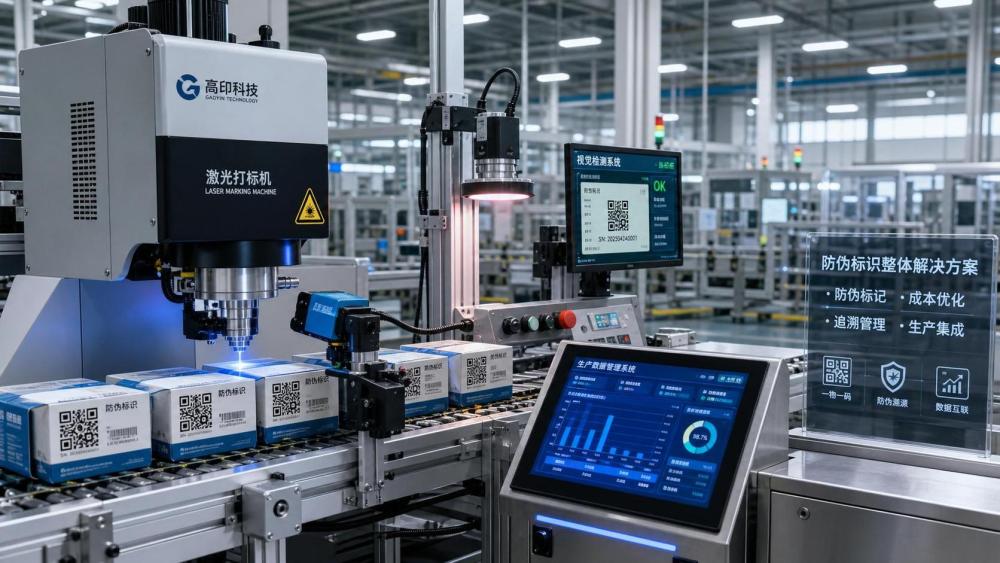
For manufacturing projects, anti-counterfeiting marking cost is rarely just about buying a machine.
It shapes traceability, audit readiness, brand protection, and the real cost of production control.
That matters when approvals depend on both short-term budgets and long-term operational value.
In practice, the biggest mistakes happen when teams compare equipment price but ignore process fit.
A lower initial quote can still create a higher anti-counterfeiting marking cost over the project lifecycle.
The better approach is to break cost into technical, operational, and risk-related drivers.
Once these cost drivers are visible, comparisons become clearer and approvals become easier to defend.
The First Cost Driver: Marking Technology Choice
The first factor behind anti-counterfeiting marking cost is the technology itself.
Laser marking, inkjet coding, thermal transfer, and hybrid systems all have different cost structures.
Laser systems often require higher upfront spending but lower consumable expense.
Inkjet solutions usually enter at a lower purchase price but add recurring costs for ink, solvent, and maintenance.
This changes the anti-counterfeiting marking cost curve over time.
For high-volume lines, permanent marking can produce better total cost performance.
For flexible packaging or frequently changing codes, variable printing may stay more practical.
The right decision depends on substrate, cycle time, code complexity, and expected service life.
Why permanent marking often costs more upfront
Permanent anti-counterfeiting features need stable beam quality, control software, and precise motion coordination.
That means stronger hardware specifications and tighter installation requirements.
However, the payback can be attractive when rework, relabeling, and field disputes are expensive.
Material, Code Design, and Production Speed Also Change Cost
A second major driver of anti-counterfeiting marking cost is what needs to be marked and how fast.
Marking on metal, plastics, coated surfaces, glass, rubber, or multilayer packaging is not equally demanding.
Some materials absorb energy well.
Others need additives, pretreatment, stronger power, or slower line speeds to achieve readable codes.
That directly affects anti-counterfeiting marking cost per unit.
Code design matters too.
A simple date code is cheaper than serialized QR codes with encrypted layers or microtext.
The more data the code carries, the more processing, verification, and data handling are needed.
Higher line speed creates another pressure point.
Fast-moving lines need better synchronization, cleaner code contrast, and tighter reject control.
That usually means more advanced hardware and software integration.
Typical production variables that raise anti-counterfeiting marking cost
- Difficult materials with poor contrast response
- Small product surfaces requiring high positioning accuracy
- Serialized or database-linked code structures
- High-speed conveyors with limited marking window
- Strict readability standards for export or regulated sectors
Integration and Compliance Costs Are Often Underestimated
One of the most overlooked parts of anti-counterfeiting marking cost is system integration.
A marking device that works in a demo may still need line modification before live production.
Mounting, guarding, fume extraction, conveyors, vision inspection, and MES connectivity all add cost.
This is especially true when anti-counterfeiting marking must support traceability across multiple factories or export markets.
Compliance requirements can raise cost further.
Some industries require validation records, code verification logs, or secure data trails.
Those controls are valuable, but they increase software scope and implementation time.
From a cost approval view, these items should be treated as project essentials, not optional extras.
Questions that expose hidden integration cost
- Will the marking system connect to ERP, MES, or serialization databases?
- Is machine vision needed to verify every code?
- Does the line need enclosure, extraction, or operator protection upgrades?
- Will validation documents or audit records be required?
- How many SKUs and code templates will need ongoing management?
Operating Expense Has More Impact Than Many Teams Expect
When anti-counterfeiting marking cost is reviewed only as capital expense, the picture stays incomplete.
Operating expense often determines whether the project remains cost-efficient after year one.
Consumables are the obvious part.
Less obvious items include spare parts, lens cleaning, calibration, software support, training, and planned downtime.
Code failures create another cost layer.
Unreadable marks can trigger scrap, manual sorting, shipment delay, or rejected export documentation.
In sectors with strong brand exposure, counterfeit disputes can cost far more than the marking line itself.
That is why anti-counterfeiting marking cost should be reviewed against failure cost, not just equipment cost.
A practical cost comparison view
Supplier Capability Changes the Real Cost Outcome
Two suppliers can quote similar anti-counterfeiting marking cost and still deliver very different results.
The gap usually comes from application knowledge, service response, and validation discipline.
A capable supplier tests real materials, simulates production speed, and documents code durability.
A weaker supplier may quote quickly but leave process risk unresolved.
This becomes expensive later through tuning delays, unstable output, or support disputes.
In recent projects, a clearer pattern has emerged.
Buyers are paying closer attention to lifecycle support, not only machine configuration.
That shift makes sense because anti-counterfeiting marking cost is strongly tied to uptime and consistency.
What to verify before approval
- Application references in similar materials and industries
- Documented code quality and durability testing
- Local or regional service capability
- Training scope for operators and maintenance teams
- Clear spare parts and support cost schedule
How to Evaluate Anti-Counterfeiting Marking Cost More Accurately
A useful review starts with total project value, not just line-item price.
That means comparing anti-counterfeiting marking cost across five dimensions.
- Initial equipment and installation expense
- Consumables and maintenance over expected service life
- Integration and compliance workload
- Risk of code failure, recall, or counterfeit leakage
- Business value from better traceability and brand protection
This framework helps separate a cheap quote from a cost-effective solution.
It also improves cross-functional alignment between engineering, procurement, quality, and finance.
When those teams assess the same cost logic, approvals move faster and surprises decrease.
The strongest decisions usually come from pilot validation, realistic output data, and lifecycle cost modeling.
That is the most reliable way to control anti-counterfeiting marking cost while protecting long-term manufacturing performance.
Before final approval, ask one direct question: will this marking solution still make economic sense after two years of real production?