
Laser processing technology engraving has become a practical foundation for industrial identification, traceability, and surface communication. In production environments where every part may need a readable code, serial number, logo, or data matrix, engraving quality affects far more than appearance.
A weak mark can interrupt scanning, slow inspections, and create uncertainty during warranty analysis or compliance checks. A stable mark, by contrast, supports product history, anti-counterfeiting, and consistent downstream handling across sectors from electronics to metal fabrication.
That is why laser processing technology engraving is often discussed alongside other process-support systems. Platforms such as GIAS focus on this broader industrial picture, where cleaning precision, coating condition, vacuum stability, and marking quality all influence final manufacturing reliability.
What Laser Processing Technology Engraving Really Means
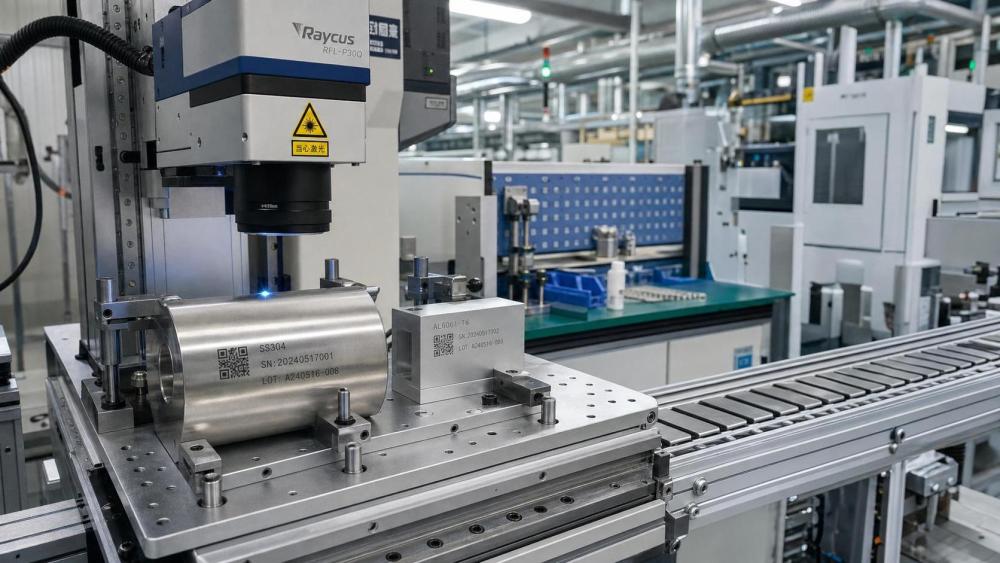
In simple terms, laser processing technology engraving uses a controlled laser beam to change a surface permanently. The result may be a shallow engraved cavity, a color change, a foamed surface, or a dark contrast mark.
Not every mark is the same process. Some applications remove material. Others alter the oxide layer, melt the top surface, or create localized carbonization. The practical goal remains the same: durable, legible identification without contact tooling.
This distinction matters because material response determines the correct laser source, pulse setting, speed, and focal strategy. When users treat all surfaces as interchangeable, mark quality becomes inconsistent very quickly.
Why the Topic Matters More Across Modern Manufacturing
Industrial lines now depend on reliable product identification at more points than before. Traceability is no longer limited to finished goods. It often begins with components, subassemblies, and process checkpoints.
That shift raises the importance of laser processing technology engraving in sectors with strict record control, export documentation, and anti-mix requirements. A permanent mark supports quality investigations, regulatory evidence, and production transparency.
The discussion also connects to adjacent systems. If a part is oily before marking, if a coating is unstable, or if a surface treatment varies by batch, the engraving result changes. Marking quality is rarely an isolated variable.
This is one reason integrated industrial content is useful. In practice, ultrasonic cleaning, coating control, coding strategy, and inspection standards often shape the final success of laser engraving.
Best Materials for Stable and Readable Marks
Some materials are naturally well suited to laser processing technology engraving. Others can be marked, but only within narrower process windows. The main issue is not whether a laser can interact with a surface, but whether the result stays readable and repeatable.
Materials that usually respond well
- Stainless steel, especially for annealed or dark contrast marks.
- Carbon steel, where deeper engraving and clear characters are common.
- Anodized aluminum, which often gives excellent contrast for codes and logos.
- Coated metals, if the coating thickness and adhesion are consistent.
- Technical plastics designed for laser marking additives.
- Ceramics that tolerate localized thermal stress and retain visible contrast.
Materials that need closer evaluation
- Highly reflective metals such as copper or polished aluminum.
- Heat-sensitive plastics that can melt, char, or deform.
- Transparent or translucent polymers with poor native absorption.
- Thin coated layers that may peel or discolor unevenly.
- Brittle ceramics that crack under concentrated thermal load.
Material selection should also consider the mark purpose. A decorative logo, a machine-readable 2D code, and a high-wear part label do not demand the same depth, contrast, or edge condition.
Where the Real Limits Usually Appear
The limits of laser processing technology engraving are usually practical rather than theoretical. A laser may produce a visible mark, yet still fail on line speed, scanner readability, corrosion resistance, or cosmetic acceptance.
Another limit involves the assumption that deeper is always better. For many parts, excessive engraving damages coating protection, creates burr-like ridges, or weakens thin-wall sections. Good marking is controlled marking.
What Determines Mark Quality in Daily Production
Mark quality depends on a chain of conditions, not only on laser power. The same machine can produce excellent or poor results depending on surface preparation, fixture repeatability, and parameter discipline.
Key factors to monitor
- Laser source type, including fiber, CO2, UV, or green laser selection.
- Pulse duration and frequency, which shape heat input and edge definition.
- Focus position, especially on curved or height-variable parts.
- Scanning speed and hatch spacing, which affect fill uniformity.
- Part cleanliness, including oil, dust, oxide, and residue control.
- Fixture stability, because small movement can distort fine symbols.
- Environmental consistency, such as fumes, airflow, and temperature changes.
In many factories, cleanliness is underestimated. Residual coolant, release agent, or coating overspray can change absorption and produce irregular tone. This is where upstream process discipline directly improves laser processing technology engraving results.
How Application Scenarios Change the Right Marking Strategy
A medical component, an automotive bracket, and a consumer electronics housing do not need the same mark profile. The best strategy depends on reading method, wear exposure, visual standards, and substrate behavior.
Typical use directions
- Traceability codes on metal parts where permanence matters more than appearance.
- Brand and compliance marks on coated housings where contrast and neat edges matter.
- Fine serial data on electronics where small text must remain scanner-readable.
- Batch information on plastics where low thermal impact is essential.
- Marks on treated surfaces where corrosion resistance must remain intact.
This is also why comparison with inkjet coding can be useful. Inkjet may fit fast, low-contact coding on some surfaces, while laser processing technology engraving is better when permanence, solvent resistance, and tamper resistance are central requirements.
Practical Steps to Improve Consistency
The most reliable improvements usually come from process control, not from aggressive parameter changes. A stable marking window is built through repeatable preparation, testing, and verification.
- Group materials by actual surface condition, not only by base material name.
- Record approved settings by part number, finish, and required code type.
- Validate marks after cleaning, coating, abrasion, and environmental exposure.
- Use scanner grading where machine-readable codes are critical.
- Check fixtures and focal distance whenever mark drift appears.
- Review upstream contamination sources before changing laser parameters.
Where parts move between cleaning, treatment, marking, and inspection, cross-process review is especially valuable. GIAS often highlights this broader logic: auxiliary systems work best when they are evaluated as a connected process chain.
What to Evaluate Before the Next Process Decision
Before expanding or adjusting laser processing technology engraving, it helps to define the real acceptance target. The key question is not only whether the mark looks acceptable at the machine.
More useful questions include whether the code remains readable after handling, whether the mark survives cleaning agents, whether coating performance changes, and whether the cycle time fits production reality.
A practical next step is to compare materials, surface states, and required mark outcomes in a small validation matrix. That approach turns laser processing technology engraving from a trial-and-error task into a controlled manufacturing decision.
From there, attention can shift to parameter standardization, inspection criteria, and how marking interacts with upstream cleaning or downstream quality checks. That is usually where better consistency, clearer traceability, and fewer line disruptions begin.