
Why Laser Engraving Technology for Metal Matters
Laser engraving technology for metal is no longer limited to branding or decorative marks.
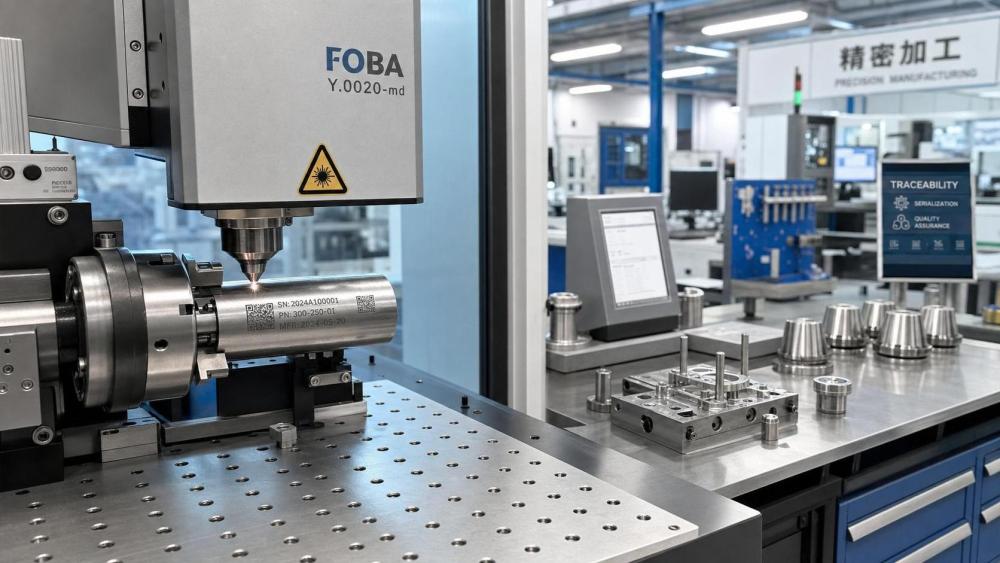
It now supports traceability, compliance, part identification, and controlled surface processing in many production environments.
From recent manufacturing changes, the stronger signal is clear.
Factories need marks that stay readable after heat, friction, cleaning, coating, or outdoor exposure.
That is why laser engraving technology for metal keeps gaining attention across automotive, electronics, tools, medical devices, and heavy industry.
In simple terms, engraving removes material and creates depth.
This is different from annealing or color marking, which mainly change surface appearance.
For day-to-day production, that difference affects durability, cycle time, and quality control.
How Laser Engraving Technology for Metal Works
The process uses focused laser energy to heat and vaporize tiny layers of metal.
Each pulse removes a controlled amount of material.
The final depth depends on power, frequency, speed, focus, and the number of passes.
Fiber lasers are the most common choice for metal applications.
They offer strong beam quality, efficient energy use, and stable performance on steel, aluminum, stainless steel, brass, and titanium.
CO2 systems are less suitable for bare metals unless coatings or special surface layers are involved.
In actual production, the goal is not maximum power alone.
The real target is balanced energy density that creates clean geometry without excessive burrs, oxidation, or thermal damage.
Key Parameters That Control Engraving Quality
Laser engraving technology for metal depends heavily on parameter control.
Even a good machine can produce poor results if settings are mismatched.
1. Power
Higher power usually increases removal rate and engraving depth.
However, too much power can widen the mark and roughen edges.
2. Frequency
Pulse frequency changes how energy is distributed across the surface.
Lower frequency often supports deeper engraving with stronger pulse energy.
Higher frequency may improve smoothness but reduce depth per pulse.
3. Marking Speed
Slower speed keeps the beam on one area longer.
That increases energy input and usually deepens the cut.
If speed is too slow, heat buildup may distort fine features.
4. Focus Position
Correct focus creates the smallest and most concentrated spot.
A slightly defocused beam may help some wider fills, but it reduces precision.
5. Hatch Spacing and Pass Count
Tighter hatch spacing creates more overlap between lines.
That can improve fill uniformity but may slow production.
Multiple passes are often better than one aggressive pass.
This approach usually gives better edge control and more stable depth.
Material Limits and What Changes by Metal Type
Not all metals respond the same way to laser engraving technology for metal.
Reflectivity, thermal conductivity, surface finish, and alloy composition all matter.
Coated or plated parts require extra caution.
Sometimes the job is to remove the top layer only.
In other cases, the requirement is to engrave through coating into the substrate.
That changes both parameter selection and inspection standards.
Depth, Precision, and Practical Limits
A common question is how deep laser engraving technology for metal can go.
The honest answer is that depth has a trade-off.
Deeper engraving usually means slower cycle time and more heat input.
For traceability codes, logos, and serial numbers, shallow but crisp engraving is often enough.
For molds, tags, harsh-environment plates, or post-coating readability, more depth may be required.
- Fine text and 2D codes need tight spot control.
- Deep cavities need multiple passes and cooling awareness.
- Very reflective metals may need careful ramp-up trials.
- Thin parts can warp if local heat concentration is too high.
This also means process validation should match the real part function, not just visual appearance.
Common Use Cases in Manufacturing
The best use cases for laser engraving technology for metal combine durability, readability, and process efficiency.
- Serial numbers and part IDs for full traceability.
- Data Matrix and QR codes for automated scanning.
- Nameplates, rating plates, and industrial labels.
- Tool identification in shared production environments.
- Medical and aerospace parts requiring permanent marks.
- Decorative metal surfaces needing precise texture control.
In many factories, marking is no longer treated as a standalone step.
It is linked to MES, quality records, supplier lots, and export compliance.
That makes laser engraving technology for metal part of a wider control system, not just a machine setting.
How to Set Parameters More Effectively
A practical setup method saves time and reduces scrap.
Instead of chasing one perfect number, test in a structured sequence.
- Start with the exact production material, finish, and thickness.
- Set a moderate power level and stable focus first.
- Adjust speed before raising power too aggressively.
- Change one variable at a time and record results.
- Check contrast, depth, edge quality, and scan readability.
- Repeat tests after cleaning, coating, or abrasion if required.
This method is especially useful when different suppliers deliver slightly different alloys or finishes.
Small material changes can shift the best settings more than many teams expect.
Quality Risks and Inspection Points
Even when marks look good at first glance, hidden issues can still appear.
Typical risks include inconsistent depth, poor code contrast, burr formation, heat tint, surface cracking, and unreadable micro text.
For standard control, inspect more than appearance.
- Measure depth where functional durability matters.
- Verify scanner performance for machine-readable codes.
- Check heat-affected zones on critical surfaces.
- Confirm adhesion performance if coating follows engraving.
- Review consistency across batch changes and shift changes.
This is where broader auxiliary process knowledge becomes valuable.
Cleaning condition, surface treatment, and coating steps can strongly influence the final result.
Final Takeaway
Laser engraving technology for metal works best when process settings match the material, part function, and inspection target.
There is no universal recipe for every alloy or every production line.
What matters more is disciplined testing, stable parameter control, and realistic quality checks.
When those basics are in place, laser engraving technology for metal can deliver durable identification, cleaner workflow, and stronger traceability performance.
If the next step is process improvement, begin with a parameter matrix on real parts and validate results under actual service conditions.