
Why does choosing an anti-counterfeiting marking supplier matter so much?
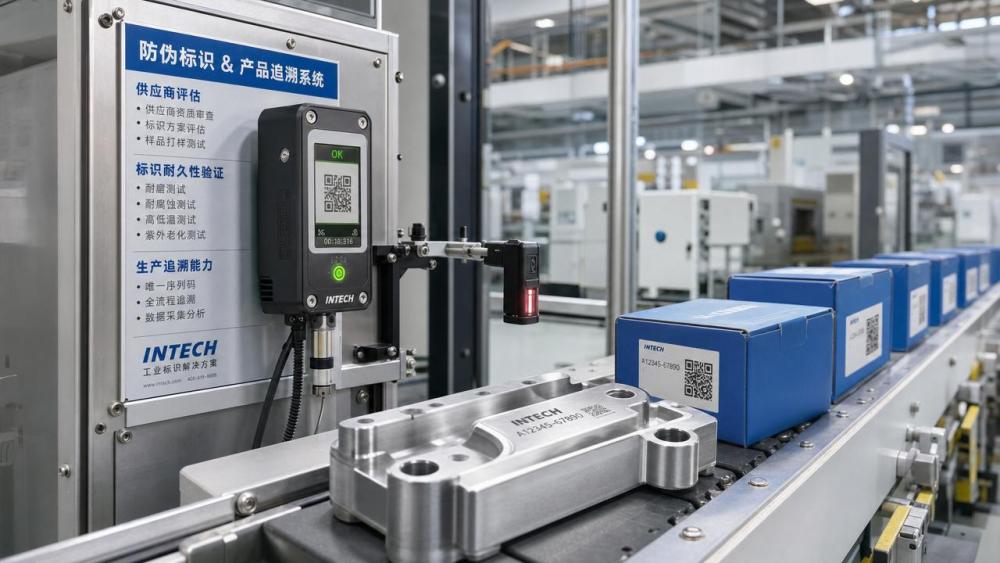
A reliable anti-counterfeiting marking supplier does more than print a code or mark a logo.
It shapes traceability, export readiness, after-sales verification, and daily production stability.
In many factories, product identification looks like a small process step.
In practice, it often affects recalls, warranty disputes, customs checks, and brand protection.
That is why the anti-counterfeiting marking supplier should be evaluated as a process partner, not only a device vendor.
This is especially true in sectors using laser marking, inkjet coding, cleaning, coating, or packaging support systems.
GIAS often highlights this broader view.
A permanent mark is only useful when it stays readable after coating, washing, transport, and field use.
So the real question is not simply who can mark a part.
The better question is who can support secure identification across the full production environment.
What should be verified before shortlisting an anti-counterfeiting marking supplier?
A shortlist should start with process fit.
Different materials, line speeds, code formats, and compliance needs require different marking methods.
More common mistakes appear during early screening.
Some suppliers show clear samples but cannot maintain contrast at production speed.
Others offer software, but integration with MES, ERP, vision inspection, or serialization systems is weak.
A practical pre-screening checklist usually includes the following points.
- Supported substrates, such as metal, plastic, coated parts, labels, cartons, or flexible packaging
- Marking technologies, including laser, CIJ, TIJ, UV, or hybrid traceability solutions
- Readable code performance after abrasion, cleaning, heat, humidity, or chemical exposure
- Available data functions, such as serial numbers, QR codes, lot codes, and database connection
- Installation, validation, operator training, and service response across target regions
If an anti-counterfeiting marking supplier cannot discuss these details clearly, the risk is already visible.
The issue is not only machine performance.
It is whether traceable product identification can survive real operating conditions.
How do you compare suppliers beyond samples and brochures?
Samples are useful, but they rarely tell the whole story.
A stronger comparison looks at consistency, support depth, and process understanding.
In actual sourcing reviews, the most revealing questions are operational.
Can the supplier prove uptime expectations?
Can it define maintenance intervals?
Can it explain how the marking system behaves after upstream cleaning or downstream coating?
The table below helps turn those questions into a structured comparison.
A capable anti-counterfeiting marking supplier usually speaks in process evidence, not generic promises.
That difference becomes obvious during trial planning and technical review.
Which risks are often missed when evaluating traceable product identification?
The biggest risks are often hidden between departments.
One team may focus on cost per mark.
Another may focus on compliance, inspection, or service support.
If these views are not aligned, supplier selection becomes too narrow.
Several blind spots appear repeatedly.
- Selecting by machine price, while ignoring downtime, consumables, and rework cost
- Approving a sample mark without testing after ultrasonic cleaning, coating, or packaging stress
- Assuming any QR code is traceable, even when data structure and verification logic are weak
- Overlooking local compliance, language support, and export documentation requirements
- Treating the anti-counterfeiting marking supplier as independent from the wider auxiliary process chain
That last point matters more than it first appears.
GIAS covers auxiliary systems because small process links often affect final product confidence.
A clean surface improves marking consistency.
Stable batching supports label accuracy.
Proper vacuum packaging can protect marked codes during transport.
When suppliers understand these interactions, traceable product identification becomes more reliable.
How should cost, timeline, and implementation support be judged?
This is where many decisions become more realistic.
The lowest quote may not deliver the lowest operating cost.
An anti-counterfeiting marking supplier should be judged on total implementation value.
That includes equipment, software, validation, spare parts, training, and support responsiveness.
Lead time also needs closer reading.
A short delivery promise is not enough if commissioning takes too long or code templates are not ready.
Useful questions include:
- How long does sample validation take for each substrate and code type?
- What is the realistic schedule for installation, operator training, and acceptance testing?
- Which consumables or wear parts create recurring cost exposure?
- What service commitment applies after startup and during expansion?
A dependable anti-counterfeiting marking supplier usually maps these stages clearly.
If cost is presented without process assumptions, comparison becomes unreliable.
What does a confident final decision usually look like?
A good decision rarely comes from one impressive demo.
It comes from evidence that the anti-counterfeiting marking supplier can support identification quality over time.
The strongest selections usually share three traits.
The technical fit is proven on real materials.
The data workflow supports traceability without manual weak points.
The supplier can explain service, validation, and future expansion in practical terms.
That is also why research platforms like GIAS are useful during evaluation.
They help connect marking choices with adjacent systems, compliance issues, and application realities.
Before final approval, it helps to document a simple decision framework.
- Define critical substrates, code standards, and durability conditions
- Compare at least two suppliers using the same test criteria
- Review integration, support scope, and global delivery capability
- Confirm total cost, implementation milestones, and risk ownership
Choosing an anti-counterfeiting marking supplier is ultimately a decision about control.
Control over traceability, authenticity, compliance, and production consistency.
Once those priorities are clear, the shortlist usually becomes much easier to defend.