
On June 8, 2026, the Council of the European Union adopted a revised foreign direct investment screening regulation that makes artificial intelligence, semiconductors, and critical raw materials subject to mandatory review. For exporters of Fiber and UV laser markers, as well as traceability vision systems, the development is worth close attention because equipment that includes AI edge recognition or chip-level control modules may now fall within technology-sensitivity assessments when entering EU member states. This is not only a policy update for trade teams; it also matters for equipment makers, component sourcing, delivery planning, and customer communication in the industrial automation and traceability chain.
What the new EU measure clearly covers
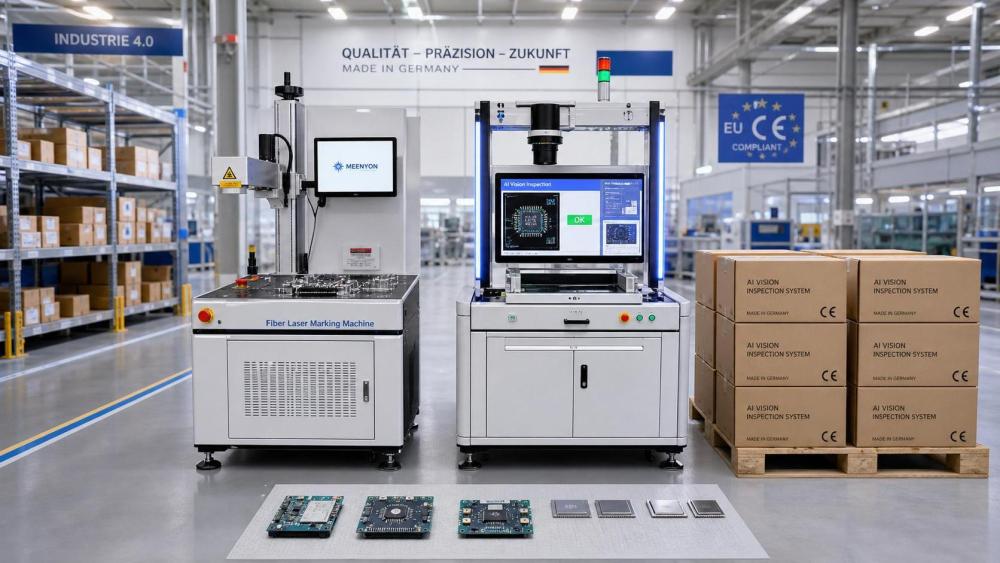
Confirmed information shows that the revised EU framework adopted on June 8, 2026 places artificial intelligence, semiconductors, and critical raw materials within mandatory screening areas under foreign direct investment review. Within that context, Fiber laser markers, UV laser markers, and traceability vision systems with AI edge recognition functions or chip-level control modules may be evaluated under a technology-sensitivity standard when exported to EU member states.
The available information also indicates that some member states have already started pre-filing import registration procedures for laser marking machines that contain domestically produced AI chips. At this stage, these are the confirmed elements provided by the event summary.
Where the pressure may appear across the supply chain
Export-facing equipment suppliers may face a new compliance checkpoint
From an industry perspective, manufacturers and direct exporters of laser marking and vision traceability equipment may be the first to feel the effect because their products are the ones being reviewed at the point of EU market entry. The main business impact may appear in product classification, technical document preparation, and communication with distributors or buyers about onboard AI or chip-control functions.
Component and module sourcing becomes more visible
Analysis shows that companies using AI chips or semiconductor-related control modules in equipment design may need to pay closer attention to how those components are described in product files and customs-facing materials. The issue is not only whether a machine performs marking or inspection, but whether certain embedded functions could trigger sensitivity review in practice.
Importers, distributors, and buyers inside the EU may see longer front-end procedures
For channels, importers, and procurement teams, the development may affect the pre-shipment stage rather than only final installation or after-sales service. What deserves closer attention is whether import registration, filing preparation, or customer-side internal review becomes a prerequisite before equipment can move forward in the transaction process.
Supply-chain service providers may need earlier coordination
Observably, logistics coordinators, customs support providers, and contract execution teams may also be affected because timing risks can shift upstream when an equipment category is treated as more sensitive. In practical terms, delivery schedules and document readiness may become more important discussion points between suppliers and customers.
What companies should monitor now
Watch the exact wording in follow-up official implementation
Companies should distinguish between the high-level policy signal and the way individual member states apply it in actual import procedures. The current information points to mandatory-review sectors and early pre-filing moves in some markets, but businesses still need to track how official wording develops around technology sensitivity and product scope.
Review products with embedded AI or chip-level control
A practical priority is to identify which laser markers or traceability vision systems contain AI edge recognition functions or chip-level control modules. This helps teams judge which products may attract more scrutiny and whether existing product descriptions are precise enough for cross-border compliance communication.
Prepare technical and transaction documents earlier
From a business operations perspective, companies may need to strengthen readiness around product specifications, module descriptions, and import-related filing materials before shipment. This is especially relevant where customers or local partners ask for confirmation of chip origin, function scope, or system architecture as part of a pre-import process.
Align customer communication with delivery planning
Where sales involve EU member states, suppliers and channel partners may need to address possible review-related timing earlier in commercial discussions. Analysis shows that the practical issue is not only whether a shipment can proceed, but whether expectations on lead time, filing sequence, and responsibility allocation are clearly aligned before order execution.
Why this looks more like a policy signal than a finished outcome
Analysis shows that this development should be read first as a stronger regulatory signal around sensitive technologies rather than as a complete and uniform market result already applied in the same way across the EU. The confirmed facts point to broader mandatory review coverage and early action by some member states, but they do not yet establish a single operational outcome for every equipment category or every transaction scenario.
It is more appropriate to understand this as a trend that deserves continued monitoring: the policy direction is clear, while the exact compliance burden for individual exporters will depend on how product functions, embedded chips, and member-state procedures are interpreted in practice.
How the market may best read this stage
At present, the industry significance lies in the fact that industrial equipment once viewed mainly through performance and application value may increasingly be assessed through embedded technology sensitivity as well. For companies involved in laser marking and vision traceability exports to Europe, the immediate takeaway is not to assume automatic restriction, but also not to treat compliance as a routine customs formality.
A neutral reading is that this is a meaningful regulatory shift with operational implications, especially for products that combine equipment functions with AI recognition or semiconductor-based control architecture. Current conditions are better understood as an evolving compliance environment that requires closer verification, not as a fully settled end state.
Basis of this article and what still needs verification
This article is generated based on the user-provided news title, event date, and event summary. The specific official source link was not provided in the input, so further verification is still needed against materials such as official announcements, company statements, industry association updates, authoritative media reporting, and relevant standard or regulatory documents typically associated with this type of development.
What should continue to be monitored includes follow-up wording from EU institutions and member states, any clearer description of products subject to technology-sensitivity review, and whether pre-filing procedures expand further for equipment containing domestically produced AI chips.