
Choosing industrial coding equipment for high-speed packaging lines is rarely a simple technology comparison. Print quality must stay stable while line speed rises, packaging materials change, and traceability rules become stricter. In many factories, coding is a small station with large consequences, affecting compliance, brand readability, rework rates, and unplanned downtime.
That is why industrial coding equipment sits alongside other process-support systems that shape final product quality. Platforms such as GIAS often frame coding this way: not as an isolated machine, but as part of a wider control chain that supports consistency, identification, and reliable production decisions.
Why coding decisions matter more on fast packaging lines
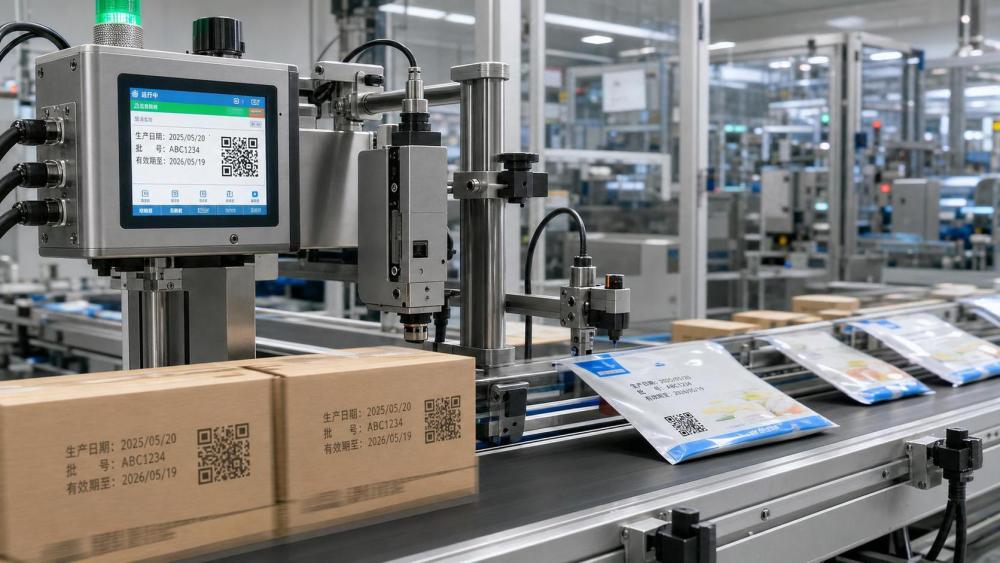
At lower speeds, minor coding instability may be manageable. Operators can stop the line, clean the printhead, reject a small batch, and resume production with limited damage.
High-speed packaging changes that equation. A missed code, blurred date, or unreadable batch number can affect thousands of units in a short run. The financial issue is obvious, but the larger risk is traceability failure.
For food, pharmaceuticals, personal care, chemicals, and export goods, coding quality also touches labeling compliance and recall readiness. If a mark cannot be read reliably, production data loses value.
This is why industrial coding equipment should be evaluated as production infrastructure. It supports product identity in the same way weighing supports recipe accuracy or vacuum systems support packaging integrity.
What industrial coding equipment includes
The term industrial coding equipment covers several technologies used to place variable information on products, primary packs, secondary packs, or labels.
Typical outputs include date codes, batch numbers, serial numbers, barcodes, QR codes, lot identifiers, production timestamps, and anti-counterfeit marks.
The most common technology groups include continuous inkjet, thermal inkjet, laser marking, thermal transfer overprinting, and print-and-apply systems. Each has a different fit with line speed, substrate, and operating environment.
A practical decision starts by separating two questions. First, what code must be produced? Second, on what surface and at what speed must it remain readable?
Technology fit at a glance
Start with the packaging line, not the brochure
Many buying mistakes happen because the equipment is judged by catalog specifications alone. A coding system that looks strong on paper may perform poorly when the actual line has vibration, dust, washdown exposure, or frequent format changes.
The first filter should be production reality. That means pack geometry, conveyor speed, available installation space, line control interface, shift pattern, and cleaning routine.
In actual use, substrate behavior matters as much as machine speed. Paperboard, PET, multilayer film, coated foil, glass, and metal cans all respond differently to ink adhesion or laser contrast.
A fast line with unstable pack positioning may need a technology that tolerates movement and variable print distance. A stable line producing export cartons may place more value on barcode sharpness and data verification.
Questions worth answering before comparing suppliers
- What is the maximum and normal line speed?
- Which substrates and colors will be coded?
- Is the code human-readable, machine-readable, or both?
- How much downtime is acceptable for maintenance?
- Will the line require future serialization or traceability upgrades?
- What environmental conditions affect print stability?
The key performance factors behind a reliable choice
When comparing industrial coding equipment, several factors usually matter more than raw print speed.
Code readability under production conditions
A supplier demo often uses ideal samples. The better test is readability after the code meets real handling, abrasion, condensation, shrink wrapping, or cold-chain storage.
Integration with existing controls
Industrial coding equipment should connect cleanly with PLCs, HMIs, vision systems, and production databases. Good integration reduces manual data entry and lowers the risk of coding errors during changeovers.
Maintenance burden
A low purchase price can hide high service demand. Cleaning frequency, spare part availability, operator intervention, and remote diagnostics all influence long-term uptime.
Consumables and operating stability
Ink, solvent, ribbons, cartridges, and filters affect running cost. Just as important, their supply chain reliability affects line continuity across sites and export markets.
Compliance and validation support
For regulated sectors, equipment documentation matters. Validation records, audit support, code verification options, and material safety information should be checked early, not after installation.
Where application differences change the decision
Industrial coding equipment is used across many sectors, but decision logic changes by application.
Food packaging often prioritizes moisture resistance, washdown suitability, and clear date marking on fast-moving films or cartons.
Pharmaceutical packaging usually requires sharp codes, strong data integrity, and support for serialized information across multiple packaging levels.
Consumer goods lines may focus on flexible changeovers, multilingual coding templates, and strong print contrast for retail presentation.
Chemical and industrial product lines often need durable marks that survive solvents, outdoor storage, or rough logistics handling.
This broader view matches the way GIAS covers auxiliary systems across manufacturing. A coding decision is strongest when it reflects the process conditions around it, not only the mark itself.
Looking beyond purchase price
The total cost of industrial coding equipment is shaped by five recurring items: acquisition, installation, consumables, maintenance, and lost production.
Lost production is often underestimated. A coder that stops a high-speed line for short but frequent interventions may cost more than a higher-priced system with stronger uptime.
It also helps to check hidden implementation costs. These may include extraction for laser systems, guarding, software licenses, vision inspection, operator training, and ERP connectivity.
A useful cost review framework
How to make the final shortlist stronger
A strong shortlist usually comes from a structured trial process rather than a sales presentation. Real samples, real substrates, and real speed conditions reveal most problems early.
It is useful to ask for coded samples after storage, transport simulation, and surface exposure tests. That confirms whether code durability matches the supply chain reality.
Supplier quality should also be judged beyond the machine. Documentation depth, training clarity, spare parts planning, and global support coverage all matter for long-term ownership.
The next step is usually straightforward: define the coding requirement at line level, map the substrate and environment, then compare industrial coding equipment against uptime, readability, integration, and lifetime cost. That approach produces a more dependable decision than choosing on headline specifications alone.