
On August 12, 2026, the EU Packaging and Packaging Waste Regulation (PPWR) is set to take full effect, bringing a new compliance point for the coding and marking sector: PFAS limits in consumables used with Continuous Inkjet Printers. The change matters not only to exporters of CIJ equipment to the EU, but also to suppliers of inks, cleaning fluids, sealing components, distributors, and end users reviewing whether current products and service arrangements can remain in market without customs or delisting risk.
What the rule now covers
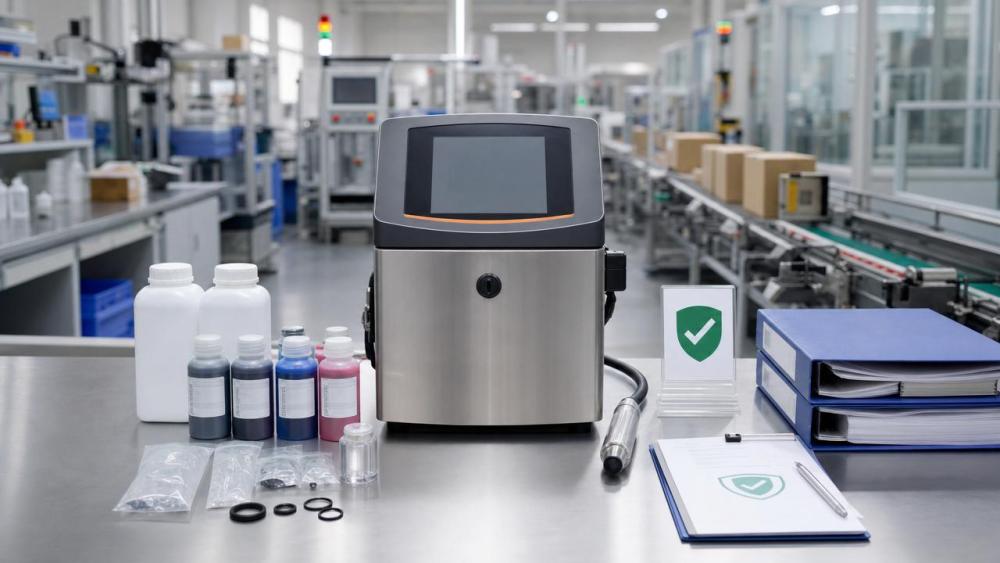
According to the provided information, PPWR will be fully implemented on August 12, 2026. The regulation, for the first time, places a limit on PFAS (per- and polyfluoroalkyl substances) in coding and marking consumables, including CIJ inks, cleaning agents, and sealing components, with a concentration threshold of no more than 25 ppm.
The rule directly affects Chinese suppliers exporting Continuous Inkjet Printers, related consumables, and associated services to the EU market. Products that do not meet the requirement may be unable to clear customs or may face removal from sale.
The same information also indicates that overseas distributors and end users need to begin supply chain screening and assessment of replacement options immediately.
Where pressure is likely to appear first
Export shipments face an immediate compliance filter
From an industry perspective, companies shipping CIJ printers and related consumables into the EU are likely to feel the impact first because the requirement is tied directly to market access. The main business concern is whether goods, supporting materials, and related service offerings can satisfy the PFAS threshold before shipment and entry.
Consumables and component sourcing move into focus
Analysis shows that the issue is not limited to the printer itself. Inks, cleaning fluids, and sealing parts are explicitly relevant in the provided information, which means procurement, formulation review, and parts selection become practical checkpoints for manufacturers and sourcing teams.
Distributors may need to reassess listed products
For overseas distribution channels, the pressure is likely to center on current inventory, ongoing sales, and product continuity. What deserves closer attention is whether products already positioned for the EU market can continue to be offered without creating delisting or fulfillment risk.
End users may need alternatives sooner than expected
For end users, especially those dependent on stable coding operations, the key issue is continuity of supply. Observably, if an existing consumable or service package does not align with the new limit, users may need to evaluate substitutes, approved supply sources, or revised maintenance arrangements.
Practical points companies should review now
Check which items are actually in scope
Companies should first identify whether their EU-facing business includes CIJ equipment, inks, cleaning agents, sealing components, or bundled service commitments connected to these products. This is the foundation for deciding where screening needs to begin.
Review supplier documentation and material declarations
Analysis shows that supplier-side verification is likely to become a central operational task. Businesses should pay close attention to whether upstream suppliers can provide clear documentation on PFAS content and whether those records are sufficient for EU-facing compliance review.
Separate policy wording from delivery execution
What deserves closer attention is the difference between knowing the rule and being ready to ship under it. For many companies, the more immediate issue may be whether internal purchasing, production, after-sales support, and export documentation are aligned with the requirement in time for actual deliveries.
Prepare customer and channel communication early
Because non-compliant products may face customs blockage or removal from sale, exporters, distributors, and service providers should be ready to explain product status, substitution plans, and delivery implications to customers and partners in the EU market.
Why this is more than a short-term compliance notice
Observably, this development should not be read only as a narrow rule update for one shipment cycle. It is more appropriate to understand it as a concrete compliance signal for the CIJ-related supply chain serving Europe, especially because the restriction reaches beyond finished equipment into consumables and service-linked parts.
At the same time, analysis should remain disciplined. Based on the provided information alone, it would be premature to extend the conclusion to broader market outcomes beyond the stated compliance risks. The clearer immediate meaning is that affected businesses now have a defined threshold and a defined implementation date that can influence export readiness and product availability.
How the market may best interpret this development
In summary, the August 12, 2026 full implementation of PPWR matters because it connects PFAS control directly to the marketability of Continuous Inkjet Printers and related consumables in the EU. The most rational reading at this stage is not that the entire sector has already reached a final outcome, but that a specific compliance requirement has become actionable for exporters, distributors, service providers, and end users that rely on CIJ supply continuity.
It is more appropriate to understand this as both an immediate operational issue and a longer-term compliance signal. Near-term attention is likely to stay on screening, substitution assessment, and shipment readiness, while broader market effects still require continued observation.
Basis of this article and what still needs verification
This article is generated based on the user-provided news title, event date, and event summary. For this type of industry update, relevant source categories typically include official regulatory notices, company disclosures, industry association updates, authoritative media coverage, and standard-setting documents.
No specific official source link was provided in the input, so the exact official reference should continue to be verified. Follow-up attention should focus on any further official wording, implementation clarification, and supply-chain-level responses related to CIJ printers, consumables, and associated service arrangements for the EU market.