
Why does continuous packaging coding matter so much on fast packaging lines?
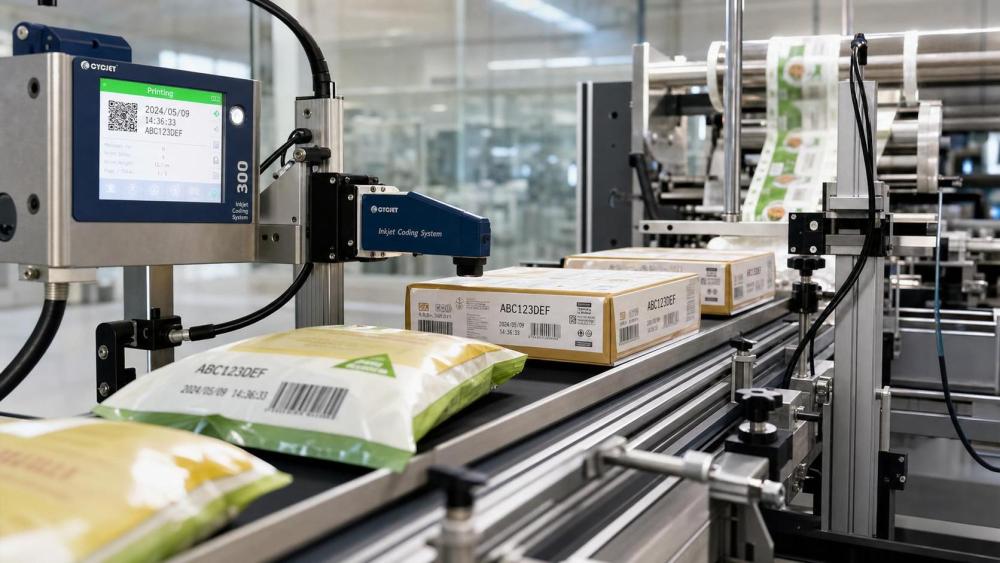
Continuous packaging coding is the process of printing variable data on moving packs without stopping line flow.
That sounds simple, but the effect reaches much further than a date code or batch number.
On high-speed cartons, pouches, and films, code quality influences traceability, rejection rates, export readiness, and brand credibility.
A blurred code can trigger rework.
A missing code can create compliance risk.
An unstable coding system can slow the entire packaging cell.
In practical terms, continuous packaging coding sits inside a wider process-control picture.
That is why industrial intelligence platforms such as GIAS treat coding, marking, weighing, vacuum, and surface process topics as connected decisions.
The package may be the visible result, yet print consistency depends on substrate behavior, line speed, environmental conditions, and data handling discipline.
For anyone comparing packaging technologies, the main question is rarely just, “Can it print?”
The better question is whether the chosen coding method keeps readable output under real production stress.
What exactly counts as continuous packaging coding?
The term usually refers to coding systems built for uninterrupted, repeatable marking on moving packaging materials.
Typical examples include continuous inkjet, thermal inkjet, thermal transfer overprinting, and selected laser systems.
The right technology depends on what moves through the coder.
Cartons behave differently from laminated pouches.
Flexible films respond differently from coated labels.
This is why continuous packaging coding should be understood as a matching exercise between code requirement and substrate reality.
A basic way to think about it is this:
- The code content may include date, time, lot, serial, shift, QR, or regulatory text.
- The package material may absorb ink, resist heat, reflect light, or stretch during sealing.
- The line may run intermittently or at constant high speed.
- The print must stay readable after packing, shipping, and storage.
Once those variables are clear, continuous packaging coding becomes much easier to evaluate.
Which coding method fits cartons, pouches, and films best?
There is no single best answer for every package.
More often, the best fit comes from balancing substrate, speed, permanence, and maintenance expectations.
The comparison below helps narrow the decision.
For cartons, thermal inkjet often delivers sharp text with low operator complexity.
For pouches and films, thermal transfer overprinting is common because it performs well on flexible, non-porous materials.
Continuous inkjet remains popular where speed changes frequently and print position needs more flexibility.
Laser can be attractive when permanent, solvent-free coding is required, but substrate response must be checked carefully.
In real production, “best” means stable readability at target speed, not just good print during a short demonstration.
How do you judge the right option before buying or upgrading?
A useful evaluation starts with line facts, not brochure claims.
Continuous packaging coding performs well when the technical fit is verified early.
The most reliable screening questions are usually these:
- What is the exact substrate, including coating, thickness, and finish?
- Where will the code sit: before sealing, after sealing, on flat stock, or on formed packs?
- What line speed must be maintained during peak output?
- Does the code need to resist rubbing, condensation, oil, or sterilization?
- Is the data simple, or does it include 2D codes and serialization?
- How much downtime is acceptable for ribbon change, ink refill, or cleaning?
That last point is often underestimated.
A coder may print well, yet still create hidden losses through frequent stoppages or difficult setup.
This is one reason process-support analysis matters across industrial auxiliary systems.
GIAS often frames equipment choices around the link between microscopic control and final output quality.
The same logic applies here.
Code clarity depends on small, measurable conditions.
Test samples should therefore come from the real packaging line, not from ideal lab stock.
Where do continuous packaging coding projects usually go wrong?
Most failures come from mismatch rather than machine weakness.
The coding system is selected for price or speed headline, while the packaging process receives too little attention.
Several mistakes appear repeatedly across industries.
- Ignoring substrate variation between production batches.
- Testing only text, then later adding dense QR codes.
- Placing the coder where vibration or poor access affects consistency.
- Assuming all films behave the same under heat or laser energy.
- Overlooking cleaning chemicals, condensation, or abrasion during logistics.
Another common issue is treating coding as a stand-alone purchase.
In reality, it interacts with conveyors, sealing units, vision inspection, reject systems, and production data flow.
If line integration is weak, even a good coder may generate inconsistent results.
That is especially true where compliance and traceability are strict.
One unreadable code can turn into a documentation problem, not just a print defect.
What about cost, maintenance, and implementation timing?
This is often where comparisons become more realistic.
The purchase price alone does not explain the true cost of continuous packaging coding.
A better view includes consumables, downtime, operator workload, print verification, and integration time.
For example, TTO may suit flexible packaging well, but ribbon replacement planning matters.
CIJ offers high-speed flexibility, yet solvent and maintenance routines need discipline.
Laser reduces consumable dependence, but installation, guarding, and material testing may take longer.
A short decision table can help:
Implementation timing also depends on validation depth.
If packaging materials, data requirements, and inspection standards are defined early, deployment becomes much smoother.
So what is the smartest next step when comparing continuous packaging coding options?
Start by documenting the packaging format, line speed, code content, and readability standard in one place.
Then compare continuous packaging coding methods against those real conditions, not generic marketing claims.
For cartons, pouches, and films, the strongest choice is usually the one that stays stable across daily variability.
That includes substrate changes, maintenance cycles, line acceleration, and compliance checks.
It also helps to review coding as part of a broader auxiliary-system strategy.
Reliable packaging output is shaped by more than the printer alone.
Traceability, cleanliness, weighing accuracy, vacuum stability, and inspection discipline often influence the final result together.
A practical next move is to build a short evaluation checklist, run substrate-specific trials, and confirm lifecycle costs before implementation.
That approach makes continuous packaging coding easier to judge, easier to scale, and far less likely to create hidden production risk.