
When Industrial Process Support Systems Integration Fails
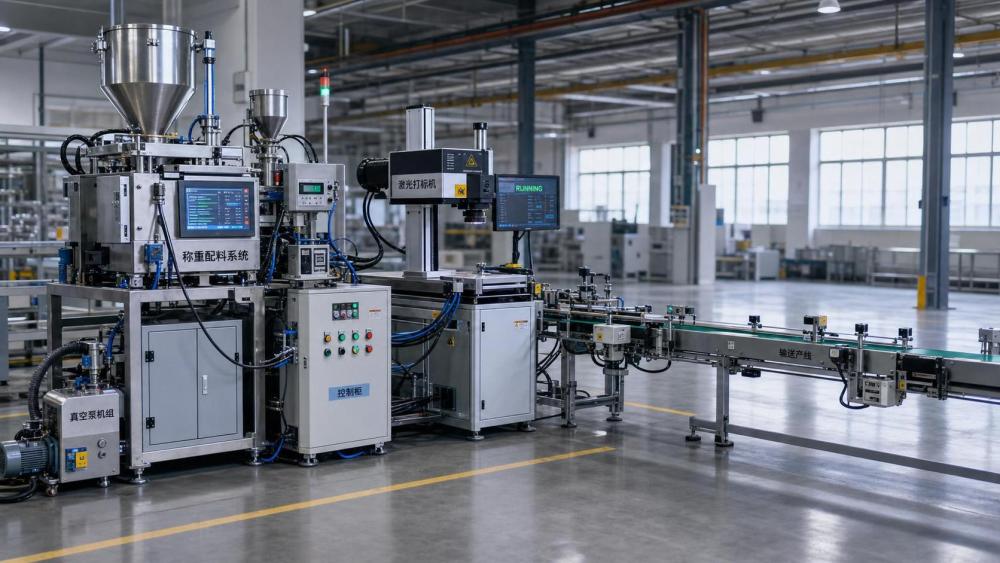
When industrial process support systems integration breaks down, problems rarely start with one dramatic event.
More often, the damage builds quietly across data flow, machine control, supplier coordination, and production handover.
A weighing system may batch correctly, yet recipe data never reaches the quality record.
A laser marker may print traceable codes, but upstream parameters remain disconnected from the final serial history.
A vacuum system may run within limits, while alarm logic is too weak to catch drift early.
That is why industrial process support systems integration matters far beyond automation convenience.
It affects traceability, product consistency, audit readiness, maintenance planning, and cost control.
In actual operations, auxiliary systems often sit outside the spotlight, but they shape final quality every day.
Understanding the common failure points helps prevent small disconnects from turning into expensive operational risk.
Why Integration Gaps Are So Common
Industrial process support systems integration usually spans many vendors, interfaces, and internal teams.
That structure creates complexity even before production starts.
Cleaning equipment, coding systems, batching controls, vacuum pumps, and coating lines are often purchased at different times.
Each system may work well on its own, but not as part of one digital process chain.
The more visible signal is that integration is still treated as a commissioning task, not a lifecycle discipline.
Teams focus on startup dates, acceptance tests, and output speed.
They spend less time on data ownership, alarm priorities, exception handling, and change control after launch.
As a result, industrial process support systems integration may appear complete on paper while core dependencies remain fragile.
Gap One: Broken Data Continuity
The first major weakness is incomplete or unreliable data continuity.
This is one of the most common industrial process support systems integration failures.
A process may generate useful data at every stage, yet records stay trapped inside separate devices or local screens.
That breaks traceability and makes root cause analysis slower than it should be.
Typical data failure points
- Lot numbers do not link to cleaning cycles, weld parameters, or marking records.
- Batch values are captured, but timestamps are inconsistent across systems.
- Operator overrides are allowed, yet not logged with reason codes.
- Quality data exists in spreadsheets instead of controlled production records.
- Equipment status data is too coarse for predictive maintenance or audit use.
These issues look administrative at first, but they directly affect yield, complaints, and compliance investigations.
For regulated or export-driven production, weak data continuity can also delay customer approval.
What to do instead
Start by mapping which data points are operationally critical, legally required, and commercially useful.
Then define one source of truth for identifiers, timestamps, alarm events, parameter sets, and change history.
Industrial process support systems integration works better when naming rules and data structures are agreed before commissioning.
Gap Two: Control Logic That Does Not Match Real Production
Another common failure is control logic that looks correct in tests but fails under real factory conditions.
This often happens when industrial process support systems integration is designed around ideal sequences only.
Actual production includes restarts, partial batches, maintenance interruptions, upstream delays, and material variation.
If logic does not account for those conditions, operators create manual workarounds.
Once that begins, process discipline weakens quickly.
Where the mismatch appears
- Interlocks protect equipment, but not product quality.
- Alarm settings are broad, creating nuisance events and alarm fatigue.
- Recipe permissions are unclear across production, maintenance, and quality teams.
- Downtime states are too generic to support meaningful analysis.
- Fail-safe behavior protects one machine while disrupting downstream traceability.
This is especially important for weighing, coding, vacuum, and surface treatment applications.
Those systems depend on stable process windows, not just machine uptime.
A line can be running and still be operating outside a controlled condition.
Better industrial process support systems integration requires scenario-based logic reviews before startup and after the first production months.
Gap Three: Weak Handover Between Vendors and Internal Teams
The third gap is handover failure, and it is usually underestimated.
Even solid engineering work can lose value if knowledge transfer is poor.
Many industrial process support systems integration projects rely on external integrators, OEMs, and specialist suppliers.
Once acceptance is signed, internal teams may inherit a system they only partly understand.
That creates long-term dependence on outside support and slows troubleshooting.
Common handover gaps
- Control narratives do not reflect final site modifications.
- Spare parts lists ignore custom sensors, valves, or interface modules.
- Training covers operation, but not failure diagnosis or recovery paths.
- User access rights are poorly defined after commissioning.
- Change procedures are missing for software patches and parameter edits.
In practice, this means the line becomes harder to sustain every quarter.
The original design intent fades, while undocumented fixes accumulate.
How to Audit Industrial Process Support Systems Integration
A practical audit does not need to start with a full digital transformation program.
It should begin with the points where process quality can quietly drift.
This kind of review quickly shows whether industrial process support systems integration is robust or only appears complete.
A More Reliable Fix Strategy
The most effective response is not adding more software everywhere at once.
It is building a tighter operating model around critical support systems.
- Identify the support systems that directly affect traceability, cleanliness, recipe accuracy, vacuum stability, or coating performance.
- Define the minimum critical data set for each process step.
- Review control logic against real production exceptions, not ideal runs only.
- Standardize ownership for alarms, recipes, access rights, and software changes.
- Require documented handover validation after commissioning and after every major modification.
This approach keeps industrial process support systems integration tied to business risk and production reality.
It also improves supplier evaluation, because expectations become measurable.
Closing the Hidden Gaps Before They Spread
Industrial process support systems integration usually fails in the spaces between systems, teams, and decisions.
The warning signs are often subtle long before quality losses become visible.
Disconnected records, weak control logic, and poor handover are not minor technical details.
They shape whether a production system remains stable, traceable, and scalable over time.
For manufacturers that depend on precision cleaning, coding, weighing, vacuum, or surface treatment, this is a practical management issue.
The right next step is a focused integration review around data continuity, control realism, and operational handover.
That is where stronger industrial process support systems integration starts delivering measurable value.