
Why Industrial Auxiliary Equipment Integration Breaks Down So Often
Industrial auxiliary equipment integration often fails for quiet reasons. The main machine may perform well, yet the connected support systems do not move in sync.
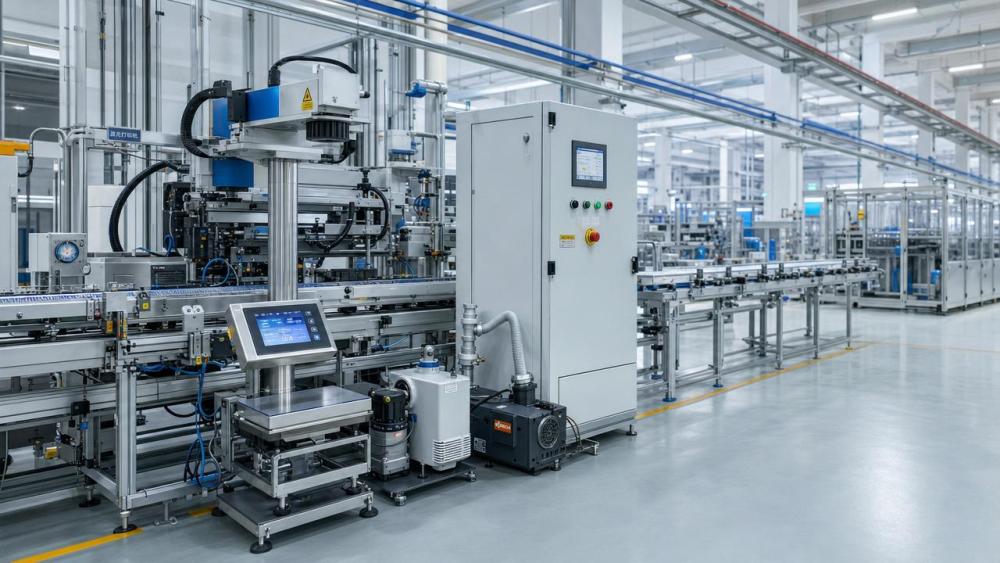
That gap usually appears at the interface level. Signals, timing rules, data formats, and quality thresholds are defined by different teams with different priorities.
In real production, that mismatch creates unstable traceability, poor cleaning precision, recipe drift, vacuum fluctuation, or coating inconsistency. None of these problems stay small for long.
Industrial auxiliary equipment integration becomes harder when factories add ultrasonic systems, laser markers, inkjet coders, weighing units, vacuum pumps, or coating lines one by one.
Each system may work alone. The trouble starts when data, alarms, tolerances, and production logic must work together under real cycle time pressure.
From a technical evaluation perspective, integration quality is often the real predictor of long-term performance. It affects uptime, compliance, scrap, audit readiness, and supplier reliability.
Bottleneck 1: Interface Compatibility Looks Fine on Paper
A common industrial auxiliary equipment integration failure begins with assumed compatibility. Teams confirm voltage, protocol, and mechanical fit, then expect the line to run smoothly.
But practical compatibility is broader. It includes signal timing, handshake logic, fault response, restart behavior, and data refresh frequency.
For example, a laser marking unit may accept a trigger correctly. Still, it may return status feedback too late for the conveyor logic.
An ultrasonic cleaning system may complete its cycle, yet the upstream handler may release parts before bath stability is restored. The result is inconsistent cleanliness.
Practical fixes
- Map every signal as an operating event, not just an I/O point.
- Test startup, shutdown, pause, and alarm recovery before site acceptance.
- Define response windows for trigger, acknowledgment, completion, and fault outputs.
- Require protocol validation under full production speed, not bench conditions.
This is where industrial auxiliary equipment integration moves from catalog matching to process engineering. That difference matters more than many buying teams expect.
Bottleneck 2: Data Logic Is Connected but Not Usable
Many systems can exchange data. Fewer systems can exchange meaningful data that supports decisions, traceability, and quality control.
This is a frequent industrial auxiliary equipment integration issue in coding, weighing, batching, and vacuum applications. The data exists, but the structure is weak.
A coding machine may record the batch number, while the MES needs lot number, shift code, operator ID, and reject status in one linked record.
A weighing system may send a final number, while quality teams need every intermediate deviation, correction event, and tolerance breach.
What better data logic looks like
- Use one naming structure across PLC, HMI, MES, and quality logs.
- Link each product code to process parameters, alarms, and pass or fail status.
- Store timestamps at each critical event, not only at final discharge.
- Define which data supports audits, troubleshooting, and daily control.
Better data logic reduces argument during root cause analysis. It also makes industrial auxiliary equipment integration more useful for compliance and supplier accountability.
Bottleneck 3: Process Timing Is Misaligned Across Equipment
Timing problems are easy to miss during pre-sales evaluation. They become obvious only when the full line runs under normal output targets.
Industrial auxiliary equipment integration often fails because one subsystem works in seconds, while another depends on milliseconds or pressure stabilization curves.
A vacuum system may require a stable pumping phase before coating begins. If the line starts too early, coating adhesion and uniformity may drop.
An inkjet coding system may print clearly at one conveyor speed, then lose consistency when product spacing changes during peak throughput.
In weighing and batching, feeder lag can create overrun. Once that happens, recipe accuracy is no longer a software problem alone.
Fix timing before scaling output
- Measure real response times for valves, pumps, triggers, and transport devices.
- Build dwell time, purge time, and stabilization time into the sequence logic.
- Test the line at low, normal, and peak throughput conditions.
- Set alarms for timing drift before defects appear downstream.
In practice, this is one of the fastest ways to improve industrial auxiliary equipment integration without replacing major assets.
Bottleneck 4: Quality Standards Differ Between Departments
Integration projects often fail because engineering, production, and quality define success differently. The equipment passes commissioning, but not operational expectations.
For industrial auxiliary equipment integration, that gap is especially risky. Auxiliary systems influence invisible process factors that later affect visible product quality.
A surface treatment line may meet speed targets, yet fail corrosion resistance after storage testing. An ultrasonic cleaner may look effective, yet leave particles beyond specification.
A coding system may print readable text, yet not meet permanence rules for export, medical, automotive, or anti-counterfeiting requirements.
How to align quality definitions
- Convert quality goals into measurable process acceptance criteria.
- Tie each criterion to one subsystem owner and one verification method.
- Validate product performance after integration, not only machine function.
- Include compliance, traceability, and durability requirements from the start.
This creates a shared target. More importantly, it stops industrial auxiliary equipment integration from being judged only by whether the line keeps moving.
Bottleneck 5: Supplier Boundaries Create Blind Spots
Another familiar problem is split responsibility. One supplier owns the cleaner, another owns the robot, and another owns controls or data collection.
When failures appear, everyone proves that their own device works alone. Yet industrial auxiliary equipment integration fails in the spaces between those devices.
This is especially common in retrofit projects. Legacy equipment, third-party software, and mixed protocol stacks create unclear ownership.
Reduce boundary risk early
- Create one integrated responsibility matrix before procurement closes.
- Define who owns interface testing, not only equipment delivery.
- Require shared alarm lists, signal maps, and fault simulation procedures.
- Include line-level performance clauses in supplier acceptance terms.
This shift sounds simple, but it changes project behavior quickly. It makes industrial auxiliary equipment integration a shared outcome instead of a handoff problem.
A Practical Evaluation Framework for Better Integration
If integration risk must be assessed early, a structured review is more useful than a generic compatibility claim. A few focused checks reveal most hidden issues.
Used early enough, this framework improves industrial auxiliary equipment integration decisions before the factory pays for delay, scrap, or customer complaints.
Final Takeaway: Fix the Connections, Not Just the Machines
When industrial auxiliary equipment integration fails, the root cause is rarely one bad machine. More often, it is weak coordination between capable systems.
The most reliable improvements usually come from tighter interface mapping, cleaner data logic, realistic timing tests, shared quality definitions, and clearer ownership.
That also means integration should be evaluated as a production capability, not as a procurement checkbox. The difference shows up in yield, compliance, and long-term line stability.
For any team reviewing new or existing systems, the best next step is simple. Audit the connections, validate the logic, test under real load, and close the gaps before scale makes them expensive.