
Vacuum degassing cost rarely comes down to one invoice line. In production, the visible machine price is only the starting point. Real spending is shaped by chamber size, pump selection, control level, cycle duration, labor interaction, energy use, and utility stability over time.
That matters across advanced manufacturing because degassing affects product quality in places where trapped air, moisture, solvents, or dissolved gases create defects. In the wider industrial systems landscape covered by GIAS, vacuum performance often influences yield, traceability, coating integrity, and long-term process consistency more than it first appears.
Why vacuum degassing cost deserves closer review
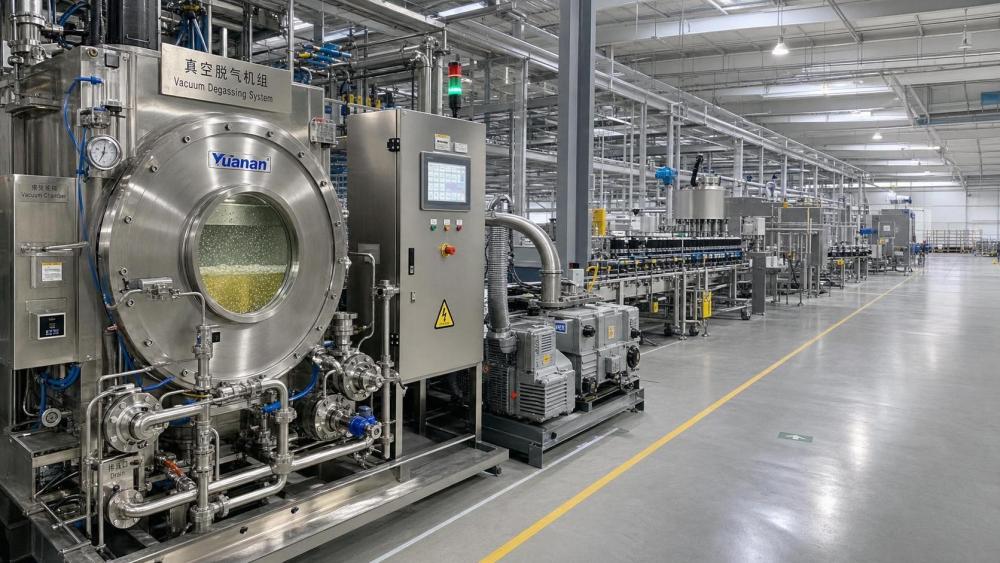
A degassing step removes gas from liquids, slurries, resins, oils, compounds, or porous materials before the next manufacturing stage. The objective is simple, but the financial impact reaches beyond the degassing station itself.
If air remains in material, the result may be voids, weak bonding, unstable coating thickness, inconsistent weighing results, poor packaging integrity, or reduced vacuum process efficiency downstream.
In practical terms, vacuum degassing cost should be viewed against the cost of scrap, rework, delayed batches, rejected exports, and quality claims. A cheaper system can become expensive if it extends cycle time or fails to reach the required gas removal level.
The equipment variables behind the number
Equipment configuration is the first major driver of vacuum degassing cost. Systems that look similar on paper can have very different capital and operating profiles.
Chamber volume and build quality
Larger chambers process more material per batch, but they demand stronger structures, higher pump capacity, and longer evacuation behavior. Stainless construction, corrosion resistance, and pressure-rated sealing also raise cost.
Pump technology and vacuum level
Rotary vane, dry screw, liquid ring, and booster-assisted systems each change both acquisition cost and lifetime utility demand. Lower target pressure often improves degassing, yet it also increases pump duty and maintenance exposure.
Automation and control architecture
Basic manual systems are less expensive upfront. Automated recipes, sensors, data logging, and PLC integration cost more, but they can reduce operator variability, support compliance, and improve repeatability across shifts.
Material handling and ancillary hardware
Mixing functions, heated jackets, condensers, filtration, foam control, and discharge systems all affect vacuum degassing cost. These options are often justified when material behavior is unstable or throughput targets are strict.
Cycle time is often the hidden cost multiplier
Many budget reviews focus on equipment price, while daily economics are driven by how long each batch occupies the system. Cycle time turns a technical detail into a financial lever.
A long cycle reduces hourly output. It can also force production planners to add parallel capacity, carry more work in process, or create scheduling bottlenecks for upstream mixing and downstream filling, coating, or packaging.
The main cycle-time components usually include evacuation, hold time, agitation, controlled venting, unloading, and cleaning. Small delays in each stage add up across a month.
This is why vacuum degassing cost should be measured in cost per acceptable batch, not only in machine ownership cost. Speed without quality is wasteful, but quality without flow control is expensive too.
Utilities shape operating cost every day
Utilities are where vacuum degassing cost becomes visible month after month. Energy use is the obvious item, yet compressed air, cooling water, process water, heating media, and ventilation can be just as important.
Pump type has a direct effect here. Dry systems may reduce contamination risk and fluid handling, while liquid ring designs may suit wet or vapor-heavy duties but increase water management requirements.
Heating is another variable. Some materials degas faster at controlled temperatures. That can shorten cycle time, though it adds thermal energy demand and sometimes tighter safety controls.
Utility stability also matters. Voltage fluctuation, inadequate cooling, or poor compressed air quality can reduce actual vacuum performance. The result is longer cycles, more maintenance, and inconsistent production economics.
Where costs rise across different industrial settings
Vacuum degassing cost does not behave the same way in every application. Material properties and quality risk define the cost structure.
Resins, adhesives, and casting compounds
Viscous materials often trap air deeply. Degassing may require longer hold times, controlled heating, or agitation. Scrap from bubbles is costly, especially in electronics, encapsulation, and precision components.
Food, pharma, and sensitive formulations
In these settings, hygiene design, validation support, traceable controls, and cleanability can become stronger cost drivers than raw chamber capacity.
Coating, surface treatment, and packaging support
Degassing can improve coating adhesion, visual finish, and package integrity. Here, the cost of defects often exceeds the direct vacuum utility bill, especially in export-facing or brand-sensitive products.
That broader perspective aligns with the GIAS view of auxiliary systems. Small process steps often determine final quality, even when they are not the most visible machines on the line.
The cost items that are easy to miss
Some of the most important parts of vacuum degassing cost appear after installation, not during quotation review.
- Seal wear, oil changes, filter replacement, and pump rebuild intervals.
- Production losses during preventive maintenance or unplanned stoppages.
- Material waste from foaming, overflow, or incomplete degassing.
- Cleaning chemicals, rinse water, and waste disposal requirements.
- Data logging or validation upgrades required later for compliance or customer audits.
- Facility modifications such as drainage, exhaust, cooling loops, or electrical upgrades.
These items explain why two systems with similar purchase prices can deliver very different total annual costs.
A practical way to evaluate vacuum degassing cost
A useful review starts with output requirements, not supplier brochures. The question is not only how deep the vacuum goes, but what cost is required to achieve stable, acceptable production.
The following checkpoints usually produce a clearer financial picture:
- Define the real quality loss caused by residual gas, bubbles, or dissolved moisture.
- Measure target throughput by acceptable units or batches per shift.
- Compare energy and utility demand at the required vacuum level, not at nominal specifications.
- Review maintenance intervals against planned production hours.
- Estimate cleaning time and changeover losses for each material type.
- Check whether the system supports future traceability, process records, or validation needs.
When these factors are quantified, vacuum degassing cost becomes easier to compare across vendors, technologies, and facility locations.
What to do next
The most reliable next step is to build a simple cost model around three numbers: cost per batch, cost per acceptable unit, and cost of quality failure without degassing improvement.
That approach creates a more useful decision frame than headline machine price alone. It also fits the broader GIAS logic that auxiliary systems should be judged by their effect on process control, consistency, and final product performance.
For any upcoming project, it is worth comparing equipment configuration, cycle assumptions, and utility demand side by side before approval. That is usually where the real vacuum degassing cost becomes visible.