
Why does smart factory auxiliary systems cost often exceed the quoted equipment price?
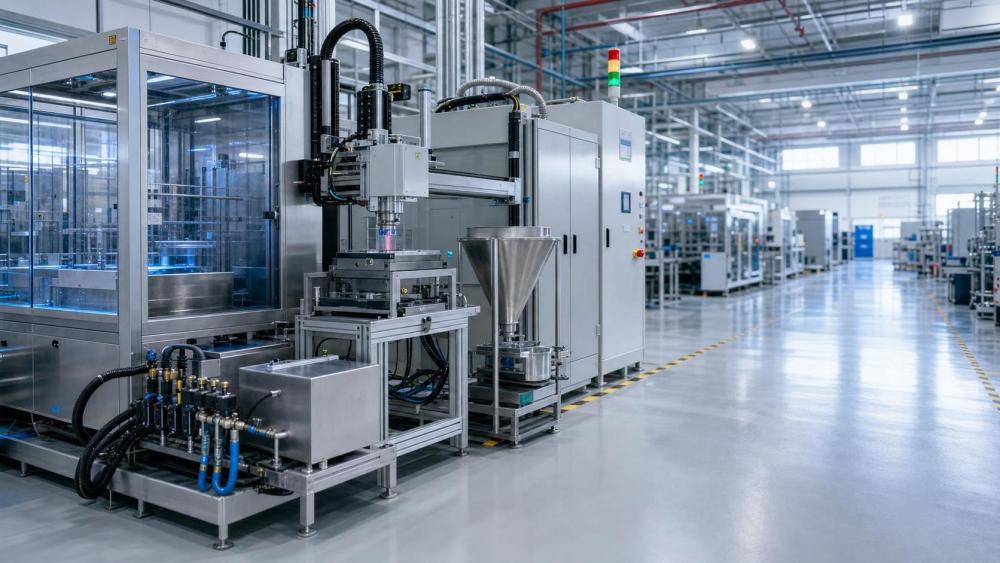
Smart factory auxiliary systems cost usually starts with a visible machine price, then expands during project definition, integration, and operation.
That is why budget reviews often become difficult. The invoice for hardware is clear, but the total investment is not.
In practical terms, auxiliary systems include ultrasonic cleaning units, laser marking, inkjet coding, weighing and batching, vacuum systems, and surface treatment equipment.
These systems support process quality rather than headline production speed. Yet they directly affect scrap, rework, traceability, compliance, and uptime.
A smart factory auxiliary systems cost review should therefore include software links, utilities, validation work, spare parts, training, and service response.
This is especially true when the system must connect with MES, ERP, SCADA, quality records, or digital traceability workflows.
GIAS often highlights this hidden layer of value. In advanced manufacturing, microscopic process control can shape final product quality more than expected.
A cleaner part surface, a stable vacuum level, or accurate batch dosing may look secondary, but they change production reliability in measurable ways.
Which cost drivers matter most before budget approval?
The most useful way to read smart factory auxiliary systems cost is to separate purchase cost from delivered operational capability.
Some projects stay close to budget because the process is standardized. Others expand because the real challenge is integration, not equipment supply.
The main cost drivers usually include the following points:
- Process complexity, such as multi-stage cleaning, high-accuracy batching, or coated surface quality targets.
- Utility needs, including compressed air, chilled water, exhaust, vacuum piping, drainage, and power upgrades.
- Automation scope, especially sensors, PLC logic, recipe control, and communication with plant software.
- Compliance and validation, including documentation, test records, coding permanence, and audit readiness.
- Lifecycle support, such as consumables, wear parts, calibration, maintenance access, and local service coverage.
A vacuum pump for packaging may appear straightforward. The budget changes if contamination control, leak detection, and uptime guarantees become mandatory.
A laser marking unit may also look inexpensive at first. Costs rise when permanent identification must integrate with serialization and anti-counterfeiting records.
The same pattern applies to ultrasonic cleaning and electrostatic coating. Performance targets shape the real budget more than brochure specifications.
How do integration and plant conditions change the smart factory auxiliary systems cost?
Integration is often where the budget either holds or drifts. A standalone machine is cheaper than a system that must behave like part of a connected factory.
When auxiliary equipment exchanges data with line controllers, traceability software, or quality databases, engineering hours increase quickly.
Older plants create another issue. Legacy wiring, unstable utilities, limited floor space, or poor airflow can push installation costs upward.
This is why two factories can request the same system and receive very different budget proposals.
A useful pre-approval checklist can reduce surprises:
This kind of table helps translate technical uncertainty into financial logic, which is often missing in early equipment comparisons.
When does a higher smart factory auxiliary systems cost still make financial sense?
A higher project value can be justified when it removes chronic losses that are already embedded in daily operations.
The strongest cases usually come from hidden waste rather than headline labor savings.
For example, better ultrasonic cleaning can reduce contamination failures in precision parts. That lowers rejection, warranty exposure, and downstream inspection burden.
Improved laser marking or inkjet coding can strengthen traceability. In regulated or export-sensitive sectors, that reduces recall risk and supports brand protection.
Accurate weighing and batching can stabilize recipes in food, chemicals, pharmaceuticals, and battery materials. Small dosing errors often create expensive variability.
Vacuum systems provide another example. Stable pressure control can improve yield in packaging, degassing, coating, and semiconductor-related processes.
Surface treatment and electrostatic coating also influence ROI. Better corrosion resistance and coating consistency can reduce returns, repainting, and non-compliance costs.
In these cases, smart factory auxiliary systems cost should be compared against avoidable losses over three to seven years, not against purchase price alone.
What are the most common budgeting mistakes with auxiliary systems?
One common mistake is treating auxiliary equipment as a peripheral add-on. That usually leads to underfunded integration and delayed commissioning.
Another mistake is assuming every supplier quote covers the same scope. In reality, some quotes include validation, operator training, and spare parts, while others do not.
A third problem is using generic ROI logic for very process-specific equipment. A vacuum system and an inkjet coding line do not create value in the same way.
More subtle errors also appear during comparison:
- Ignoring consumables, cleaning media, filters, nozzles, or coating material transfer efficiency.
- Overlooking calibration intervals and process verification requirements.
- Failing to price downtime risk during installation or ramp-up.
- Choosing based on peak specification instead of stable production performance.
- Skipping supplier evaluation for documentation depth and service capability.
GIAS content is useful here because it frames auxiliary technologies by application, compliance, and process outcome, not by catalog language alone.
That perspective helps filter out low-value comparisons and focus on operational fit.
How should smart factory auxiliary systems cost be evaluated before a final decision?
A practical decision process starts with one simple question: what measurable factory problem must this system solve?
If the answer is vague, the budget case will remain weak. If the answer is tied to scrap, traceability, uptime, cleaning precision, or coating consistency, the review becomes clearer.
It helps to build a short decision framework before comparing offers:
- Define the process risk being reduced and how it is currently measured.
- Separate core equipment price from integration, utilities, and lifecycle support.
- Check whether compliance, traceability, or export requirements add hidden scope.
- Ask for expected maintenance intervals, spare part strategy, and service response assumptions.
- Model return using yield improvement, downtime reduction, and quality cost avoidance.
The best evaluation method is usually cross-functional but evidence-based. It connects engineering performance with financial outcomes that can be audited later.
In that sense, smart factory auxiliary systems cost is not only a purchasing figure. It is a decision about process discipline and long-term manufacturing reliability.
A sensible next step is to map one priority application, list every integration point, and compare suppliers on total delivered value rather than quote totals alone.