
Before any capital is committed, pharmaceutical manufacturing equipment GMP review has to go further than speed, output, or price. In regulated production, the wrong machine can delay validation, complicate cleaning, weaken traceability, and create expensive corrective work long after installation.
That is why a practical pre-purchase checklist matters. It helps connect supplier promises with the realities of documentation control, hygienic design, process consistency, and inspection readiness across modern pharmaceutical operations.
Why GMP review starts before equipment delivery
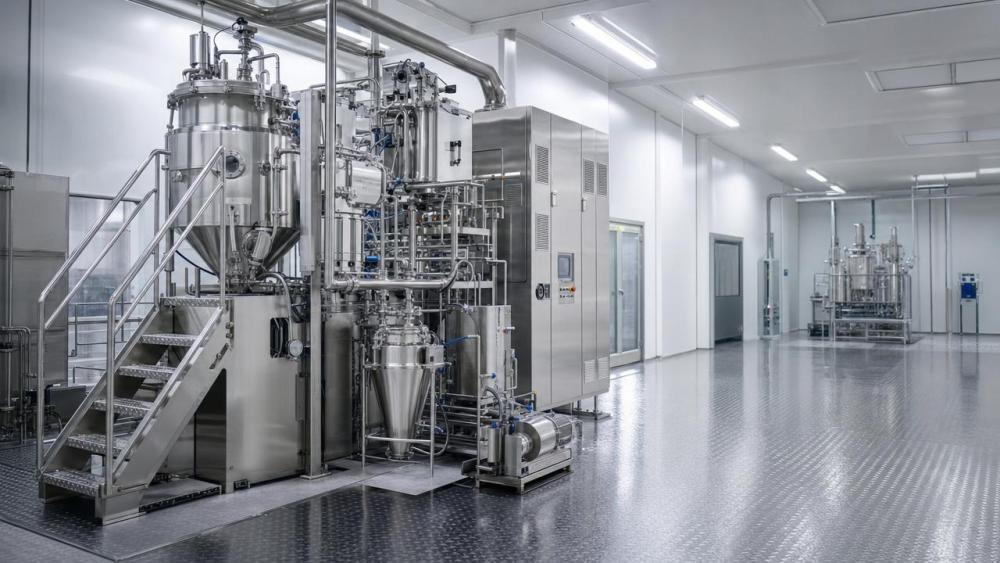
In pharmaceutical projects, compliance is built into design choices early. Once equipment is fabricated, many weaknesses become difficult to correct without redesign, retrofit, or repeated qualification work.
This is especially true for pharmaceutical manufacturing equipment GMP assessments involving contact surfaces, control software, cleaning access, and production records. A lower purchase price can quickly disappear if change control grows complicated.
Across advanced manufacturing, auxiliary systems often determine whether core production performs reliably. GIAS frequently highlights this principle in areas such as ultrasonic cleaning, coding, weighing, vacuum control, and surface treatment.
Pharmaceutical environments are no different. A mixer, washer, isolator, vacuum unit, coding device, or batching platform may sit outside the spotlight, yet still shape product quality and inspection outcomes.
What pharmaceutical manufacturing equipment GMP really covers
GMP is not a single feature that can be checked on a brochure. It is a framework for ensuring equipment supports consistent production, contamination control, documented operation, and reproducible cleaning and maintenance.
In practice, pharmaceutical manufacturing equipment GMP suitability usually includes four linked questions. Can the equipment be cleaned? Can it be controlled? Can it be documented? Can it perform consistently within defined limits?
Those questions apply to both major process machines and supporting systems. Weighing stations affect recipe accuracy. Laser marking and coding influence traceability. Vacuum stability can affect drying, degassing, transfer, and packaging integrity.
So the checklist should not stop at the main machine body. It needs to cover the surrounding process-support equipment that can influence product identity, cleanliness, and batch reproducibility.
The compliance points that deserve the closest attention
A useful checklist is detailed enough to reveal risk, but clear enough to support comparison between suppliers. The following areas usually separate a compliant design from a difficult one.
Material and surface suitability
Contact materials should be compatible with the product, cleaning chemicals, and process conditions. Surface finish, weld quality, dead-leg avoidance, and corrosion resistance need documented confirmation rather than verbal assurance.
Poor surface execution can trap residues or support microbial risk. For equipment tied to liquid transfer, blending, or sterile pathways, this becomes a validation problem, not just a workmanship issue.
Cleanability and access
Ease of cleaning should be judged physically, not theoretically. Ask how internal parts are accessed, whether disassembly is tool-free, and how difficult areas are verified after routine cleaning.
For some applications, ultrasonic cleaning support equipment or validated wash systems may be part of the broader pharmaceutical manufacturing equipment GMP strategy, especially where precision parts or change parts must be cleaned repeatedly.
Automation, data, and audit trail readiness
Modern GMP expectations increasingly involve electronic records, user permissions, alarm history, and parameter traceability. Controls should support secure access, event logging, and reliable data export where required.
If a supplier cannot clearly explain software architecture, backup logic, or change management for control systems, future validation effort may become disproportionate.
Calibration and measurement integrity
Sensors, load cells, temperature probes, pressure instruments, and flow devices should be identifiable, accessible, and calibratable. In batching or dosing systems, measurement integrity is central to GMP performance.
This is where industrial weighing and batching technology deserves close scrutiny. Small measurement drift can create batch deviations, reconciliation issues, or product release delays.
Maintenance and spare parts control
A compliant machine also has to remain compliant after years of use. Wear parts, seals, filters, gaskets, and critical consumables should be standardized, documented, and available with clear specifications.
Documents that should be reviewed before purchase approval
Many equipment problems appear first in missing paperwork. A supplier may build acceptable hardware but still create risk if the document package is weak, incomplete, or inconsistent with actual configuration.
If the document set is fragmented before the order is placed, it rarely becomes simpler later. That alone can influence supplier selection under a pharmaceutical manufacturing equipment GMP review.
Where auxiliary systems often create hidden GMP risk
Some of the most important compliance gaps are found outside the main process vessel or filling line. They appear in supporting systems that affect precision, contamination, identification, or environmental control.
- Vacuum pumps and vacuum systems may influence drying consistency, solvent removal, transfer stability, and sealing performance.
- Laser marking or inkjet coding equipment may determine whether batch data stays legible and permanent through packaging and distribution.
- Weighing and batching systems may decide whether formulation steps remain accurate, repeatable, and reviewable.
- Surface treatment quality on external structures may affect cleanroom durability, particle shedding, and cleaning frequency.
GIAS focuses on these process-support technologies because they directly influence quality outcomes. In pharmaceutical settings, that same perspective helps prevent a narrow purchasing review.
How to compare suppliers beyond brochure claims
A strong supplier usually answers technical questions with traceable detail. A weak one often responds with general statements about experience, quality, or customization without showing how compliance is controlled.
Useful comparison points include documented change control, previous regulated installations, response to deviations, software support capability, and clarity of responsibilities during FAT, SAT, IQ, and OQ preparation.
It also helps to ask how optional features affect validation. A feature that improves efficiency may still add user access complexity, extra cleaning burden, or more failure points.
In other words, pharmaceutical manufacturing equipment GMP review should measure how easily the machine can be controlled within a real quality system, not just how advanced it appears.
A practical pre-purchase checklist for internal review
Before final approval, it is useful to consolidate technical, quality, and lifecycle issues into one decision view. That keeps commercial pressure from overshadowing compliance essentials.
- Confirm product-contact materials, finishes, and fabrication standards with supporting records.
- Review cleanability, drainability, and accessibility under routine operating conditions.
- Check whether controls support audit trails, user management, alarms, and parameter history.
- Verify instrument calibration strategy, measurement ranges, and replacement traceability.
- Assess FAT and SAT scope before the purchase order is finalized.
- Request spare parts lists, manuals, drawings, and document revision control early.
- Examine how auxiliary systems interact with the main process and with cleaning procedures.
- Document any open GMP gaps and assign closure responsibility before shipment.
This checklist is not a substitute for site-specific validation planning. It is a practical filter that improves equipment selection before risk becomes embedded in hardware.
What to do next with the checklist
The most effective next step is to translate pharmaceutical manufacturing equipment GMP expectations into a written bid package. That makes supplier comparisons more objective and reduces ambiguity during technical review.
It is also worth separating critical requirements from preferred features. That distinction helps preserve compliance priorities when schedules tighten or quotations differ significantly.
For projects involving cleaning systems, coding, weighing, vacuum control, or other auxiliary technologies, cross-check how each supporting unit affects validation workload and batch assurance. That broader view often leads to better purchasing decisions.
A careful checklist does more than prevent mistakes. It builds a stronger basis for qualification, smoother startup, and more reliable long-term operation in regulated pharmaceutical production.