
Why does non adhesive assembly cost often look low at first, then rise during approval?
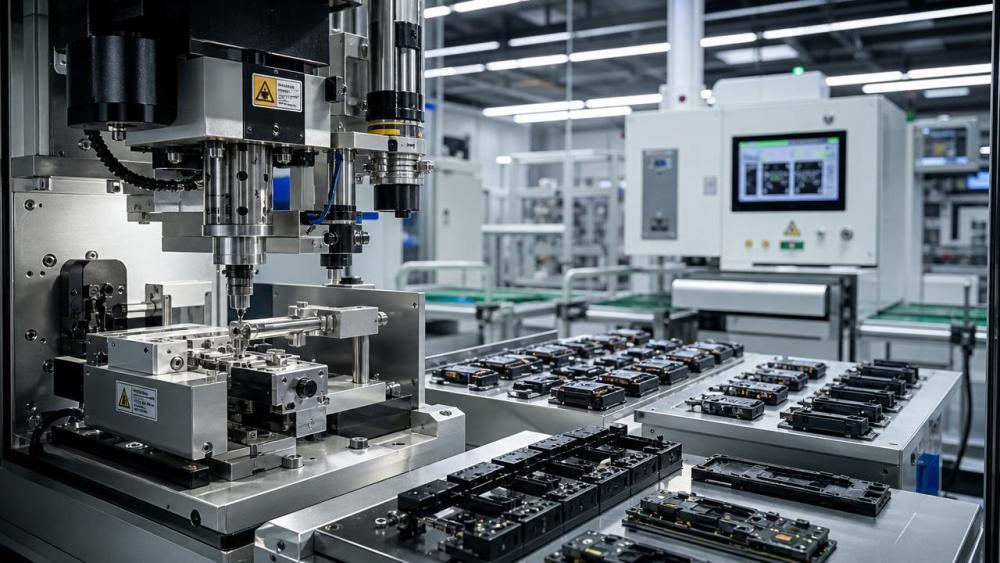
At quote stage, non adhesive assembly cost is often reduced to equipment price or piece-part cycle time.
That view is too narrow for real budget control.
In practical manufacturing, the larger cost picture includes tooling wear, operator dependence, scrap exposure, validation effort, and output stability.
This matters especially when replacing adhesive bonding with ultrasonic welding, press-fit, heat staking, snap-fit, laser-assisted joining, or mechanical locking methods.
The process may remove glue, curing time, and contamination risk.
Even so, savings only appear when the assembly window stays stable over volume production.
A useful way to read non adhesive assembly cost is to separate visible cost from hidden cost.
Visible cost includes machinery, fixtures, energy, and labor.
Hidden cost appears in downtime, qualification, part variation, failed joints, and lost traceability.
That is why industrial intelligence platforms such as GIAS focus on auxiliary systems.
Assembly quality is rarely driven by the joining device alone.
Cleaning precision, marking quality, vacuum stability, batching accuracy, and surface condition all influence final yield.
Which cost drivers usually have the biggest impact on non adhesive assembly cost?
Most approval discussions focus on labor first.
More common surprises come from tooling and yield loss.
For ultrasonic welding, horn design, fixture rigidity, and part tolerance can decide whether output remains predictable.
For press-fit or staking, insertion force consistency and fixture alignment become equally important.
The following table helps frame the main non adhesive assembly cost drivers before comparing suppliers or internal capital requests.
When non adhesive assembly cost is reviewed through this structure, the conversation becomes more practical.
The question is no longer whether the joining method is cheaper per cycle.
The better question is whether the method protects margin across the full production window.
How much of non adhesive assembly cost is really driven by tooling?
Tooling can be the turning point between an attractive pilot and an expensive rollout.
A non adhesive assembly process usually needs more precise energy transfer or mechanical control than adhesive application.
That precision does not happen for free.
Ultrasonic welding needs tuned tooling geometry.
Heat staking requires controlled thermal profiles and stable contact conditions.
Snap-fit assembly may look simple, but mold variation can force extra fixture investment.
The more critical the joint, the more sensitive the tool stack becomes.
A common mistake is treating tooling as a one-time purchase.
In reality, non adhesive assembly cost should include refurbishment cycles, spare tool inventory, engineering changes, and line balancing impacts.
If parts arrive with surface contamination or inconsistent dimensions, tool stress rises further.
That is why upstream support systems matter.
Ultrasonic cleaning can reduce joint variation caused by oils or particles.
Laser marking and inkjet coding can preserve traceability when assemblies fail later in the field.
Those details belong in the total cost discussion, even when they sit outside the core joining machine.
If labor is falling, why can yield loss still make non adhesive assembly cost worse?
Lower labor does not guarantee lower total cost.
Yield loss usually hurts more because it consumes material, machine time, inspection effort, and delivery confidence at the same time.
This is especially true in regulated or traceable production.
If one failed weld or bad press-fit forces destructive checks on a batch, the hidden cost expands quickly.
More importantly, yield loss is often blamed on the joining method when the root cause sits elsewhere.
Part cleanliness, surface treatment, moisture, vacuum stability, or inaccurate batching upstream may shift the process window.
That broader process view is central to advanced manufacturing decisions.
GIAS covers these auxiliary systems because they influence output consistency more than many budget reviews assume.
A slightly cleaner component or more stable vacuum condition may reduce scrap more effectively than adding another operator or buying faster tooling.
When estimating non adhesive assembly cost, it helps to ask whether scrap is random or patterned.
- Random scrap points to weak control limits or operator variation.
- Patterned scrap usually points to part design, contamination, batch drift, or fixture wear.
- Escalating scrap after startup often signals preventive maintenance gaps.
That diagnosis is more useful than treating all yield loss as one number.
What should be compared when evaluating one non adhesive assembly option against another?
The strongest evaluations compare process fit, not just machine price.
A lower-priced system can still produce a higher non adhesive assembly cost if validation is slower or reject sorting is manual.
A practical comparison usually includes five questions.
- Does the process tolerate real part variation, or only ideal samples?
- How often will tooling require replacement or retuning?
- Can the line verify joint quality in process, not only after failure?
- Will traceability be preserved through marking, coding, or batch records?
- What upstream conditions must stay controlled for yield to remain acceptable?
Those questions often separate a stable industrial solution from a promising lab result.
It also helps to compare cost under three volumes.
Look at pilot output, normal output, and surge output.
Some non adhesive assembly cost models perform well only in mid-volume conditions.
Once demand rises, setup loss, cooling time, fixture wear, or inspection bottlenecks become more visible.
A quick decision table can keep the comparison grounded
Where do finance reviews usually misread non adhesive assembly cost?
The most frequent mistake is treating adhesive removal as automatic savings.
Eliminating glue can reduce consumables, curing stations, ventilation needs, and contamination risk.
Still, non adhesive assembly cost may rise if the new process demands tighter tolerances or heavier inspection.
Another misread appears in capital timing.
A project may look efficient because maintenance cost lands after the first approval period.
That does not make the cost disappear.
It simply shifts the burden into later quarters.
There is also a tendency to isolate the joining station from the surrounding process-support equipment.
In advanced manufacturing, that separation is risky.
Cleaning systems influence bond surfaces.
Weighing and batching affect material consistency.
Vacuum systems can affect degassing, packaging integrity, or downstream coating behavior.
Surface treatment changes how parts respond to heat, pressure, or friction during joining.
The better reading of non adhesive assembly cost links the station to the full process chain.
How can the next approval step be made more defensible?
A defensible decision usually starts with a narrower question.
Do not ask only whether non adhesive assembly cost is lower.
Ask under which conditions it stays lower.
That small wording change improves the analysis.
Before approval, it is worth confirming a short checklist.
- Separate tooling, labor, maintenance, and scrap into different lines.
- Model yield at expected variation, not only at best-case settings.
- Check whether cleaning, marking, vacuum, or batching controls must be upgraded.
- Request evidence of process window stability across several production runs.
- Define what traceability data will exist if defects appear later.
In other words, non adhesive assembly cost should be approved as a system decision, not a standalone machine decision.
That approach tends to reduce surprises after launch.
It also creates a clearer basis for comparing alternative joining methods, supporting equipment, and rollout timing.
If the next step is evaluation, build a simple cost sheet around tooling life, labor content, qualification effort, and expected yield.
Then test those assumptions against actual line conditions.
That is usually where the true non adhesive assembly cost becomes visible.