
Lithium Battery Dosing Price Breakdown: What Drives Cost per Line and per Cell?
For procurement teams evaluating lithium battery production lines, understanding the lithium battery dosing price is essential to controlling total project cost and long-term process stability.
Cost per line and per cell can vary widely depending on dosing accuracy, automation level, throughput, material compatibility, and quality requirements.
This article breaks down the key pricing drivers to help buyers compare solutions more confidently and make better-informed sourcing decisions.
Why Lithium Battery Dosing Price Varies So Much
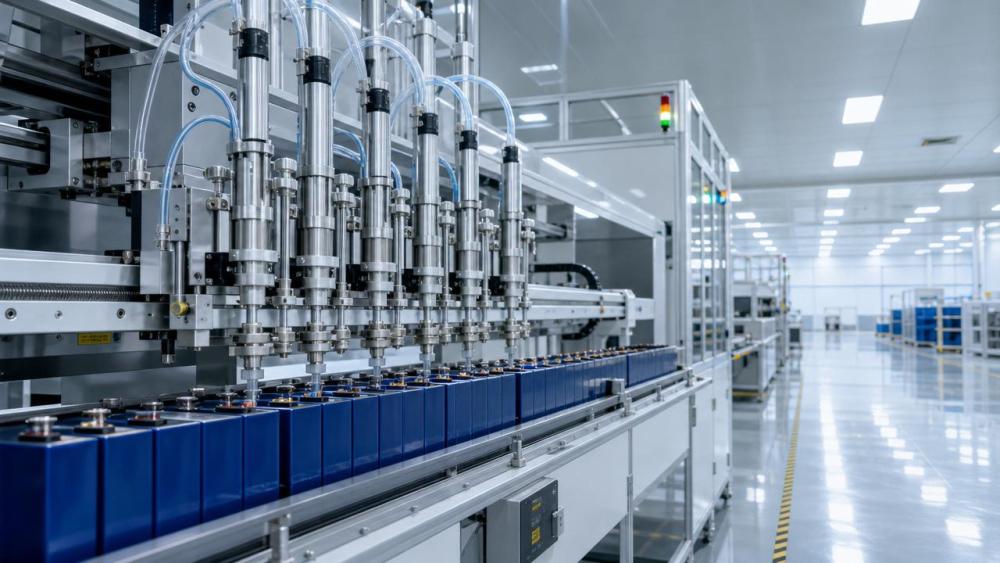
At first glance, many dosing systems look similar.
In practice, the lithium battery dosing price reflects much more than a pump and a nozzle.
It includes process consistency, production speed, quality control, and integration risk.
A low entry quote may look attractive.
But if dosing drift causes scrap, downtime, or electrolyte waste, the real cost rises fast.
That is why buyers should review both line-level investment and cell-level economics.
The Two Main Pricing Views
- Cost per line covers equipment, installation, integration, and commissioning.
- Cost per cell reflects long-term production efficiency across output volume.
Both matter, but they answer different sourcing questions.
One helps with capital planning.
The other helps judge lifetime value.
What Shapes Cost per Line
The lithium battery dosing price per line usually starts with configuration depth.
A semi-automatic setup costs far less than a high-speed fully automated system.
Still, equipment scope is only one part of the story.
1. Dosing Accuracy and Repeatability
Higher accuracy needs better metering components, tighter control logic, and stronger calibration capability.
That pushes the lithium battery dosing price upward.
For premium cells, this added cost is often justified.
2. Throughput and Takt Time
Fast lines require stable fluid delivery at high speed.
They also need motion control, synchronization, and buffering systems.
As throughput rises, line cost usually climbs.
However, cost per cell may fall later.
3. Number of Dosing Heads and Stations
Multi-head systems increase output and flexibility.
They also increase controls, maintenance points, and spare parts demand.
This is a direct driver of lithium battery dosing price during quotation comparison.
4. Automation and Traceability
Modern plants often expect barcode linking, MES communication, and real-time process records.
These features add software, sensors, and validation work.
They raise initial lithium battery dosing price, yet reduce quality disputes later.
5. Material Compatibility and Safety Design
Electrolyte handling needs compatible seals, tubing, valves, and enclosed protection.
If the line must support aggressive chemistry, cost rises further.
This is especially true when compliance standards are strict.
What Drives Cost per Cell
Looking only at equipment price can be misleading.
A better sourcing decision comes from linking lithium battery dosing price to cell output.
This makes hidden operating costs easier to spot.
Key Cost-per-Cell Factors
- Yield loss from underdosing or overdosing.
- Electrolyte waste during startup, purging, and changeover.
- Downtime caused by clogging, calibration drift, or unstable feeding.
- Maintenance labor and replacement parts consumption.
- Energy use and compressed air demand.
When output is high and stable, a more expensive system can deliver a lower per-cell cost.
That trade-off is often where the smartest procurement decisions happen.
A Simple Evaluation Formula
A practical way to review lithium battery dosing price is to compare total five-year cost.
Include capital cost, downtime risk, scrap, maintenance, consumables, and expected output.
Then divide by total qualified cells produced.
This approach reveals whether a low quote is truly competitive.
Typical Price Difference by System Level
While exact numbers vary by market and specification, pricing usually follows clear patterns.
From a sourcing angle, the best option depends on plant scale, product mix, and quality targets.
Hidden Cost Drivers Buyers Often Miss
This is where many quotations become hard to compare fairly.
The stated lithium battery dosing price may exclude several important items.
Watch for These Gaps
- Installation and site acceptance services.
- Recipe development and dosing parameter tuning.
- Spare parts packages for the first year.
- Software licenses and MES interface costs.
- Training for operators and maintenance staff.
- Validation documents for regulated production environments.
A supplier with a higher upfront number may still present the cleaner total offer.
That is why quote normalization matters so much in procurement review.
How to Compare Suppliers More Effectively
A useful RFQ process should go beyond unit price.
It should test whether the quoted lithium battery dosing price matches production reality.
Ask Suppliers These Questions
- What dosing accuracy is guaranteed during continuous operation?
- How much electrolyte loss occurs during cleaning and changeover?
- What is the proven takt time under actual customer conditions?
- Which spare parts are critical, and what is their service life?
- How is the system integrated with upstream and downstream equipment?
- What support is included after commissioning?
These questions help separate simple price competition from real value comparison.
They also reduce the risk of expensive surprises after purchase.
A Practical Buying Approach
In real projects, the best decision usually comes from staged evaluation.
Start with process requirements, then map them to pricing logic.
- Define cell type, throughput target, and dosing tolerance first.
- Request a detailed breakdown of lithium battery dosing price components.
- Compare line cost and projected cost per cell side by side.
- Check references from similar battery production applications.
- Review service response time and local support capability.
This method keeps the purchase grounded in measurable business outcomes.
Final Takeaway on Lithium Battery Dosing Price
The right lithium battery dosing price is not simply the lowest quoted number.
It is the price that delivers stable dosing, strong yield, manageable maintenance, and scalable production economics.
When cost per line and cost per cell are reviewed together, sourcing choices become clearer.
That also makes supplier comparison more objective and investment decisions more defensible.
For better results, request detailed technical data, validate operating assumptions, and compare total ownership cost before final selection.