
Industrial Weighing Technology Price: What Drives Cost in Modern Production Lines?
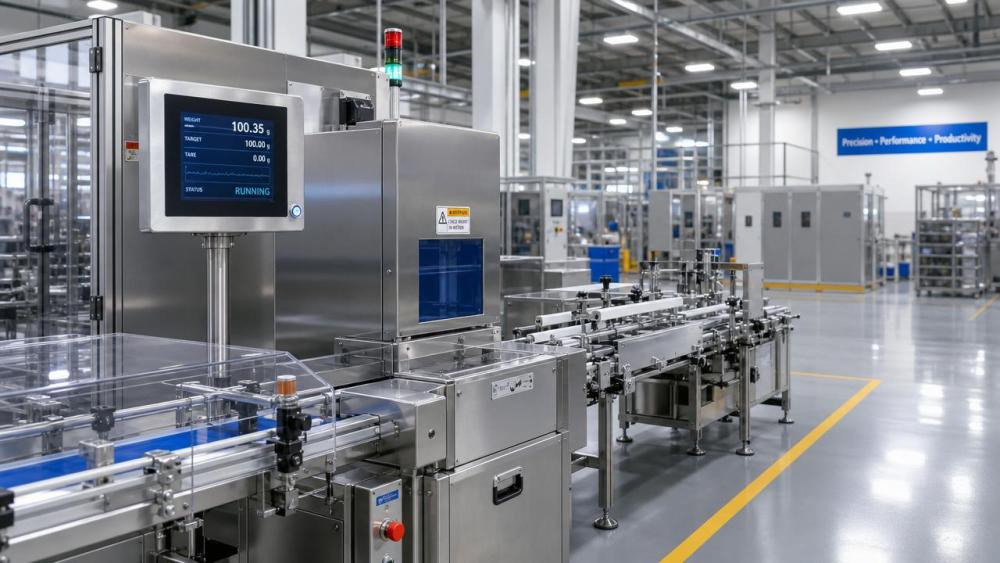
Industrial weighing technology price is not shaped by machine size alone. In most factories, the real cost picture is wider, more technical, and more strategic.
A basic floor scale may look affordable at first glance. Yet a fully integrated weighing system can carry a very different price structure.
That difference often comes from accuracy, software, traceability, compliance, and production continuity. These factors matter because they directly affect waste, rework, and audit exposure.
For companies comparing suppliers, industrial weighing technology price should be reviewed as a total investment, not only as an equipment invoice.
In modern production lines, the weighing system often supports recipe control, batch consistency, inventory accuracy, and product release decisions.
This also means a cheaper unit can become expensive later if downtime, calibration drift, or integration limits interrupt production.
Why Industrial Weighing Technology Price Varies So Much
The first reason is application complexity. Static weighing, dynamic checkweighing, batching, and loss-in-weight feeding all require different design levels.
A simple warehouse scale serves one task. A production-line weighing system often connects to conveyors, PLCs, MES platforms, and barcode systems.
The second reason is performance stability. Buyers are not only paying for weight measurement. They are paying for repeatability under real factory conditions.
Dust, vibration, humidity, operator habits, and cleaning routines can all influence hardware choice. Better protection usually raises industrial weighing technology price.
A third factor is lifecycle expectation. Some systems are selected for five years. Others are expected to operate reliably for a decade or longer.
Core Cost Drivers in Modern Production Lines
When evaluating industrial weighing technology price, it helps to separate cost drivers into technical, operational, and compliance categories.
1. Accuracy and resolution
Higher precision usually requires better load cells, signal processing, and environmental compensation. The tighter the tolerance, the higher the system cost.
In food, pharmaceuticals, and specialty chemicals, small deviations can trigger waste or compliance issues. That makes precision a cost control tool, not a luxury.
2. Throughput and automation
Manual weighing stations cost less upfront. Automated systems with feeders, conveyors, reject units, and software logic cost more but reduce labor dependence.
As production speed increases, industrial weighing technology price often rises because the system must stay accurate without slowing the line.
3. Construction materials and hygiene design
Stainless steel frames, washdown capability, sealed electronics, and hygienic surfaces increase cost. They are common in food, dairy, and pharmaceutical settings.
These features may look expensive upfront. In practice, they lower contamination risk and shorten cleaning downtime.
4. Software and data integration
Standalone systems are cheaper. Connected systems that log batch data, support traceability, and communicate with ERP or MES platforms cost more.
Still, software often justifies the industrial weighing technology price because it improves audit readiness, recipe control, and production visibility.
5. Certification and compliance
Legal-for-trade approval, calibration documentation, GMP alignment, or hazardous-area design can all add cost. They also reduce regulatory risk.
In regulated industries, ignoring these items often leads to replacement expense later. That is where early savings disappear quickly.
The Hidden Costs Behind a Low Quotation
A low bid can be attractive during budget review. However, industrial weighing technology price should never be judged without operating context.
Some suppliers quote only the core scale. Essential items may be excluded, including mounting structures, junction boxes, software licenses, or validation support.
Other quotations understate installation complexity. A system may need cable routing, vibration isolation, line modification, or operator training.
Replacement parts are another issue. A lower initial industrial weighing technology price can lead to higher maintenance costs if components are proprietary or slow to source.
More importantly, unstable performance creates indirect losses. These include overfilling, underweight rejects, recipe variation, and delayed batch release.
How to Compare Industrial Weighing Technology Price More Effectively
A stronger buying process starts with total cost of ownership. That includes purchase, installation, calibration, maintenance, downtime risk, and system life.
It also helps to compare price against measurable business outcomes. Better weighing performance often improves yield, consistency, and complaint prevention.
- Define the required tolerance before asking for quotations.
- Confirm whether software, interfaces, and reporting tools are included.
- Check calibration frequency and expected spare-parts availability.
- Review cleaning needs, ingress protection, and factory environment.
- Ask how the system handles vibration, drift, and operator variation.
This kind of comparison creates a more realistic view of industrial weighing technology price. It also reduces the chance of approving an incomplete solution.
A Practical Cost Framework for Procurement Review
A simple framework can make supplier evaluation more consistent. It helps separate a low equipment number from a low operational cost.
Using a framework like this makes industrial weighing technology price easier to defend internally. It ties technical details to financial outcomes.
When a Higher Price Makes Better Financial Sense
There are cases where a higher industrial weighing technology price is the more economical decision. High-volume operations are a clear example.
If a plant runs continuously, even short stoppages are expensive. In that setting, robust components and local service coverage can protect output.
The same logic applies to regulated production. A system with stronger data logging and validation support may prevent nonconformance and batch disputes.
More recently, digital integration has become a bigger pricing factor. Yet it also supports better forecasting, line transparency, and supplier accountability.
In actual business terms, the best industrial weighing technology price is often the one that lowers cost per compliant unit over time.
Questions to Ask Before Approval
Before final selection, several questions can expose hidden risk and sharpen negotiation.
- What production problem is this system solving today?
- What failure cost appears if weighing accuracy drifts?
- Which functions are standard, and which are optional extras?
- How long will calibration, repair, or software support take?
- Can the system scale with future automation plans?
These questions keep industrial weighing technology price linked to production reality. They also improve supplier transparency during the quotation stage.
Conclusion
Industrial weighing technology price reflects far more than scale capacity. It is shaped by precision, automation, compliance, integration, and long-term service performance.
A disciplined review process makes it easier to compare suppliers on real value. That includes direct cost, hidden cost, and operating risk.
For production-driven businesses, the smartest decision is rarely the lowest quotation. It is the solution that protects consistency, compliance, and output over time.
When industrial weighing technology price is evaluated through that lens, procurement becomes more predictable, budgets become easier to justify, and investment quality improves.