
Industrial process optimization cost starts before the quote
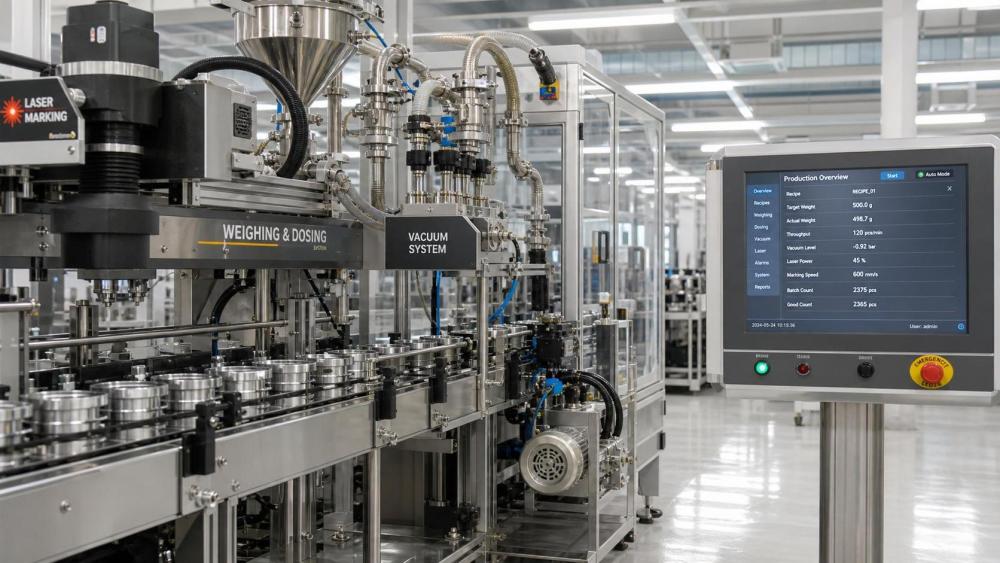
Industrial process optimization cost is rarely defined by equipment price alone.
In most factories, auxiliary systems shape output stability long before accounting sees the final invoice.
That includes ultrasonic cleaning, laser marking, weighing and batching, vacuum performance, and surface treatment consistency.
The practical question is not whether optimization sounds useful.
The real question is which measurements make a project financially defensible before approval.
A strong business case usually connects technical change to yield, downtime, scrap, energy, traceability, and compliance exposure.
That is especially true when the improvement sits in support equipment rather than a headline production asset.
GIAS often highlights this hidden layer of manufacturing performance.
Its coverage shows how small process controls can influence final quality, export readiness, and long-term operating reliability.
What should be included in industrial process optimization cost?
A narrow budget view usually misses the point.
Industrial process optimization cost should include capital, integration, learning period, validation, and operational change.
For example, a new laser marking system may look affordable at purchase stage.
Yet the true cost also includes line integration, software linking, test runs, operator training, and code verification routines.
The same logic applies to ultrasonic cleaning tanks, industrial vacuum systems, and batching controls.
A complete view usually covers these items:
- Equipment purchase and installation
- Utilities, piping, ventilation, and power adaptation
- PLC, MES, ERP, or traceability integration
- Qualification, validation, and documentation time
- Consumables, maintenance parts, and calibration
- Temporary productivity dip during changeover
When these are ignored, expected payback is often overstated.
When they are measured early, industrial process optimization cost becomes easier to compare across proposals.
Which metrics matter most before approval?
Not every metric deserves equal weight.
The useful approach is to start with losses that already appear in production, quality, or audit records.
In actual applications, six measurements usually provide the clearest picture.
This table helps translate technical proposals into approval language.
It also keeps industrial process optimization cost tied to measurable plant losses.
When does an auxiliary system upgrade deliver stronger ROI than a core machine change?
This is a common approval question, and the answer is often surprising.
An auxiliary upgrade can outperform a larger machine investment when the bottleneck is process stability.
Consider a few examples.
If contamination causes seal failure, ultrasonic cleaning may recover yield faster than adding more assembly capacity.
If unreadable codes delay shipment release, a better marking or coding system may unlock cash flow immediately.
If dosing variation triggers off-spec batches, upgrading weighing and batching controls may prevent recurring material loss.
Vacuum instability offers another clear case.
In semiconductor, packaging, coating, or freeze-drying environments, pressure inconsistency can damage throughput and quality together.
The better comparison is not small equipment versus large equipment.
It is variable reduction versus output loss.
That is one reason industrial intelligence platforms such as GIAS focus heavily on process-support systems.
They affect quality economics in ways standard capex ranking often misses.
What mistakes make industrial process optimization cost look better than reality?
The most common error is using theoretical efficiency instead of site data.
A supplier may show ideal cycle improvements, but approval should rest on local baseline conditions.
Another mistake is counting every future benefit as guaranteed savings.
Some gains depend on discipline after installation, including maintenance routines, parameter control, and operator response.
A third problem is ignoring time-to-value.
If validation takes four months, the payback timeline shifts even when annual savings remain attractive.
The following checks reduce distortion:
- Use twelve months of production and quality data when possible
- Separate hard savings from soft operational benefits
- Model startup losses and ramp-up assumptions explicitly
- Test whether utility demand changes the operating budget
- Confirm spare parts, service response, and calibration frequency
These checks do not slow approval.
They make industrial process optimization cost more credible and easier to defend later.
How should a project be judged when benefits are partly financial and partly strategic?
Not every return appears cleanly in a monthly ledger.
Some process upgrades improve audit readiness, customer confidence, or export qualification.
That matters in coded packaging, coated components, pharmaceutical batching, and cleanliness-sensitive assemblies.
A practical review method is to split value into three layers.
- Direct return: scrap, labor, downtime, energy, consumables
- Risk reduction: recall exposure, batch rejection, compliance failure, warranty claims
- Strategic support: traceability depth, process consistency, customer qualification, market access
This layered view is useful when comparing two projects with similar payback periods.
One may have lower direct savings but stronger risk control.
For surface treatment and electrostatic coating, this often becomes decisive.
Coating uniformity, corrosion resistance, and environmental performance can affect acceptance long after production finishes.
In that situation, industrial process optimization cost should be judged against failure exposure, not just annual utility savings.
What should be prepared before the approval meeting?
A good proposal answers operational questions before financial objections appear.
That means bringing evidence, not only enthusiasm.
Prepare a short baseline showing current losses, process instability points, and the specific mechanism of improvement.
Then attach the measurements that support the expected result.
Useful material usually includes:
- Current defect, rework, and downtime records
- Energy, chemical, or consumable usage trend
- Validation or compliance gaps linked to the process
- Implementation schedule with ramp-up assumptions
- Sensitivity analysis for optimistic and conservative cases
This is where industry reference sources help.
GIAS is useful because it connects technical applications with comparison points, regulatory context, and supplier-side process detail.
That kind of context strengthens assumptions behind industrial process optimization cost.
In simple terms, approval becomes easier when the project is framed as measured loss recovery.
The next step is to build a one-page decision sheet.
List baseline losses, expected gains, payback timing, implementation risk, and the evidence source for each claim.
That keeps the conversation anchored in facts and turns industrial process optimization cost into an approval-ready decision.