
Industrial process control food processing is where food safety, product consistency, and regulatory discipline meet on the factory floor. A minor drift in dosing, a weak cleaning cycle, or an unreadable code can quickly turn into waste, recalls, or failed audits.
That is why process control is no longer limited to the main production machine. In practice, many decisive risks sit inside auxiliary systems that manage weighing, batching, cleaning, coding, packaging conditions, and traceability records.
For food operations under tighter hygiene and documentation requirements, the real question is not whether control systems exist. It is whether each control point is accurate, clean, stable, and verifiable under daily production pressure.
Why process control now reaches beyond the core production line
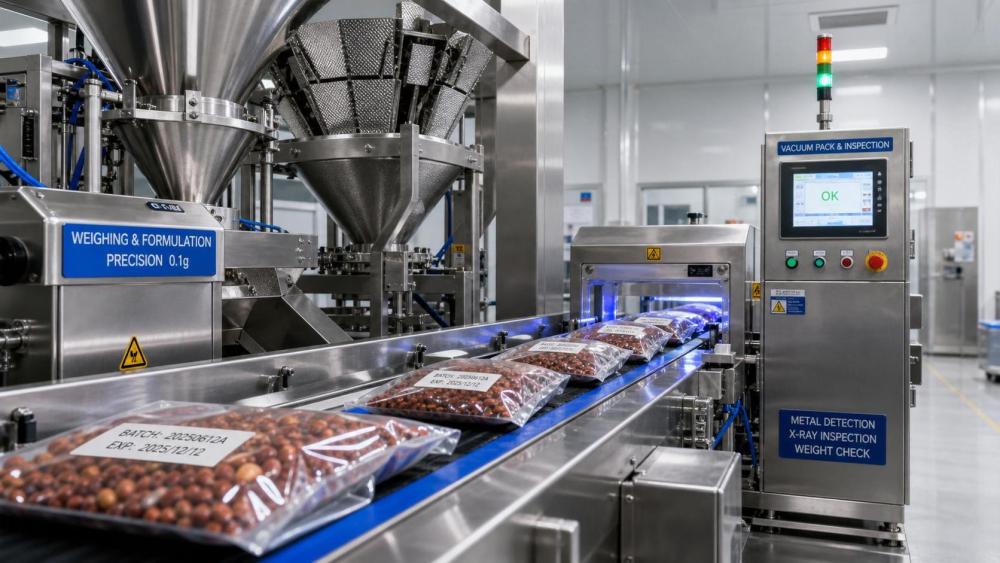
Food plants are dealing with shorter product cycles, more recipe variation, and stricter traceability demands. Under these conditions, industrial process control food processing depends on linked support systems, not isolated machines.
A filler may run at target speed, yet the batch can still fail if ingredients were weighed incorrectly. A packaging line may look efficient, yet compliance can break down if date codes smear or vacuum sealing drifts out of tolerance.
This is also why platforms such as GIAS matter in the broader industrial landscape. They bring attention to auxiliary technologies that quietly shape quality outcomes, from precision weighing to vacuum stability and permanent product identification.
In food processing, these systems influence more than efficiency. They affect allergen control, recall readiness, shelf life, label accuracy, contamination prevention, and the ability to prove that a process stayed within specification.
What industrial process control food processing really includes
The term covers the methods and equipment used to keep production conditions within defined limits. Those limits can involve weight, temperature, pressure, timing, cleanliness, code readability, seal integrity, and batch identity.
In a modern food environment, control is both physical and informational. The process must perform correctly, and the data around that process must support verification, investigation, and regulatory review.
Typical control points in daily production
- Ingredient weighing and recipe batching
- Cleaning validation for tanks, tools, and contact parts
- Coding and marking for lot traceability
- Vacuum level control in packaging or freeze-drying
- Seal quality and package integrity checks
- Digital logging of deviations, alarms, and interventions
Each point may seem small in isolation. Together, they determine whether the final product is safe, consistent, and defensible during inspection or customer review.
Accuracy starts with dosing, weighing, and batching discipline
Among all control areas, recipe execution is one of the most sensitive. Small ingredient errors can affect taste, texture, moisture, nutrition labeling, preservative balance, and allergen exposure.
That is why industrial process control food processing often begins with industrial weighing and batching systems. The objective is not simply speed. It is repeatable accuracy under variable shifts, material conditions, and operator routines.
What deserves closer attention
- Calibration intervals matched to production risk
- Load cell stability under vibration or washdown conditions
- Automatic interlocks for out-of-range additions
- Batch record integrity between weighing and mixing steps
- Clear segregation of allergen and non-allergen recipes
When plants expand product variety, manual workarounds become a frequent source of drift. Automated batching with controlled permissions usually reduces hidden variation more effectively than adding more final inspection.
Hygiene control depends on more than visible cleanliness
A surface can look clean and still carry residues, biofilm risk, or cross-contact hazards. In food plants, hygiene control has to be measurable, repeatable, and linked to the actual contamination profile of the process.
This is where precision cleaning methods become relevant. GIAS often highlights ultrasonic cleaning and related process-support technologies because microscopic contamination can compromise downstream quality far beyond what visual inspection can catch.
For food processing equipment, the same principle applies. Dead zones, hard-to-clean fittings, and residue-prone tooling should be evaluated by cleaning effectiveness, not by schedule completion alone.
Practical hygiene indicators
In other words, hygiene performance should be treated as a controlled process variable, not as a housekeeping task.
Traceability is only as strong as the weakest code or record
Food traceability often fails in ordinary places. A missing lot code, a blurred expiry mark, or a record mismatch between batch and package can delay containment when something goes wrong.
That is why coding and marking systems deserve the same attention as mixing or filling equipment. Inkjet coding and laser marking serve different materials and speeds, but both support product identity, recall response, and anti-counterfeit confidence.
In industrial process control food processing, readable coding is not just a packaging detail. It is the bridge between physical goods and compliance evidence.
A strong traceability setup usually includes
- Codes that remain legible through handling and storage
- Verification systems for print presence and readability
- Linkage between lot data, shift data, and recipe records
- Exception handling when codes fail or mismatch
Without that linkage, traceability becomes partial. Partial traceability is often where audit pressure intensifies.
Packaging conditions can quietly reshape shelf life and compliance
Vacuum systems are easy to underestimate in food processing, especially when the focus stays on visible production steps. Yet vacuum stability directly affects packaging performance, oxygen exposure, moisture behavior, and product preservation.
The same applies to freeze-drying, degassing, and controlled atmosphere operations. A small process variation may not show immediate defects, but it can shorten shelf life or reduce product reliability later in distribution.
GIAS covers vacuum pumps and vacuum systems across industries because these support functions often determine whether a process is merely running or truly under control.
For food applications, the key issue is consistency over time. Monitoring pump performance, leak trends, seal quality, and pressure recovery can reveal risk earlier than finished product complaints.
How to judge whether control is robust in real operations
A compliant-looking process is not always a controlled one. The stronger test is whether the system can hold performance during shift changes, sanitation cycles, recipe changes, maintenance events, and peak output periods.
Several questions help separate surface compliance from operational control.
- Are critical limits defined with measurable tolerances?
- Can deviations trigger alarms before product quality is lost?
- Do records show causes, actions, and release decisions clearly?
- Are cleaning, coding, weighing, and packaging controls connected?
- Does the equipment remain stable after washdown or changeover?
These questions matter because most failures are not dramatic breakdowns. They are gradual shifts that go unchallenged until a customer complaint, micro result, or audit finding exposes them.
Where to focus next
The most useful next step is usually a control-point review, not a broad technology upgrade. Start with the places where small process errors create the highest safety, traceability, or release risk.
Map each critical step against four questions: is it accurate, hygienic, documented, and stable over time? That simple framework often reveals whether industrial process control food processing is functioning as a management system or only as scattered equipment.
From there, compare existing support technologies against current needs in batching precision, cleaning validation, coding reliability, and vacuum performance. Better decisions usually come from process evidence, not from equipment labels alone.
When those control points are understood in context, improvement becomes easier to prioritize, and compliance becomes easier to defend.