
Industrial IoT Integration in Germany: What Actually Needs to Connect
Industrial IoT integration Germany is moving from pilot projects to plant-level investment.
Manufacturers want better visibility, lower waste, and faster response to quality issues.
The bigger shift is that auxiliary systems are now part of the decision, not an afterthought.
That includes weighing, batching, coding, laser marking, vacuum, ultrasonic cleaning, and coating support equipment.
If these assets stay disconnected, digital transformation usually stalls at the line level.
In Germany, that gap matters because production standards, traceability, and compliance expectations are high.
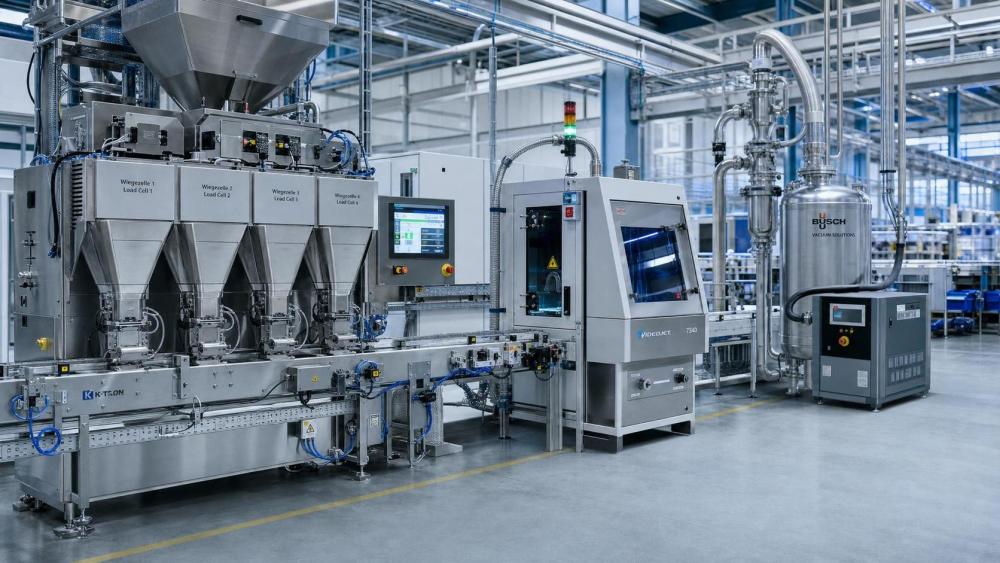
Industrial IoT integration Germany therefore means more than connecting PLCs and dashboards.
It means creating usable data flows across process-support systems that influence product quality every day.
For procurement and operations teams, the main question is practical: which systems deserve priority, and where is the return?
A useful answer starts with understanding which assets generate measurable operational value once integrated.
Key Systems That Shape Industrial IoT Integration Germany
Not every machine has equal impact in an Industrial IoT integration Germany project.
The highest-value systems usually sit where precision, traceability, uptime, or environmental stability matter most.
1. Weighing and batching systems
These systems are often the easiest place to prove value.
Connected recipe control reduces variation, supports audit trails, and flags dosing errors before they become scrap.
This is especially relevant in food, pharmaceuticals, chemicals, and battery materials.
2. Coding and laser marking systems
Traceability is a major driver of Industrial IoT integration Germany.
When coding and marking platforms connect with MES or ERP layers, batch history becomes faster to verify.
That supports recall readiness, anti-counterfeiting, and customer-specific labeling requirements.
3. Vacuum pumps and vacuum systems
Vacuum performance often affects product stability long before operators notice a defect.
Connected monitoring helps track pressure drift, cycle irregularities, and maintenance needs.
This matters in packaging, coating, degassing, freeze-drying, and semiconductor-related processes.
4. Ultrasonic cleaning and welding
These systems directly influence cleanliness and joint consistency.
Integrated sensors can capture cycle time, power stability, bath condition, and validation data.
That improves process control in medical devices, automotive parts, electronics, and precision assemblies.
5. Surface treatment and electrostatic coating
These processes affect corrosion resistance, finish quality, and environmental performance.
Industrial IoT integration Germany often includes humidity, temperature, line speed, and coating thickness data.
Without that visibility, root-cause analysis stays slow and expensive.
Where Industrial IoT Integration Germany Usually Fails
From recent projects, the main problems are rarely about sensor availability.
They usually come from architecture, governance, and poor system selection.
Legacy protocol mismatch
Older auxiliary equipment may use proprietary interfaces or limited export functions.
That creates hidden costs in gateways, middleware, custom connectors, and vendor support time.
Poor data context
Raw machine signals do not create business value by themselves.
If event tags, batch IDs, timestamps, and operator actions are inconsistent, analysis becomes unreliable.
Cybersecurity exposure
Industrial IoT integration Germany adds value, but it also expands the attack surface.
Remote access, unmanaged devices, and weak segmentation can turn a visibility project into an operational risk.
Unclear ownership
Many programs fail between IT, OT, quality, and procurement boundaries.
When no team owns data standards, uptime priorities, and supplier accountability, deployment slows quickly.
Overbuilt pilot scope
Some companies try to connect every asset before proving a business case.
A narrower rollout often delivers faster results and clearer internal support.
ROI Factors Behind a Stronger Business Case
A credible Industrial IoT integration Germany strategy needs more than a technology narrative.
It needs measurable financial logic tied to production outcomes.
Quality yield improvement
If integrated auxiliary systems reduce contamination, coding errors, coating defects, or recipe deviation, the return is usually visible fast.
Downtime reduction
Predictive alerts on vacuum, cleaning, or marking systems can prevent unplanned stoppages.
That matters most where one support system can interrupt the full production line.
Labor efficiency
Manual logging, paper traceability, and reactive troubleshooting consume skilled labor.
Connected workflows reduce that burden and improve response time during audits or deviations.
Compliance and recall cost avoidance
In Germany and across Europe, traceability failures can become expensive quickly.
Industrial IoT integration Germany supports cleaner records, faster investigation, and lower exposure during customer complaints.
Energy and consumables optimization
Vacuum systems, coating lines, and cleaning processes often hide avoidable utility costs.
Integrated monitoring helps identify waste that standard production reports often miss.
How to Evaluate Vendors and Build a Smarter Rollout
A strong Industrial IoT integration Germany program usually starts with a focused selection framework.
The goal is not maximum connectivity. The goal is usable, scalable, low-friction value.
- Map the auxiliary systems that directly affect quality, compliance, and stoppage risk.
- Check protocol compatibility, data export depth, and API or gateway requirements early.
- Define a short list of operational KPIs before choosing software or devices.
- Ask suppliers for references in Germany or similar regulated manufacturing environments.
- Confirm who owns cybersecurity, patching, remote access, and support escalation.
- Start with one production-critical use case and a realistic payback window.
In practice, the best projects often begin with one line, one plant, and one measurable problem.
That could be traceability gaps, unstable batching, vacuum-related downtime, or coating inconsistency.
Once those gains are visible, scaling Industrial IoT integration Germany becomes much easier to justify.
The most reliable investment logic is simple.
Connect the auxiliary systems that shape product quality first, control risk early, and tie every integration step to a business outcome.
That is usually where Industrial IoT integration Germany delivers the clearest and fastest return.