
Industrial Batching Engineering Systems: What to Compare Before Finalizing Your Line Design
Selecting industrial batching engineering systems is not just about throughput or footprint.
It is about recipe accuracy, process stability, compliance, and long-term scalability.
Before locking in a line design, several comparisons matter more than many teams first expect.
A batching skid may look similar on paper, yet perform very differently in daily production.
The real question is simple.
Which industrial batching engineering systems will protect quality, reduce risk, and still fit future expansion?
Start with the process, not the machine list
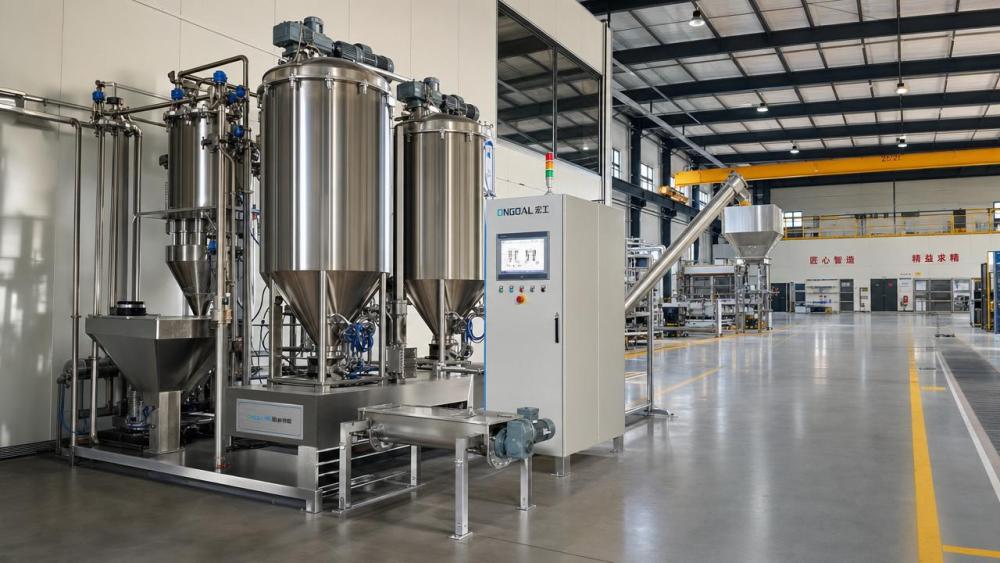
Many selection mistakes begin when equipment is compared before the process is fully defined.
That usually creates redesign work later.
First, map the full recipe path.
Identify raw material entry, intermediate holding, dosing points, mixing sequence, discharge timing, and downstream handoff.
In actual projects, the biggest failures often come from poor process matching rather than poor component quality.
This is especially true in food, chemicals, pharmaceuticals, and battery material production.
Different products need very different industrial batching engineering systems.
Powders behave differently from flakes.
Liquids with changing viscosity behave differently from stable solvents.
So the first comparison point is always process fit, not brochure performance.
Compare dosing accuracy under real operating conditions
Accuracy claims often look impressive in vendor documents.
The more useful question is how those numbers were achieved.
Were they measured with stable material, constant temperature, and ideal flow behavior?
Or do they still hold during shift changes, partial loads, and frequent recipe switching?
For industrial batching engineering systems, repeatability usually matters more than a single best-case accuracy number.
A line that drifts slightly every batch can create large losses across a month.
Compare these points in detail:
- Target tolerance by ingredient and batch size.
- Coarse and fine feeding strategy.
- Load cell resolution and environmental protection.
- Valve response time and shutoff consistency.
- Compensation logic for material lag or overrun.
- Calibration frequency and operator intervention needs.
This is where industrial batching engineering systems separate into basic weighing platforms and truly engineered dosing solutions.
If the process has high-value materials, small formulation windows, or compliance pressure, this comparison should be rigorous.
Assess material handling compatibility early
A common project delay appears when the dosing system is selected before material behavior is fully tested.
This becomes costly very fast.
Bridging powders, sticky granules, abrasive solids, and shear-sensitive ingredients all need different handling methods.
The same applies to corrosive liquids, foaming additives, or temperature-sensitive compounds.
When reviewing industrial batching engineering systems, compare:
- Feeder type, screw geometry, pump selection, and agitator design.
- Hopper angle, liner choice, and anti-bridging support.
- Dust control, containment, and clean transfer requirements.
- Compatibility with CIP, washdown, or dry cleaning procedures.
- Wear resistance for aggressive or abrasive materials.
From recent market changes, more lines are handling mixed product portfolios.
That means flexibility matters more than before.
If materials may change within two years, build that assumption into the evaluation now.
Review control architecture and data traceability
Control architecture shapes how usable the whole line becomes after commissioning.
On paper, two systems may both support automatic batching.
In practice, one may offer far better control, visibility, and diagnostics.
For industrial batching engineering systems, the controls layer should support decision-making, not just machine movement.
Key items to compare include:
- PLC platform, HMI usability, and alarm clarity.
- Recipe management with version control.
- Batch reporting, audit trails, and lot traceability.
- MES, ERP, SCADA, or historian integration.
- User permissions, electronic signatures, and data security.
- Remote diagnostics and service access policy.
This is especially important where compliance, recall response, or quality investigations are part of normal business risk.
Better traceability also improves daily operations.
When a batch deviation appears, clear data shortens diagnosis and limits waste.
Look beyond capacity to line integration risk
Throughput is necessary, but it is not enough.
Industrial batching engineering systems must connect smoothly with upstream storage and downstream processing.
A mismatch here can erase the value of an otherwise strong system.
Focus on integration questions such as:
- Can raw materials be replenished without stopping production?
- How does the system handle upstream variability?
- Will discharge timing match mixers, reactors, fillers, or conveyors?
- What happens during blocked discharge or partial batch interruption?
- Can the layout support maintenance access and future expansion?
More obvious signals often appear during layout reviews.
Pipe runs become too long.
Operator paths cross forklift traffic.
Feeder refill zones block access panels.
These are small design details that create large operating costs later.
Compare maintenance burden and lifecycle cost
Purchase price rarely tells the whole story.
In many plants, maintenance effort decides whether a system remains efficient over time.
Industrial batching engineering systems should be compared on lifecycle cost, not only capital expense.
Ask suppliers for practical evidence on:
- Wear part life in similar materials.
- Time needed for cleaning, changeover, and recalibration.
- Spare part availability across export markets.
- Local service capability and remote support quality.
- Failure mode history and typical downtime causes.
A lower-cost feeder that needs frequent adjustment may become the expensive option.
The same is true for complex controls with weak documentation.
Good industrial batching engineering systems reduce both operator dependence and unplanned downtime.
Check compliance, safety, and validation readiness
Safety and compliance should not be added after technical selection.
They must be built into the comparison stage.
Depending on the application, industrial batching engineering systems may need support for GMP, ATEX, FDA-related documentation, or local electrical rules.
Even when regulation is lighter, customer audits still raise the bar.
Useful review points include:
- Material certificates and contact surface specifications.
- Explosion protection or dust hazard controls.
- Validation documents, FAT, SAT, and calibration records.
- Cleaning verification and contamination control design.
- Emergency stop logic and access safety.
When these issues are reviewed late, line startup becomes slower and approval costs rise.
Use a practical comparison matrix before final approval
To make a solid decision, convert technical discussion into a weighted comparison matrix.
This keeps industrial batching engineering systems from being judged only by headline price or supplier confidence.
This also makes internal alignment easier.
Engineering, production, quality, procurement, and compliance teams can review the same decision framework.
That reduces late-stage disagreement and speeds approval.
Final decision: choose resilience, not just speed
The best industrial batching engineering systems are rarely the ones with the most aggressive brochure claims.
They are the systems that stay accurate, stable, traceable, and serviceable under real plant conditions.
That is what protects line performance over years, not just during acceptance testing.
Before finalizing your line design, compare process fit, dosing behavior, controls, integration risk, maintenance demand, and compliance readiness side by side.
In practical terms, this means asking harder questions early.
It also means requiring evidence, not assumptions.
A careful review now can prevent expensive changes after installation.
If the goal is a dependable line, industrial batching engineering systems should be selected for resilience first and capacity second.