
What makes an advanced manufacturing systems supplier suitable for multi-process work?
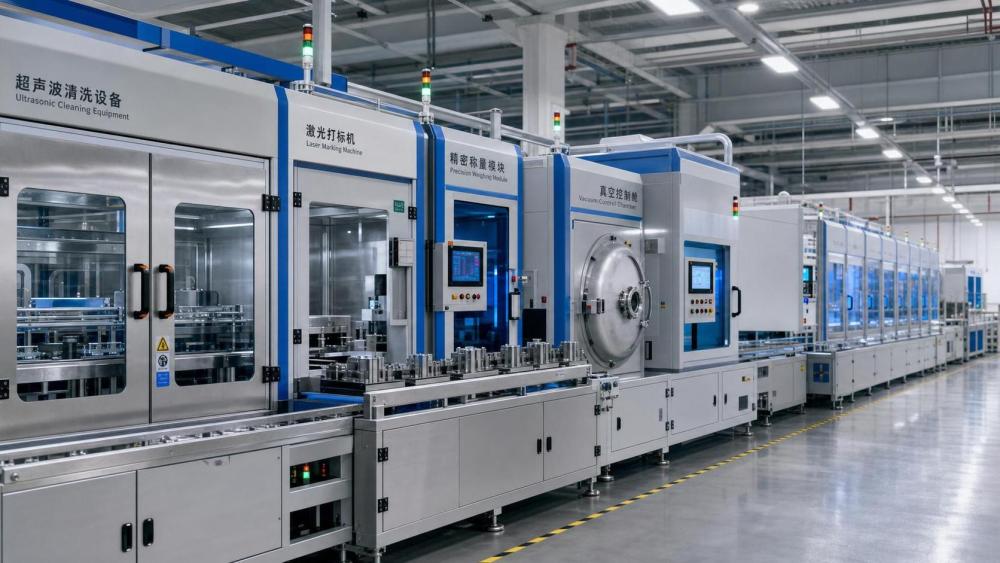
Choosing an advanced manufacturing systems supplier is rarely about one machine.
In multi-process projects, cleaning, marking, batching, vacuum control, and surface treatment often affect the same product path.
That means one weak link can damage yield, traceability, compliance, or appearance.
A capable supplier should connect process requirements across stations, not just quote separate units.
In practice, the better question is this: can the supplier support a stable process chain?
For example, ultrasonic cleaning influences coating adhesion.
Laser marking may need to match surface condition.
Vacuum performance can affect drying, packaging, or degassing quality.
A strong advanced manufacturing systems supplier understands these dependencies before installation starts.
This is where industry intelligence becomes useful.
Platforms such as GIAS help organize supplier visibility, process knowledge, application cases, and compliance context in one place.
That matters because auxiliary systems usually decide consistency behind the scenes, even when they are not the headline equipment.
Which capabilities should you check before comparing price?
Price matters, but early comparison based only on unit cost usually creates a distorted shortlist.
A lower quote may hide extra integration time, validation work, maintenance exposure, or process instability.
A more useful screening method is to review six capability areas first.
- Process understanding across linked operations, not only single equipment expertise.
- Engineering depth in controls, interfaces, utilities, and layout coordination.
- Proof of quality performance, such as repeatability, traceability, and defect reduction records.
- Regulatory and documentation readiness for export, validation, and audit needs.
- Service structure, including spare parts, remote diagnostics, and training response.
- Scalability for future throughput, recipe changes, or additional process modules.
An advanced manufacturing systems supplier that performs well in these areas usually protects total project cost better.
This is especially true when projects involve ultrasonic systems, coding equipment, weighing accuracy, or vacuum stability.
Those technologies look separate on paper, yet they often share validation data, operator workflow, and maintenance planning.
A quick evaluation table for early supplier screening
Before deep technical meetings, use a simple judgment table to remove weak options.
How can you tell whether the supplier really understands process integration?
This is often the point where supplier presentations become less useful than technical dialogue.
A real integration partner will ask difficult questions early.
They will ask about contamination limits, substrate variation, code durability, batch tolerance, vacuum level stability, and coating performance targets.
They should also ask how data moves between processes.
That includes recipe transfer, inspection feedback, barcode linkage, and alarm traceability.
An advanced manufacturing systems supplier with integration experience usually speaks in workflow terms.
They talk about utility loads, line balancing, changeover time, cleaning validation, and maintenance access.
They do not stay at brochure level.
A useful test is to request a process risk review.
Ask the supplier to identify the three most likely failure points in your proposed setup.
The quality of that answer says more than a polished slide deck.
Across advanced manufacturing, good suppliers understand that microscopic factors drive visible results.
That idea is central to the way GIAS frames auxiliary technologies.
Precision cleaning, stable batching, reliable coding, and controlled surface preparation are rarely optional details.
They are often the difference between a pass and a recurring quality issue.
Where do projects usually go wrong when selecting an advanced manufacturing systems supplier?
Most failures do not begin with catastrophic equipment faults.
They begin with incomplete assumptions during supplier selection.
One common mistake is treating every auxiliary system as a separate purchase package.
That approach can create mismatched controls, duplicate validation effort, and unclear accountability.
Another mistake is overvaluing delivery speed without checking startup readiness.
A fast shipment is not the same as a fast operational ramp.
There is also a frequent gap around documentation.
When traceability, export compliance, or regulated production are involved, missing documents become expensive quickly.
More subtle issues appear in maintenance planning.
If wear parts, calibration intervals, chemical handling, or vacuum pump service are ignored, ownership cost rises later.
A careful advanced manufacturing systems supplier should help surface these risks before contract finalization.
- Confirm who owns line integration and software handshakes.
- Define acceptance criteria for each linked process, not only final output.
- Review consumables, utilities, and preventive maintenance assumptions.
- Check whether service support matches the countries where equipment will operate.
How should cost, lead time, and long-term value be weighed together?
This is usually the hardest part of the decision.
A strong advanced manufacturing systems supplier may not offer the lowest purchase price.
Still, the better option can reduce launch delays, rework, audit exposure, and field failures.
The practical way to compare suppliers is to separate visible cost from hidden cost.
Visible cost includes equipment price, installation, tooling, and freight.
Hidden cost includes validation effort, reject rate, downtime, retraining, spare inventory, and support delays.
Lead time should be read the same way.
The calendar date on the quotation matters less than the time to stable output.
For multi-process systems, stable output usually depends on commissioning depth and process tuning.
When comparing offers, ask for a phased schedule.
It should include design freeze, factory testing, site installation, qualification, training, and post-start optimization.
That schedule often reveals which advanced manufacturing systems supplier has realistic execution discipline.
Questions worth asking during final comparison
These questions often produce clearer answers than a broad request for best price.
- What performance metric will you guarantee after integration?
- Which process variable is most sensitive in this application?
- What operator skill level do you assume at startup?
- How will spare parts be localized or stocked?
- What data can be captured for traceability and future optimization?
What is the smartest next step before making a final choice?
The smartest next step is not another generic supplier meeting.
It is a structured requirement review based on the full process path.
List every critical point where auxiliary systems influence quality, identification, cleanliness, dosing accuracy, vacuum stability, or coating result.
Then compare suppliers against those real decision points.
This approach makes the evaluation more objective.
It also reduces the risk of selecting an advanced manufacturing systems supplier that looks strong commercially but weak operationally.
Sources that combine application guidance, technology analysis, and supplier context can support that review efficiently.
That is why sector-focused platforms like GIAS are useful during research.
They help turn scattered equipment information into a more coherent decision framework.
In the end, the best supplier is usually the one that can explain your process clearly, quantify risk honestly, and support stable output after handover.
Before moving forward, align internal requirements, define acceptance standards, and test each proposal against implementation reality.
That is the most reliable way to choose an advanced manufacturing systems supplier for a multi-process project.