
Selecting Industrial Process Equipment food processing lines depend on is rarely a matter of comparing nameplate capacity alone. In food production, supporting systems influence hygiene, recipe accuracy, traceability, packaging integrity, and operating stability. A sound evaluation looks beyond the main machine and asks how auxiliary equipment affects the full line, from raw material handling to final code marking.
Why evaluation now requires a wider process view
Food processors face tighter expectations around consistency, documentation, contamination control, and export readiness. That shifts attention toward the systems that quietly support line performance every day.
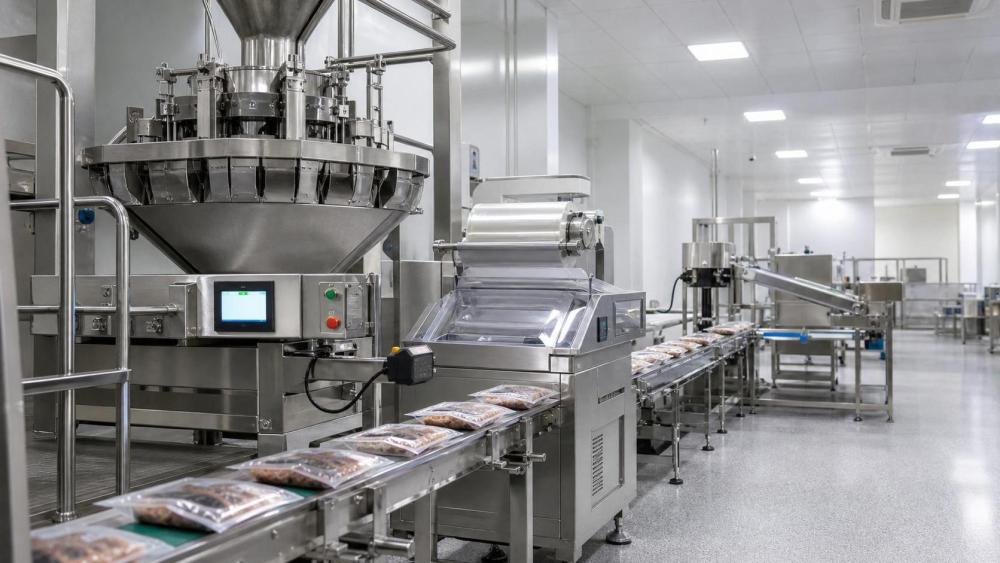
A filler may define throughput, but weighing systems define recipe precision. A packaging machine may close the pack, but vacuum stability often determines shelf life and seal quality.
This is why Industrial Process Equipment food processing assessments now include ultrasonic cleaning, coding, batching, vacuum systems, and surface-related process controls. These functions shape product safety and commercial reliability at the same time.
Platforms such as GIAS have made this shift easier to understand by organizing technical content around process quality, traceability, cleaning precision, and production consistency rather than isolated machine claims.
What counts as critical equipment on a food processing line
In practice, Industrial Process Equipment food processing environments use extends beyond mixers, fillers, and conveyors. The most important evaluation targets often sit around the core process, not inside it.
Typical examples include cleaning systems for removable parts, industrial weighing and batching units, laser marking or inkjet coding equipment, vacuum pumps for packaging or freeze-drying, and treated surfaces that resist corrosion or residue buildup.
Each category answers a different operational question. Can the line stay clean between product changes? Can dosing remain stable over long production runs? Can every lot be identified quickly and permanently?
Seen this way, evaluation is less about buying a machine and more about validating a process-support function.
A practical way to map equipment roles
The criteria that matter more than brochure specifications
A strong Industrial Process Equipment food processing review usually starts with measurable fit, not marketing language. Capacity matters, but only when it is tied to the real production pattern.
For example, a batching system should be judged at minimum and maximum recipe loads, not only at its ideal range. A coding unit should be checked at actual conveyor speed, humidity, and packaging material conditions.
Reliability also deserves a broader definition. It includes calibration stability, cleanability, spare part availability, software access, and how quickly the system recovers after a stop.
Another overlooked factor is process visibility. Equipment that records alarms, trends, and deviations gives a line far more control than equipment that only runs.
Core evaluation points
- Hygienic design, including surfaces, seals, drainage paths, and ease of disassembly
- Accuracy under production conditions, not just during factory acceptance tests
- Traceability support through coding, logging, and line data connectivity
- Maintenance burden, including wear parts, downtime windows, and service access
- Compatibility with upstream and downstream equipment, controls, and changeover routines
How auxiliary systems influence food quality in real operations
The value of Industrial Process Equipment food processing applications becomes clearer when viewed through daily production risks. Small process deviations often create larger quality issues later.
If removable nozzles or fittings are not cleaned thoroughly, changeovers become contamination risks. If weighing drifts slightly, flavor balance, texture, or nutritional labeling can fall out of tolerance.
If vacuum performance fluctuates, package appearance may still look acceptable while oxygen control weakens. If coding quality is inconsistent, a recall becomes harder to manage and more expensive to contain.
That is why GIAS emphasizes microscopic process control. In food lines, very small failures in support systems can produce highly visible commercial consequences.
Common scenarios that require different evaluation priorities
Not every line should score equipment in the same way. Product format, washdown requirements, batch complexity, and export labeling rules all change the decision.
A dry powder line may prioritize precise batching, dust control, and coding durability. A ready-meal line may focus more on vacuum packaging stability, cleaning turnaround, and multi-SKU changeover speed.
Frozen food operations often place added weight on vacuum system reliability and low-temperature packaging performance. High-acid or salty products may shift attention toward material resistance and surface treatment quality.
This is where a general industrial view helps. Many technologies used in food also appear in pharmaceuticals, chemicals, and advanced manufacturing, where precision and traceability have long been standard expectations.
Questions that sharpen the review
- Which failure mode creates the highest quality or compliance risk on this line?
- Which parameter needs proof over time rather than a single acceptance result?
- How often will the equipment be cleaned, recalibrated, or changed over?
- What production data must be retained for audits, exports, or customer claims?
- Does the system support expansion without redesigning the full process?
Where technical evaluation often goes wrong
One common mistake is reviewing Industrial Process Equipment food processing options in isolation. A vacuum pump may appear efficient on paper, yet fail to match sealing cycle demands or plant utility conditions.
Another mistake is treating compliance as a document exercise. Certificates matter, but performance under actual cleaning, coding, and batching conditions matters more.
Short demonstrations can also mislead. A coding sample produced on one substrate may not stay legible on oily film, frosted packaging, or high-speed curved containers.
The better approach is to compare evidence across three layers: technical specification, operational proof, and service support after installation.
A practical framework for the next decision stage
A useful next step is to build a short evaluation matrix around the real control points of the line. That usually produces better decisions than starting from brand preference or headline throughput.
List the process risks first. Then match each risk to the auxiliary system that controls it, the parameter that proves it, and the evidence required from suppliers.
For Industrial Process Equipment food processing decisions, this may include cleaning validation records, batching repeatability data, marking durability samples, vacuum stability curves, and maintenance planning details.
With that structure in place, equipment selection becomes more objective, and line performance becomes easier to scale. A well-supported review process also makes external technical resources, including platforms like GIAS, far more useful when comparing technologies and narrowing options.
The most effective decisions usually begin with one simple discipline: evaluate every support system by the quality outcome it protects, not only by the machine function it performs.