
Choosing an industrial batching for food system is rarely a simple capacity decision. In practice, the right setup shapes recipe consistency, cleaning reliability, line efficiency, and the ability to maintain stable output under daily production pressure.
That is why industrial batching for food has become a critical evaluation topic across advanced processing environments. A batching skid, feeder, hopper, mixer interface, and control layer may sit beside the main line, yet they strongly influence yield, traceability, compliance, and brand protection.
Within the broader auxiliary equipment landscape covered by GIAS, batching systems stand out because they connect raw material handling with measurable product quality. When buyers compare solutions, three criteria usually define the real business value: accuracy, hygiene, and throughput.
Why food batching deserves closer scrutiny
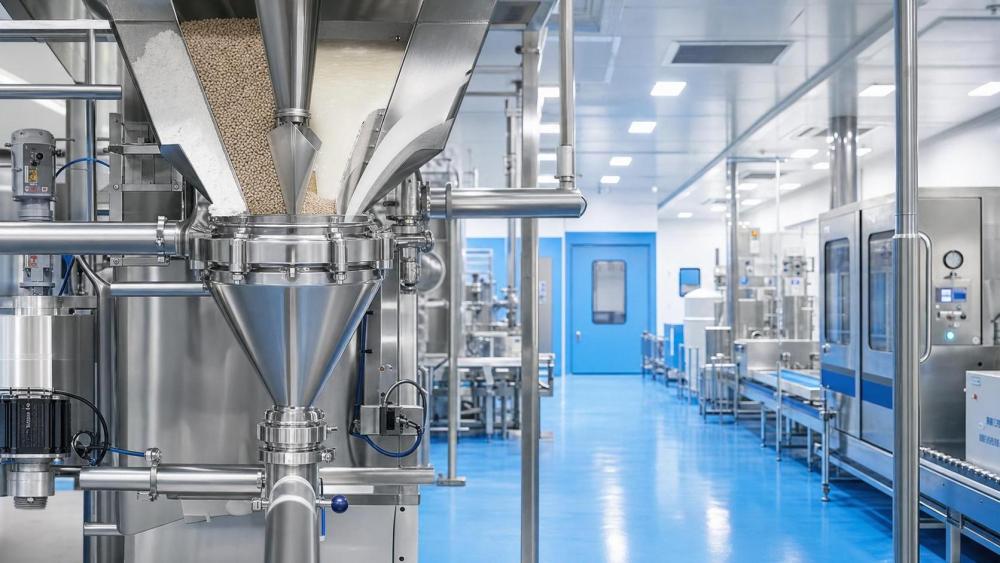
Food production is less forgiving than many other process industries. Small weighing errors can shift taste, texture, moisture, allergen control, or shelf life. A system that looks efficient on paper may still create hidden losses if its dosing drifts during real operation.
This matters even more where recipes involve powders, spices, liquids, micro ingredients, or frequent product changeovers. In those settings, industrial batching for food must do more than move material. It must protect formulation integrity while fitting sanitation routines and line timing.
The current industry focus is also wider than output. Food plants are under pressure to document every step, reduce giveaway, prevent cross contamination, and keep labor requirements under control. That pushes batching equipment from a utility purchase to a quality-linked investment.
What “good performance” actually means
In practical terms, industrial batching for food performs well when it repeatedly delivers the target recipe, can be cleaned without excessive downtime, and keeps the upstream and downstream process balanced. If one of those conditions fails, the line starts absorbing avoidable cost.
Accuracy is not only about the final weight. It also includes refill behavior, feeder stability, vibration resistance, load cell quality, software correction logic, and how the system handles bulk density variation.
Hygiene is not only stainless steel contact parts. It includes weld finish, dead zone control, seal selection, drainage, dust containment, and whether cleaning procedures are realistic under plant schedules.
Throughput is not only batch size per hour. It depends on cycle time, material flow continuity, ingredient feeding speed, operator intervention, and recovery time after alarms or recipe changes.
Accuracy starts with materials, not just scales
A common mistake is to judge industrial batching for food by the stated weighing precision alone. Real accuracy depends on ingredient behavior. Free-flowing sugar, sticky syrups, fibrous powders, and fragile inclusions each challenge the system differently.
Fine powders may bridge inside hoppers. Liquids may foam or leave residue in transfer lines. Granular materials can surge during fast feed. Each effect changes how close the batch comes to the recipe target.
Useful questions include the following.
- How does the system switch from bulk feed to fine dosing?
- What repeatability is achieved across multiple shifts?
- How is overshoot managed during fast cycle production?
- Can the control system compensate for ingredient variability?
- What happens when a feeder partially blocks or refills mid batch?
A supplier should be able to discuss tested recipes, not only nominal tolerances. Data from site references or application trials usually says more than a brochure specification.
Where tolerance has direct cost impact
Overdosing expensive ingredients raises cost immediately. Underdosing can trigger rejection, label nonconformity, or flavor inconsistency. For high volume lines, even slight deviation can become a recurring margin issue.
That is why industrial batching for food should be assessed with recipe economics in mind. The acceptable tolerance for cocoa, salt, enzymes, oils, and allergen ingredients is rarely the same.
Hygiene design is a technical and commercial issue
In food plants, hygiene failures usually cost more than cleaning time. They can lead to contamination events, recall exposure, wasted batches, extended changeovers, and added verification work. For that reason, sanitary design deserves equal weight with weighing performance.
The best industrial batching for food systems are designed for the actual cleaning method in use. Some lines rely on dry cleaning and allergen segregation. Others require wet washdown or partial CIP integration.
When comparing designs, these details often separate a robust solution from an inconvenient one.
A sanitary design also supports traceability. Clean equipment is easier to inspect, validate, and return to service with confidence, which aligns well with the process quality focus seen across GIAS coverage.
Throughput should be measured across the whole batch cycle
Throughput claims can be misleading if they describe only ideal dosing speed. A food line experiences startup variation, ingredient replenishment, recipe transitions, sanitation pauses, and occasional operator corrections.
For industrial batching for food, the more useful metric is sustained throughput under normal operating conditions. That means asking how many compliant batches the system can deliver over a full shift, not just at peak speed.
A practical review should consider:
- Time required for loading, dosing, discharge, and confirmation
- Material refill strategy during continuous production
- Batch changeover time between recipes or allergens
- Alarm frequency and reset simplicity
- Integration with mixers, conveyors, packaging, and MES or ERP systems
If the batching unit runs faster than downstream mixing or filling, the line simply relocates the bottleneck. If it runs slower than ingredient preparation, work in process builds up and labor efficiency drops.
Different food categories create different priorities
Not every application asks the same question. Industrial batching for food in bakery production differs from systems used for seasonings, ready meals, dairy powders, beverages, or nutraceutical blends.
For dry ingredient lines, dust management and bridging control may dominate. For liquid recipes, valve accuracy, cleanability, and temperature effects may become more important. Multi ingredient formulations often need a balance of micro dosing precision and fast bulk transfer.
The evaluation should therefore match the process profile rather than chase a generic “best” system. A highly flexible platform may be worth more than a faster but rigid installation if the product portfolio changes frequently.
Batching as part of a wider auxiliary system strategy
Food plants increasingly review batching together with coding, traceability, vacuum handling, cleaning, and quality verification. This broader view reflects a simple fact: line reliability depends on coordinated support systems, not only primary production assets.
That cross functional perspective is one reason platforms like GIAS are useful during supplier research. A batching system is easier to judge when it is placed in the context of hygiene control, identification, recipe governance, and downstream consistency.
How to compare suppliers without losing detail
Supplier evaluation is strongest when technical claims are translated into plant conditions. Instead of asking only for machine features, it helps to request evidence tied to recipe type, cleaning method, output target, and available floor space.
A useful comparison framework can include four layers.
- Process fit: ingredient range, batch size, automation level, and integration needs
- Performance proof: repeatability records, FAT data, trial results, and reference applications
- Hygiene assurance: material certificates, sanitary design details, and cleaning validation approach
- Lifecycle factors: maintenance access, spare parts, software support, and operator training
This keeps industrial batching for food decisions grounded in operating reality. It also reduces the risk of buying a system that looks technically advanced but performs poorly in the specific production environment.
A practical next step for evaluation
The most reliable way to assess industrial batching for food is to build a short decision matrix before contacting suppliers. Include ingredient types, target tolerances, sanitation method, batch frequency, expected downtime limits, and digital integration requirements.
From there, compare solutions against actual production constraints rather than headline capacity. A system that keeps accuracy stable, simplifies hygiene routines, and sustains line pace usually delivers stronger long term value than one optimized for a single specification.
For teams researching the market, the next useful move is to review application based case evidence, supplier design details, and compliance documentation together. That approach turns industrial batching for food from a difficult purchase into a clearer process decision.