
Why Industrial Process Monitoring Software Matters in Multi-Line Manufacturing
Choosing industrial process monitoring software gets harder when one factory runs several lines, product variants, and mixed equipment generations.
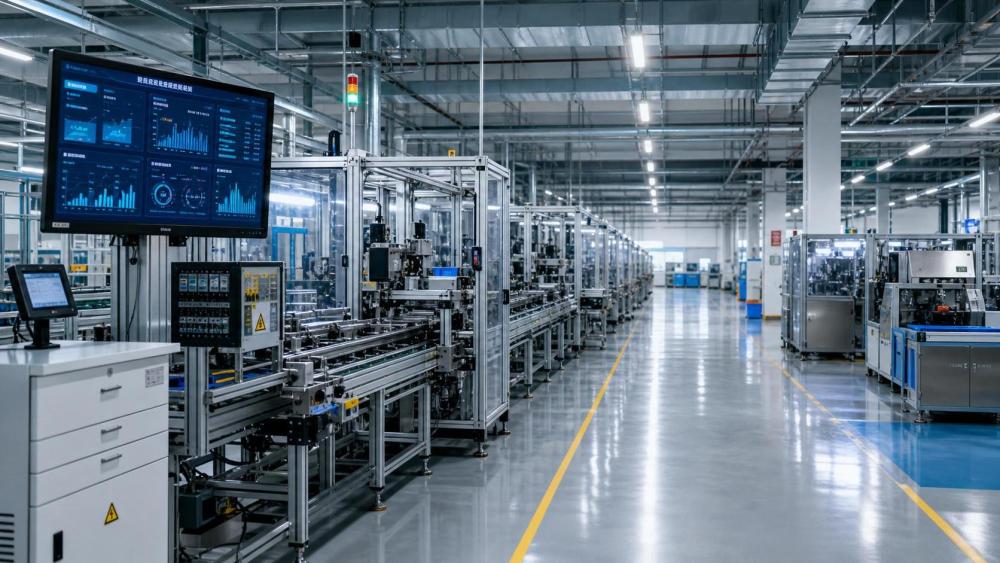
A simple dashboard is not enough. Multi-line operations need clear data, stable integration, and fast response when quality or throughput starts to drift.
That is why industrial process monitoring software often becomes a decision platform, not just a reporting tool.
In practice, the right system helps teams connect process signals with yield, downtime, traceability, compliance, and maintenance actions.
This matters even more in industries using ultrasonic cleaning, laser marking, inkjet coding, vacuum systems, industrial weighing, batching, or coating support processes.
These auxiliary systems may sit beside the main line, yet they strongly shape final product quality and production consistency.
From a selection standpoint, the real question is straightforward: can the software turn distributed process data into reliable operational decisions?
If the answer is unclear, feature lists will not help much. A structured evaluation will.
Start with the Real Monitoring Scope
Before comparing vendors, define what must actually be monitored across all lines.
Many projects fail early because monitoring goals stay too general, such as “better visibility” or “improved digitalization.”
A better approach is to map production risks by line, station, and process-support system.
For example, one line may need recipe accuracy from batching systems, while another depends on vacuum stability and coating thickness control.
Industrial process monitoring software should align with those realities, not with a generic smart factory pitch.
Useful scoping questions include:
- Which lines create the highest quality or compliance risk?
- Which process variables must be captured in real time?
- Where do operators currently rely on manual checks or spreadsheets?
- Which alarms need immediate action, and which support trend analysis?
- What records must be stored for customer audits or regulatory review?
This step narrows the market quickly. It also prevents overbuying software that looks impressive but solves the wrong problem.
Check Integration Depth, Not Just Connectivity
Most vendors claim easy integration. The critical issue is how deep that integration really goes.
In multi-line manufacturing, industrial process monitoring software must connect with PLCs, SCADA, MES, ERP, historians, sensors, and machine-level controllers.
That includes older equipment too. Many factories still run stable legacy assets that cannot be ignored.
From recent market changes, a clearer signal is the growing need for mixed-environment data normalization.
If one line reports pressure in different formats, or one coder logs status differently, comparison becomes unreliable.
So during evaluation, ask vendors to explain:
- Supported industrial protocols, such as OPC UA, Modbus, MQTT, or vendor-specific interfaces
- Methods for handling legacy machines with limited digital outputs
- How tags, units, event names, and timestamps are standardized
- Whether integration supports two-way workflows or only passive data collection
- How quickly new lines or devices can be added without custom redevelopment
Good industrial process monitoring software should reduce integration friction over time. It should not create a permanent services dependency.
Prioritize Real-Time Decision Support
Monitoring is valuable only when it helps people act before losses spread across multiple lines.
That means industrial process monitoring software should do more than display current values.
It should detect drift, show root-cause clues, and trigger meaningful escalation based on process context.
For example, a pressure deviation in a vacuum system matters differently during startup, normal production, or cleaning cycles.
The same logic applies to weighing deviations, ultrasonic cleaning time windows, or code verification failures in identification systems.
Look for decision-support capabilities such as:
- Rule-based alarms linked to process states
- Statistical process control views by line or product family
- Automatic deviation logging with operator acknowledgment
- Contextual dashboards for maintenance, quality, and production teams
- Trend analysis that highlights recurring losses rather than isolated events
This is where industrial process monitoring software becomes operationally useful. It shortens reaction time and improves consistency across shifts.
Evaluate Traceability, Data Quality, and Compliance Readiness
In many sectors, selection decisions are driven by auditability as much as by efficiency.
If data cannot be trusted, industrial process monitoring software loses value fast.
That is especially true where product coding, batch records, cleaning validation, or coating parameters must be verified later.
A solid platform should preserve complete records, time synchronization, user actions, and version history for critical rules or recipes.
This also means data quality controls matter. Missing tags, duplicate timestamps, or manual overrides without explanation will weaken every report.
When comparing options, review these areas carefully:
For regulated or export-oriented manufacturing, these details are not secondary. They often determine whether the software can scale globally.
Assess Scalability Across Lines, Plants, and Teams
A platform may work well on one pilot line and still fail at plant-wide adoption.
That is why industrial process monitoring software should be tested against future complexity, not only current demand.
In real operations, new products, added shifts, supplier changes, and compliance requirements keep reshaping what must be monitored.
More importantly, different teams need the same data presented in different ways.
Production wants immediate visibility. Quality wants evidence. Maintenance wants failure patterns. Management wants comparable KPIs across lines.
A scalable system should support all of that without rebuilding the architecture each time.
Pay attention to practical signals:
- Can templates be reused across similar lines?
- Can dashboards be localized by role or plant?
- Can the system compare line performance using common KPIs?
- Will licensing remain reasonable as tags and users increase?
- Can cloud, on-premise, or hybrid deployment match corporate policy?
This also affects total cost of ownership. Cheap entry pricing can become expensive if scaling requires repeated customization.
Use a Shortlist Method That Exposes Risk Early
A smart selection process for industrial process monitoring software should surface risk before contract signing.
The best way is to combine technical review with a focused proof of capability.
Instead of asking for a polished demo, provide one real use case from a multi-line environment.
For example, track batch deviations across lines, connect alarm events to maintenance actions, or verify product coding consistency by shift.
Then score vendors on execution, not presentation quality.
- Define three to five critical use cases tied to measurable plant risks.
- List mandatory integration, traceability, and reporting requirements.
- Ask vendors to map their workflow using your data structure.
- Run a scored workshop with quality, production, and automation stakeholders.
- Review implementation effort, support model, and expansion path.
This method keeps the decision grounded. It also shows whether the industrial process monitoring software can perform under real operational conditions.
In the end, the strongest choice is usually not the one with the longest feature sheet.
It is the platform that fits plant complexity, supports action, protects data quality, and scales with manufacturing change.
For multi-line operations, that is what turns industrial process monitoring software from a software purchase into a durable process control asset.