
Why Maintenance Free Design for Factories Matters in High-Use Areas
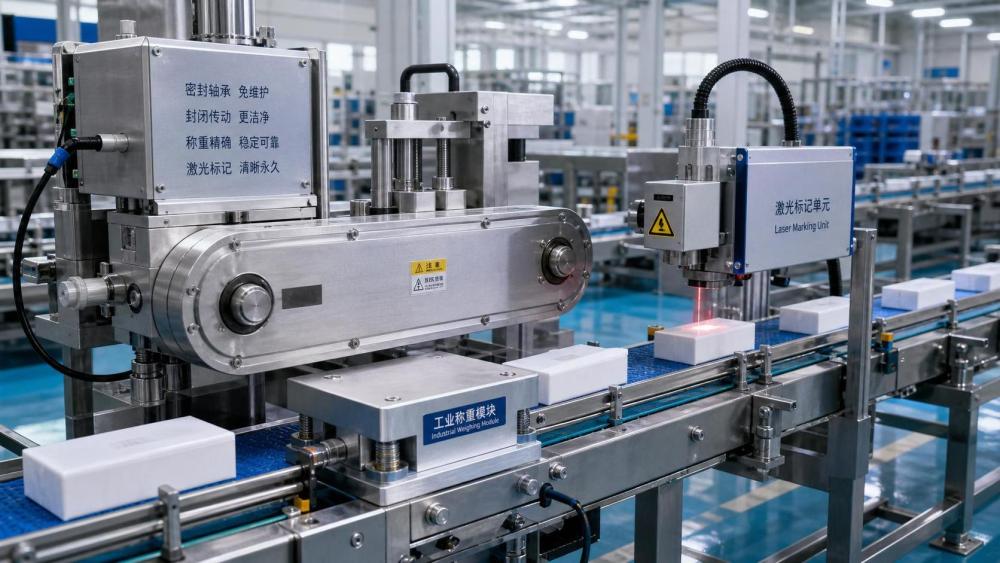
In high-use production areas, uptime is rarely protected by one machine alone.
It depends on many support systems working without interruption.
That is where maintenance free design for factories becomes strategically important.
The phrase does not mean a factory never needs inspection or replacement.
It means equipment is designed to reduce routine service, weak points, contamination, and manual adjustment.
In busy production zones, that shift can cut downtime in a measurable way.
This matters even more in auxiliary systems.
Ultrasonic cleaning, laser marking, industrial weighing, vacuum systems, and coating support final quality every day.
When these systems stop, the main line often slows, waits, or fails quality checks.
From a business perspective, maintenance free design for factories supports three goals at once.
- Less unplanned downtime in high-use production areas
- More stable process quality and traceability
- Lower lifecycle service cost across multiple lines
That combination is why more manufacturers now evaluate design simplicity before headline speed or capacity.
The stronger signal is operational resilience, not just output.
How Downtime Starts in Auxiliary Equipment
Most downtime in support systems starts small.
A clogged nozzle, worn seal, drifting sensor, dirty chamber, or loose cable can stop a larger process.
These failures often appear in high-cycle areas first.
That includes packaging, coding, cleaning, batching, and surface treatment stations.
Maintenance free design for factories targets these repeat problems at the design stage.
It removes exposure, reduces wear interfaces, and makes contamination easier to control.
In practical terms, better design reduces the number of stoppages that maintenance teams need to chase.
It also lowers restart risk after a short stop.
For regulated industries, that matters beyond output.
A brief failure can trigger batch review, relabeling, or traceability gaps.
Common failure sources in high-use areas
- Open moving parts that attract dust or overspray
- Frequent lubrication points and manual adjustments
- Components that fail under vibration, heat, or washdown
- Designs that require frequent disassembly for cleaning
- Sensors placed where contamination affects accuracy
This is why maintenance free design for factories is tied directly to line stability.
It prevents familiar failure patterns before they reach production.
What Maintenance Free Design for Factories Looks Like in Practice
The concept works best when it is specific.
A maintenance free design for factories usually combines material choice, sealed architecture, simplified mechanics, and process visibility.
It is not one feature.
It is a reliability strategy built into the equipment itself.
Core design traits
- Sealed bearings and enclosed drive systems
- Corrosion-resistant materials for chemical or humid zones
- Self-cleaning or low-residue surfaces in dirty processes
- Tool-free access for fast inspection without long stoppages
- Stable sensor placement with automatic calibration support
- Fewer moving parts and fewer wear-related adjustment points
Take industrial weighing and batching as an example.
If dust enters load cell assemblies, drift and cleaning work increase quickly.
A better sealed design protects recipe accuracy and reduces intervention.
In laser marking, stable cooling and enclosed optics help preserve code quality without frequent service calls.
In vacuum systems, leak-resistant connections and low-wear pump configurations reduce the risk of unstable process conditions.
Across these cases, maintenance free design for factories protects both uptime and output consistency.
Where the Business Value Becomes Visible
The financial case becomes clear when downtime costs are mapped by minute, not by month.
Short interruptions look small in reports, but they compound across shifts.
That is especially true in multi-step lines where one support system delays downstream work.
Maintenance free design for factories creates value in several connected ways.
This also changes procurement logic.
The lowest purchase price may create the highest operating burden.
In real operations, maintenance free design for factories often delivers better total cost performance than cheaper service-heavy alternatives.
How to Evaluate the Right Solution Before You Buy
Good decisions start with the operating environment, not the brochure.
A maintenance free design for factories should match the actual load, contamination profile, cleaning routine, and compliance pressure.
That means asking more detailed questions during selection.
Use this evaluation checklist
- Map the high-use zones where stoppages happen most often.
- Identify which auxiliary systems cause quality delays or restart losses.
- Check whether the design reduces cleaning, lubrication, calibration, or replacement frequency.
- Review materials, sealing levels, and contamination resistance.
- Ask for evidence from similar throughput or regulated applications.
- Compare lifecycle cost, not just acquisition cost.
- Confirm spare parts logic and diagnostic visibility for planned shutdowns.
This approach is especially useful when comparing process-support technologies from multiple suppliers.
For example, an ultrasonic cleaning system may look similar across vendors.
The real difference may be tank durability, transducer stability, drainage design, and service interval behavior.
The same is true for coding systems, vacuum pumps, or electrostatic coating support equipment.
Maintenance free design for factories should be tested against your process risks, not generic claims.
A Practical Path to Lower Downtime
Factories do not reduce downtime by chasing alarms one by one forever.
They reduce downtime by removing repeat failure causes from the system.
That is the real promise of maintenance free design for factories.
In high-use production areas, this design mindset helps protect throughput, quality, compliance, and staffing efficiency at the same time.
It also fits the wider direction of modern manufacturing.
Processes are becoming more traceable, more automated, and less tolerant of variation.
As that continues, service-heavy equipment becomes harder to justify.
The practical next step is clear.
Review your most interruption-prone auxiliary systems first.
Then prioritize upgrades where maintenance free design for factories can deliver measurable gains in uptime and process stability.
That is often where the fastest operational return appears.