
Advanced Manufacturing Supplier Selection: 7 Criteria for Quality, Capacity, and Lead Time
Choosing the right advanced manufacturing supplier can directly influence product quality, production uptime, and delivery reliability.
The real challenge is rarely price alone.
A low quote means little if quality drifts, batches fail, or lead times slip during demand peaks.
In advanced manufacturing, small process weaknesses create large downstream costs.
That is especially true for auxiliary systems.
Ultrasonic cleaning, laser marking, vacuum systems, batching equipment, and coating technologies all affect consistency, traceability, and compliance.
A strong advanced manufacturing supplier helps protect output, reduce risk, and support growth over time.
The seven criteria below offer a practical framework for supplier evaluation and negotiation.
1. Process Capability Must Match Product Requirements
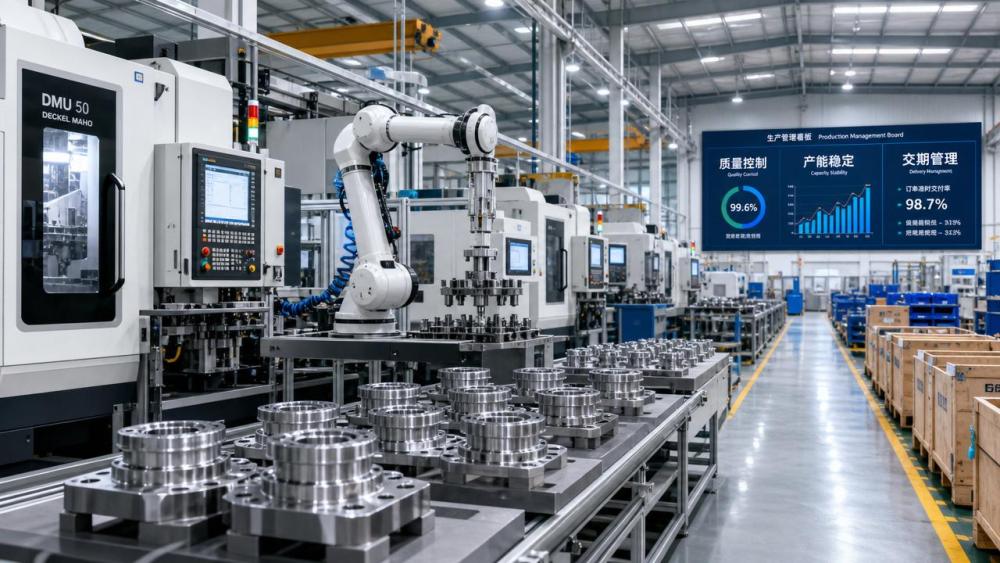
The first question is simple.
Can the advanced manufacturing supplier consistently make what the application actually needs?
This goes beyond machine lists and product brochures.
Buyers should verify tolerances, repeatability, contamination control, marking quality, surface finish, or vacuum performance.
In real operations, process stability matters more than headline specifications.
Ask for sample reports, process validation records, and data from similar applications.
- Request Cp or Cpk data where relevant.
- Review cleaning, welding, coating, or marking consistency across multiple lots.
- Confirm whether process settings are documented and controlled.
- Check if the supplier can support pilot runs before full release.
A capable advanced manufacturing supplier reduces defect risk before orders scale.
2. Quality Systems Should Be Visible, Not Assumed
Many suppliers claim quality control.
The better question is whether their system is measurable, repeatable, and easy to audit.
A reliable advanced manufacturing supplier should show clear inspection routines, nonconformance handling, and traceable records.
This matters even more in regulated sectors.
Food, pharmaceutical, electronics, automotive, and battery production all require disciplined documentation.
Recent market changes make this more important.
Customers now expect better traceability, faster recalls, and stronger proof of compliance.
- Check ISO certifications and their real scope.
- Review incoming, in-process, and final inspection checkpoints.
- Ask how corrective actions are tracked and closed.
- Confirm serialization or batch traceability where needed.
A supplier with visible quality discipline is easier to trust during pressure periods.
3. Capacity Stability Matters More Than Nameplate Capacity
Capacity claims can look impressive on paper.
But nameplate numbers do not always reflect real output under mixed orders, labor shifts, or raw material delays.
A dependable advanced manufacturing supplier should prove stable throughput over time.
This becomes critical when production ramps quickly or demand turns seasonal.
More buyers now look beyond monthly output and focus on resilience.
Can the supplier absorb urgent orders without hurting quality or lead time?
That is often the real test.
- Ask for utilization rates, not just installed equipment counts.
- Review overtime dependence and subcontracting practices.
- Check backup equipment and maintenance planning.
- Evaluate raw material and component sourcing depth.
A strong advanced manufacturing supplier manages both current load and future expansion.
4. Lead Time Performance Should Be Backed by Data
Quoted lead time is only a promise.
Historical delivery performance shows whether that promise is realistic.
The best advanced manufacturing supplier tracks on-time delivery, delay causes, and recovery actions.
This also means communication must be timely and honest.
Late notice can be as damaging as a late shipment.
In practice, shorter lead time is not always better.
Predictable lead time supports planning, inventory control, and customer commitments far more effectively.
A data-driven advanced manufacturing supplier gives better visibility and fewer surprises.
5. Compliance and Traceability Reduce Hidden Procurement Risk
Price pressure can hide expensive compliance gaps.
A qualified advanced manufacturing supplier should understand standards, export requirements, and industry-specific documentation.
This is especially relevant for auxiliary systems tied to cleanliness, coding, coating, weighing accuracy, or vacuum integrity.
A missing record today can become a major liability later.
That also affects audits, recalls, warranty claims, and market access.
- Confirm material declarations and regulatory documents.
- Review calibration and validation records for critical equipment.
- Check coding, marking, or batch traceability systems.
- Ask how compliance updates are monitored and implemented.
A compliant advanced manufacturing supplier protects both cost and reputation.
6. Engineering Support Can Lower Total Cost
Unit price is only one part of total procurement cost.
A collaborative advanced manufacturing supplier often saves money through process optimization, fewer defects, and faster troubleshooting.
This is a stronger signal than aggressive discounting.
For example, better ultrasonic cleaning may reduce contamination failures.
Better marking integration may improve traceability and cut rework.
Better batching control may lower material waste.
These gains add up quickly in volume production.
- Assess application engineering depth.
- Ask whether the supplier supports installation, tuning, and operator training.
- Review response time for technical issues.
- Look for case studies with measurable cost or yield improvement.
A value-oriented advanced manufacturing supplier helps improve total cost, not just purchase price.
7. Commercial Terms Should Support Long-Term Reliability
The final criterion is commercial structure.
A good advanced manufacturing supplier offers terms that reduce uncertainty on both sides.
That includes pricing logic, warranty scope, service commitments, and change control.
The goal is not only cost reduction.
It is cost predictability with operational protection.
This matters more when supply chains remain volatile and customer schedules stay tight.
- Define service levels for urgent support and spare parts.
- Clarify lead time commitments and penalty triggers if appropriate.
- Review payment terms against delivery milestones.
- Set rules for engineering changes, material substitutions, and approval flow.
A stable commercial framework strengthens the advanced manufacturing supplier relationship over the long run.
How to Compare Suppliers More Effectively
A practical scorecard makes evaluation more consistent.
It also reduces bias when several options look similar at first glance.
For each advanced manufacturing supplier, score process capability, quality systems, capacity stability, lead time data, compliance, engineering support, and commercial terms.
Then weight each factor by business impact.
For critical parts, quality and traceability may outrank price.
For mature categories, delivery reliability and cost control may carry more weight.
This also creates a stronger basis for negotiation.
When evaluation is structured, discussions become more factual and less reactive.
Final Takeaway
Choosing an advanced manufacturing supplier is a risk decision as much as a cost decision.
The strongest suppliers do more than ship on time.
They support quality consistency, process control, compliance readiness, and predictable growth.
That is why deeper evaluation pays off.
Use these seven criteria to build a shortlist, challenge assumptions, and compare suppliers with better confidence.
A disciplined selection process today can prevent quality loss, missed deliveries, and avoidable cost tomorrow.